

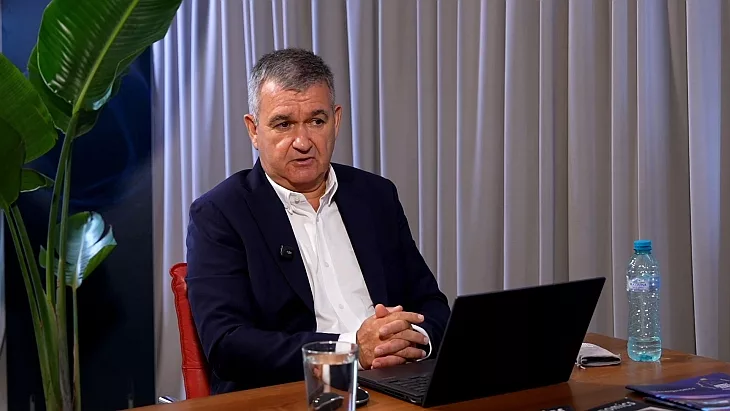
The energy bill does not reflect only the cost of the electricity purchased by the supplier, but brings together several components calculated according to different rules. “The final energy price [is] made up of the price of energy as a commodity, the grid cost and then all the taxes,” explains Valeriu Binig, Chairman of the Board of Directors of Eximprod Engineering, in an edition of Energynomics Talks. For consumers, the supplier is the most visible actor because it issues the bill, but the amount paid includes costs originating across the entire market and from the infrastructure required to deliver electricity to the point of consumption.
Binig believes that the public debate focuses too much on suppliers and too little on how the other components are formed. “We are constantly looking at suppliers, because they are the ones that issue our bills, but we do not break down what lies behind them and where the costs come from,” he says. A proper analysis needs to separate electricity traded on the wholesale market from transmission and distribution tariffs, taxes, contributions and support schemes. Only after this breakdown can the areas where there is genuine scope for reducing costs be identified.
In Romania, the wholesale price is frequently influenced by fossil-fuel power plants that enter last in the merit order and set the marginal price. The cost of CO₂ emission allowances is therefore reflected in the electricity price paid even by consumers physically supplied from nuclear, hydro or renewable sources. “In Romania, the marginal producer is a fossil-fuel generator, and it incorporates the cost of a tonne of CO₂ into the marginal price,” Binig explains. Europe is examining ways to reduce the impact of the emissions trading scheme on competitiveness without losing the revenues used to modernise energy systems.
Grid costs cannot be removed from the equation either. Transelectrica and the distribution system operators need to modernise infrastructure built for a centralised system in which electricity flowed from large power plants to consumers. Today, generation is increasingly located in rural areas and at the edges of the grid, through renewable energy parks and hundreds of thousands of prosumers. Binig says he would not consider the grid component excessive in Romania and cites a Eurelectric estimate according to which, for every euro invested in generation, approximately 0.7 euros should be invested in grids.
The rapid expansion of solar and wind capacity does not, therefore, automatically and immediately result in lower bills. New power plants must be connected to the grid, their variable generation must be balanced, and the grid must be able to manage voltage, congestion and rapid changes in output. “The distance between the project stage and delivering energy to the market at a competitive price is very, very large,” was the point with which Gabriel Avăcăriței, Energynomics Editor-in-Chief, opened the conversation. Investments in generation achieve their full economic impact only if they are accompanied by grids, storage, automation and rules that enable energy to be used efficiently.
Batteries and flexible consumption can reduce some of these costs. Storage makes it possible to use solar energy after sunset, reduce imbalance penalties and combine wind and photovoltaic generation behind the same grid connection point. For households and prosumers, smart meters and dynamic tariffs can create incentives to shift consumption to periods when electricity is abundant and cheaper. Active participation, however, also comes with responsibilities: “The moment you also want to enter the market and trade your product, from that moment you are part of the national power system, and this system […] operates on the basis of discipline.”
The ultimate test of the energy transition remains the outcome experienced by the economy and society. The public does not assess the system by the number of MW installed, but by security of supply and the value of the energy bill. Ongoing investments can improve both dimensions, but only if Romania addresses generation, grids, storage, taxation and consumption together. Before assigning responsibility to a single actor, the bill needs to be broken down into its components and the mechanism that determines each cost needs to be analysed.
About Schneider Electric
Schneider Electric creates impact by maximising the value of energy and resources, connecting progress with sustainability. We are a global leader in electrification, automation and digitalization, providing AI-driven IoT solutions for smart industries, infrastructure, data centres and buildings.
With 150,000 employees in over 100 countries we promote diversity and innovation. Schneider Electric România, with 27 years in business and more than 300 employees, runs operations in Armenia and Moldova and provides support in 17 languages for 26 countries through the Bucharest Hub.