

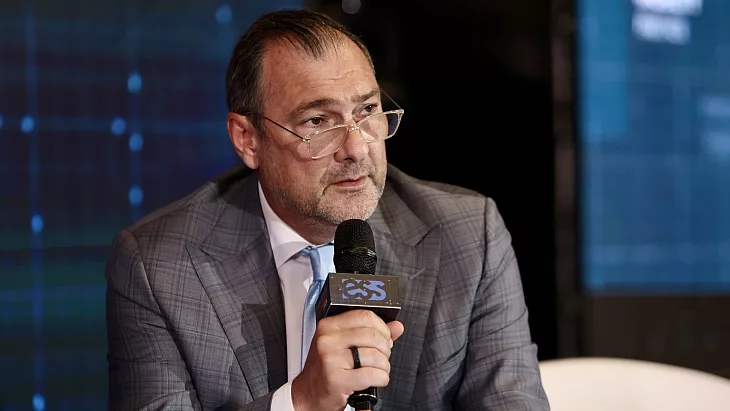
The European energy sector is undergoing a sweeping transformation, driven by emerging technologies and ambitious climate goals, but the pace of implementation and the regulatory framework remain major challenges, said Daniel Apostol, General Director of the Energy Employers’ Federation – FPE, at the Energy Strategy Summit 2026, organized by Energynomics.
“All of these technologies are ambitious and are intended to move humanity toward a new stage of development,” Apostol said.
He emphasized that the energy transition encompasses a broad portfolio of technologies, ranging from hydrogen, geothermal, and biofuels to photovoltaics, offshore wind, and carbon capture and storage, all of which are intended to reposition the European economy into a new phase of development. In this context, the Energy Employers’ Federation has redefined its mission to include all emerging energy technologies and to foster dialogue between industry and government. Apostol explained that the organization acts as an “ambassador for the industry,” facilitating communication between the private sector and government institutions and contributing to the development of public policies and strategic documents regarding the energy transition – a transition that shifts the energy paradigm from the “gas-to-power” model to a “power-to-X” ecosystem, in which energy can be produced and utilized in multiple forms and integrated technological chains.
Building on an idea previously promoted by Dan Stratan, CEO and founder of the RCI Holding Group, Apostol emphasized the importance of dialogue between industry and authorities, including through European “sandbox” mechanisms, which allow for the testing of innovative solutions in partnership with regulatory bodies. In his view, Romania and Europe have specialists and administrative structures capable of understanding the ongoing transformations, but the legislative framework must be continuously updated to support investment.
“The state must be an active partner in the development of the energy sector, not just a regulator,” Apostol said.
He also drew attention to the risk of institutional bottlenecks caused by periods of political instability, which can slow down the implementation of strategic energy projects. According to Apostol, carbon capture and storage (CCS) technology is essential for the natural gas industry to comply with new European regulations, including the Net Zero Industry Act. However, implementing this technology poses significant challenges, including uncertainties regarding the actual capacity of Romania’s geological formations to store CO2 on an industrial scale.
“The decision was made before we had complete certainty regarding storage capacity. It is a major challenge for the industry,” emphasized Daniel Apostol.
Energy Strategy Summit 2026 was organised by Energynomics, with the support of our partners: Elektra Renewable Support, 4P Renewables, ABB, Alive Capital, Atmoce, Baringa, BCR, Big Store, Capalo AI, CBRE Romania, Distribuție Energie Electrică România, Eastship, Distributie Oltenia parte din Evryo, Eaton Electric, Electrica Furnizare, Electroalfa, Electroprecizia, EnergoBit, Enery, Enexus, Eurowind, Evryo, Exim Banca Romaneasca, Hagag Energy, KStar, LONGi, MBK Power Energy, MET Romania Energy, Monsson Trading, Nextpower, OX2, Romgaz, Schraubram, Sigenergy, Softenerg WEBUS 4 ENERGY, Solar Today, Sunotec, TBEA, Think Blu Solution, Transelectrica, Waldevar Energy, WTW Romania. Coffee Break Partner Enerta. Lanyard Partner Monsson Operation. Beverage Partners Aqua Carpatica, Alexandrion. Digital Partner Imsol. Mobility Partner BlackCab.