

Daniel Pintilie, energy strategist and entrepreneur
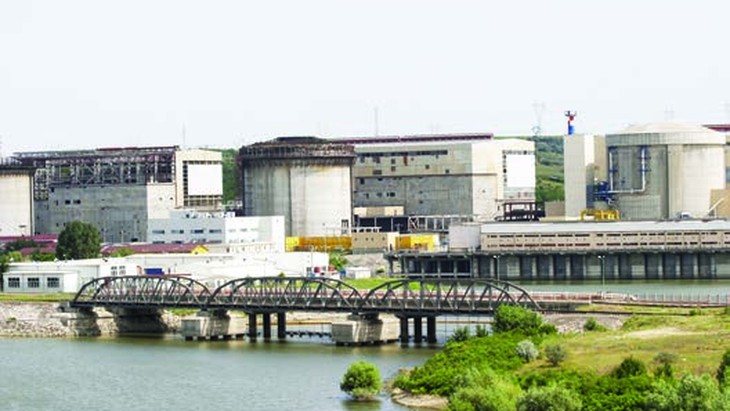
On August 13, 2026, at 10:53, Unit 2 at Cernavodă was taken offline in a controlled manner and disconnected from the National Energy System, according to the Ministry of Energy. Unit 1 had already been shut down on the morning of July 28, amid extremely low Danube water levels. For the first time in the plant’s history, Romania was left without either reactor operating because of drought, in the middle of a heat wave. It was not a breakdown, an operating error or a nuclear incident. It was a problem related to the water level. We often talk about the energy transition in the conditional: what do we do if drought comes, if the wind stops, and the sun disappears exactly when consumption reaches its maximum? In August 2026, the question became reality. The difficult day had a date, time and consequences. The lesson is simple: the value of an energy system lies not in the installed megawatts, but in the energy it can deliver when the pressure is at its maximum.
WHAT DIDN’T WORK, IN FACT As a rule, production is divided into variable sources – solar and wind – and dispatchable sources, such as nuclear and hydropower. The August crisis, however, shows the limit of this classification. Nuclear may be dispatchable, but it was not available when the level of the Danube prevented the cooling of the reactors. Hydropower, in turn, is flexible, but its production decreases during periods of drought. In extreme hydrological conditions, both depend on the same resource: water. The important distinction is not between renewable energy and conventional energy, but between installed capacity and the energy available exactly when the system is under pressure and needs it most. The contribution to the adequacy of the system of a 700 MW nuclear reactor that cannot operate due to lack of cooling water is at that moment as small as that of a photovoltaic park after sunset: zero. Romania does not just need more production. It needs a system prepared for the hours when supply decreases, consumption remains high, and emergency solutions become very expensive.
8:00 PM IS MORE IMPORTANT THAN LUNCH On a hot day, photovoltaic production can very well support the energy system at lunch. The problem arises in the evening. Between 7:00 PM and 11:00 PM, solar energy decreases rapidly, while demand can remain high due to space cooling, commercial activity, and industrial consumption. If the wind is weak, if hydropower is limited, and if one or more conventional capacities are not available, the pressure is transferred almost entirely to imports, storage, and flexible capacities. For the evening peak of August 13, the Ministry of Energy estimated an import requirement of a maximum of 2,300 MW, specifying that the value was within the limits of available commercial capacities. This is not a minor detail. Compared to a cross-border import capacity of approximately 4,000 MW, this means about 57% of the country’s interconnection, committed to cover a single consumption window. The price explains the urgency. The weighted average of the Day-Ahead Market was 636.46 lei/MWh in July 2026, after 694.48 lei in June and 565.05 lei in May, according to OPCOM. The day of August 13 traded at an average of 857 lei/MWh, 18.6% above the previous day, and the evening peak reached almost 500 euros/MWh. The absolute market record remains June 30, 2026, when between 19:00 and 19:15 energy traded at 5,321 lei/MWh, the equivalent of 1,015 euros/MWh. And on August 5, the price varied between approximately 237 and 2,123 lei/MWh during the same day. These episodes show where security of supply is actually decided. Not in annual averages, not in capacity objectives for 2030, nor in the number of announced projects. It is decided in the short intervals in which the flexible generation offer is insufficient.
BATTERY ARITHMETIC, ALL THE WAY Storage is the obvious answer. But the answer must be calculated mathematically, not just invoked in general terms. On August 1, 2026, Romania had storage facilities with a total power of 989.3 MW and an energy capacity of 1,974.7 MWh, according to Transelectrica. In just four months, the storage capacity has almost doubled: on April 1, the system had 599 MW and about 1,130 MWh. If the critical interval lasts four hours, the current capacity would theoretically allow a constant delivery of about 494 MW. In practice, the level is lower: it assumes that all batteries are fully charged at 7:00 p.m. and ignores the energy lost in the charging, storage and discharging process. At a total efficiency of 90%, the actual delivery would be about 444 MW.
Compared to an import requirement of 2,300 MW on a difficult evening, it results that the existing fleet could have covered about 21% of the deficit. It is an important contribution, but by no means a complete solution.
The scheme approved on 6 March 2026, with a value of €150 million and a target of at least 2,174 MWh of new storage, is needed. Added to the existing base, it would bring the system to around 4,150 MWh, or around 1,040 MW delivered consistently over four hours, about 45% of the deficit on an August evening. But the scheme gives investors 48 months from the time the aid is granted to get it up and running, and the call for projects is scheduled to open on 1 September and close on 30 October 2026. Those 2,174 MWh will not be in the system in the critical season of 2027 and, with a high probability, not in 2028 either.
This is the conclusion that needs to be made clear: storage is not enough just because it exists. It matters how much storage we have, how long it can deliver, where it is located, when it actually comes into operation and after what type of economic signal it operates.
A battery designed for two hours can meet a certain part of the evening peak. If the deficit continues for four or five hours, it stops before the system leaves the critical zone. The duration of storage is not just a technical detail but becomes an energy security choice.
The first is the minimum discharge duration. The battery financing scheme requires a minimum power of 1 MW and a ratio of at least 2:1 between capacity and power, that is, two hours of operation at the installed power. It is a step forward, but it does not automatically reflect the real duration of the deficit on the most difficult days. The support criteria must be correlated with the risk profile of the National Energy System, not just with easily achievable technical thresholds.
The second issue is the relationship between storage and hybrid projects. Exclusive financing of autonomous batteries legitimately aims to avoid double subsidization and encourage their operation in the market. But hybrid projects can use existing infrastructure more efficiently and reduce pressure on new connections. In a country where grid access remains a major constraint, their exclusion from certain support instruments is worth re-examining in terms of the value they bring to the system. The third is location. A battery located in a congested node can absorb energy that would otherwise be limited and can reduce pressure on the grid. A battery located in an area without constraints can be profitable, but may have a lower systemic value. However, the allocation is made on the basis of the aid requested, capped at 69,000 euros per MWh installed, without any geographical weighting. If the selection is made exclusively on the basis of the lowest aid requested per MWh installed, capital will naturally go to the simplest and cheapest projects, not necessarily to the most useful for the system. Not every MWh of storage is worth the same.
WHO PAYS FOR AVAILABILITY? This is the question that the Romanian market must resolve. Romania is caught between two real pressures: the need to decarbonize and the obligation to maintain sufficient capacity available during critical hours. The gradual withdrawal of coal-fi red power plants is necessary, but it reduces the capacity reserve at a time when alternative flexibility is not yet sufficiently mature. An asset that produces little in a year, but can operate on an August evening with limited hydropower, unavailable nuclear and strained imports, has a value that the energy market, alone, does not always remunerate fairly. This could mean batteries, pumped hydro, flexible gas capacities, demand response or aggregation of distributed resources. Technology should not be chosen politically. What should be remunerated is verifiable availability during the hours when the system needs it. If we pay exclusively for the energy produced, we will systematically undervalue the capacity that protects consumers during times of stress. And the same debate about unscheduled shutdowns, exemptions and emergency imports will resurface during each difficult hydrological period.
SOMETIMES, THE MOST EXPENSIVE PROBLEM IS A POSTPONED INVESTMENT The Cernavoda crisis also highlights a less discussed problem: the delay of infrastructure projects that directly reduce system risk. The BALA II project, intended to improve water supply on the route relevant to Cernavoda, had the technical and economic indicators approved by the Government in 2024 and an environmental permit, but it did not have an execution contract: two public procurement procedures were canceled, and the design and execution contract was not signed. After the reactors were shut down, the Government announced the establishment of an interministerial committee to unblock the project, financing from the state budget and an estimated deadline of approximately three years for completion.
The lesson is an uncomfortable one. An investment of over a billion lei, approved in 2024 and not started in 2026, can protect a nuclear capacity of about 1,400 MW and would raise the level on the Old Danube by over a meter, almost doubling the flow. The cost of the postponement is already being paid, through expensive imports, force majeure invoked in energy supply contracts and three additional years of exposure to a similar risk.
Sometimes, the most expensive hours of the year are produced by decisions that were not taken in time.
First, adequacy planning must start from adverse hydrological scenarios, not just historical averages. Drought can no longer be treated as an exception in a system where water simultaneously conditions hydropower and the cooling of nuclear capacities.
Second, support for storage and rules on network access must more clearly include the value given to location. Investments should be directed to areas where batteries reduce grid congestion, help balance the system, and create space for new projects with real economic value.
Third, Romania needs to determine who and how pays for security of supply: the guarantee that energy remains available on an August evening, between 7:00 p.m. and 11:00 p.m., when the Danube is at critical levels, solar production has declined, and the regional market is under pressure.
On August 13, the system held up. It held up through a combination of alternative energy sources, imports, and operational interventions. At 3:00 p.m., photovoltaic production was 2,673 MW, covering more than half of the 4,583 MW of consumption at that time, according to Transelectrica real-time data.
But the ability to overcome a one-time crisis cannot replace a solid energy policy.
The day when green energy alone did not cover the needs of the system is not an argument against the energy transition. However, it should become the decisive argument for a planned transition not for the ideal scenario, but for the reality in which the system must operate.
_____________________________________________
The analysis also appeared in the print edition of Energynomics Magazine, Q3 2026 issue.
In order to receive the printed or electronic issue of Energynomics Magazine, we encourage you to write us at office [at] energynomics.ro to include you in our distribution list. All previous editions are available HERE.