

Zsuzsa Bereschi, Energy and Sustainability Director of EY Romania
Sustainable aviation fuels (SAF) are no longer a niche innovation, they are becoming the cornerstone of aviation decarbonization. The EU’s ReFuelEU Aviation regulation mandates a gradual increase from 2% SAF in 2025 to 70% by 2050, fundamentally reshaping fuel markets and forcing rapid industrial transformation. Our latest EY analysis (2025) shows SAF could contribute up to 65% of aviation’s emissions reduction pathway toward net zero. For Romania, this transition is not only a compliance challenge, but a strategic opportunity for both aviation stakeholders and oil & gas players.
At its core, SAF is a “drop-in” fuel, meaning it can be blended with conventional kerosene and used in existing aircraft and infrastructure.
Two main categories define the technology landscape:
- Bio-SAF: produced from waste oils, agricultural residues, or biomass (e.g., HEFA, ATJ, FT routes)
- E-SAF (Power-to-Liquid): produced from renewable electricity, hydrogen, and captured CO2.
Currently, SAF can be blended up to 50% with conventional fuel. For Romania, this taxonomy directly influences feedstock strategy (biomass availability vs electrification potential) and refinery adaptation pathways (co-processing vs greenfield E-SAF).
What is the impact on Romanian customer readiness, where the market is regulation-driven, but financially constrained (airline companies, airports)?
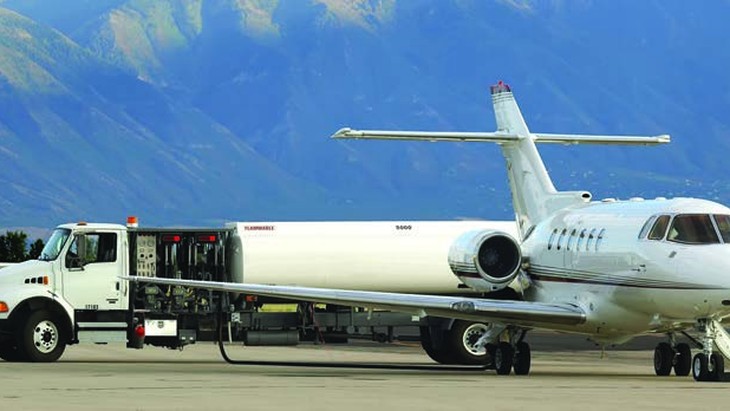
For Romanian airlines SAF demand is primarily regulation-driven and constrained by cost, with SAF priced up to six times higher than kerosene on a global level. This means that Romanian airlines operate with thin margins and limited ability to absorb the green premium. In turn for oil & gas companies / SAF producers this means that adoption will remain compliance-led rather than voluntary. Purchasing behaviour on the short-term is expected to be quota driven and with a focus on minimizing costs, whereas on the medium-term we may see long-term off take agreements (if financing allows). Globally, airlines increasingly sign multi-year SAF supply contracts to secure volume and price visibility. Romanian airlines are likely to follow, but with slower uptake due to weaker balance sheets. On the other hand, Romanian airports are technically ready and operationally evolving to implement ReFuelEU Aviation obligations. From an infrastructure perspective Romanian airports are comparatively advantaged, since SAF blends are fully compatible with existing fueling systems and no fundamental redesign of hydrants, tanks or refueling systems is required. However, it is necessary that airports plan effectively, efficiently and in due time for blending, storage, and traceability systems, since these will require incremental investments. The challenge is that airports are generally not the primary investors, creating coordination gaps in SAF deployment. For example, there could be misalignments between fuel suppliers and airports: fuel suppliers are obliged to deliver SAF volumes (under ReFuelEU) but airports do not own or control the entire fuel infrastructure. A coordination gap is when it’s not clear who invests in SAF storage tanks, blending systems, certification labs. Airports often expect fuel suppliers or operators to invest, whereas suppliers expect infrastructure readiness at airports, if they covered investments and risks related to production and potentially price premium. The result of this could be delays in physical rollout despite regulatory demand for SAF. Another example of misalignment could be between airlines and fuel suppliers, related to airlines’ high price-sensitivity due to the green premium. Airlines demand reliable supply and long-term price visibility, while fuel producers need long-term contracts to justify capex. Romanian airlines (and many smaller EU carriers) have limited ability to sign long-term off take agreements and this results in insufficient bankability and delayed investment decisions. Coordination gaps may also occur along the fuel logistics chain, decisions are needed on where blending occurs (refinery vs airport), who owns inventory, how sustainability is accounted (mass balance vs. book-and-claim).
In conclusion, SAF deployment is less constrained by technology than by coordination: fragmented responsibilities between fuel suppliers, airports and airlines create investment deadlocks, particularly in smaller markets such as Romania.
COMPATIBILITY OF ROMANIAN ASSETS: A STRONG STARTING POSITION
Co-processing in existing refineries is a critical early scaling solution. This allows SAF production using existing hydro processing units, lower capex vs. greenfield plants and faster market entry. Romanian refineries are upgrading incrementally and hydrogen integration becomes a key enabler.
One of the most important, and often underestimated, advantages of SAF is its logistics compatibility, existing fuel supply chains (pipelines, trucks, terminals) can be reused. SAF can be transported via pipelines (for certified blends) and rail, truck, ship, and storage systems are broadly identical to kerosene. Moreover, mass balance and book-and claim systems allow decoupling physical flow from sustainability accounting.
For Romania current fossil infrastructure is not a barrier, it is an asset, however, a key gap is scaling storage capacity and SAF certification processes to capture market opportunities.
There are a number of trends we have seen globally and in Western Europe:
- Long-term offtake agreements – they are critical for Romanian market development.
- Dual-track production strategy, with co-processing on the short-term and dedicated SAF plants on the medium-term.
Book-and-claim systems are particularly relevant for smaller markets like Romania.
Public-private financing ecosystems. SAF scaling requires $1–1.45 trillion globally by 2050, and Western Europe leverages EU Innovation Fund, ETS revenues and green finance. Romania must actively mobilize EU funding rather than wait for market dynamics. SAF represents one of the clearest industrial transformation pathways for the sector. Key opportunity areas lay in refinery optimization, feedstock aggregation, integration with hydrogen economy, regional export positioning, as Southeast Europe expected to remain supply-constrained and access to green capital, as SAF is classified as taxonomy-aligned activity. The key bottleneck is not technical feasibility, but cost competitiveness, bio-SAF is ~$2.7/kg today and E-SAF ~$4.9/kg expected to be declining over time. This creates a structural “green premium”, which airlines struggle to pass on to passengers, therefore it requires regulatory and financial support. Romania will not become a SAF leader by default, it must actively position itself. For oil & gas companies, SAF represents not just compliance, but a route to asset repurposing, a new growth market and a bridge into the hydrogen economy. The next 3-5 years will determine whether Romania becomes a regional SAF hub, or a structural importer of decarbonization solutions. The direction depends on decisions taken today, by industry, regulators and investors alike.
_____________________________________________
The interview also appeared in the print edition of Energynomics Magazine, Q3 2026 issue.
In order to receive the printed or electronic issue of Energynomics Magazine, we encourage you to write us at office [at] energynomics.ro to include you in our distribution list. All previous editions are available HERE.