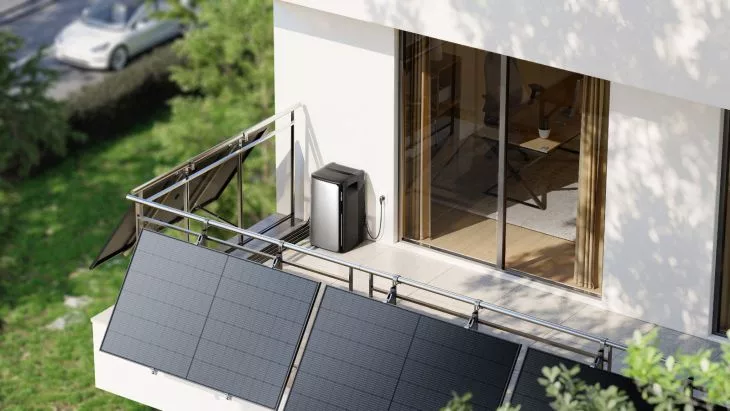
Romania has surpassed the threshold of 330,000 prosumers, with a production capacity of over 3,800 MW, being currently the second – intermittent – energy producer in Romania, with the second largest installed energy capacity. In parallel, the storage capacity installed in batteries at prosumers has exceeded 800 MW, a power comparable to the instantaneous need of Bucharest in certain periods. The potential for expanding distributed storage remains considerable, however, given that approximately 200,000 prosumers do not yet have batteries, say E-Acumulatori.ro officials.
Equipping them with 15 kWh storage systems would add a distributed capacity of about 3 GWh, capable of taking over part of the photovoltaic surplus produced during peak hours. Using differentiated tariffs by hourly intervals, this capacity would allow the shift of consumption and stored energy to the intervals in which the system needs it most, contributing to reducing pressure on the network and balancing costs.
With a market of over 400,000 prosumers, expected at the end of the year, the volume could exceed 4 GWh.
The proposed multi-annual program “A battery for everyone” could accelerate the installation of storage systems and, subsequently, their voluntary integration into virtual power plants, capable of contributing to the flexibility and stability of the National Energy System.
“This evolution shows that the market is starting to move from a model based exclusively on photovoltaic production to one in which production is complemented by storage and intelligent energy management. We expect investments in this segment to accelerate with the launch of the support scheme for stand-alone storage systems, financed by the Modernization Fund. In the case of prosumers, batteries allow for increased self-consumption by storing part of the energy produced during the day for the intervals in which the household needs it. On a national scale, however, distributed storage could acquire a much more important role,” said Dan Tudose, specialist in renewable energy solutions and founder of E-Acumulatori.ro.
“A battery for everyone” – a multi-annual national program for prosumers
In this new energy context, Romania can launch “A battery for everyone”, an energy program intended for both new beneficiaries of photovoltaic programs and prosumers who already own energy production systems.
“The experience of European countries shows that the future of energy systems involves a combination of renewable production, storage, digitalization and smart consumption. In several European countries, solutions are being developed through which the flexibility of consumers and storage systems contributes to energy security and to reducing pressure on the networks. Romania has all the premises for developing a similar model”, explained Dan Tudose.
The “A Battery for Everyone” program could have two main components: financing new photovoltaic systems together with storage batteries and the phased financing of batteries for existing prosumers.
“The advantage is that a significant part of the infrastructure already exists. Many homes already have photovoltaic panels, and some systems are technically prepared for the integration of batteries. In other cases, the installations could be adapted following a technical assessment, by introducing compatible equipment or, where necessary, by modernizing the inverter and protection systems”, added Dan Tudose.
Who could have priority in financing batteries
Financial support should not be granted according to a single formula, but could be sized according to the characteristics of each system and the needs of the local grid. Among the proposed criteria are the power of the photovoltaic system, the annual consumption of the household, the capacity of the battery, the degree of self-consumption and the characteristics of the local electricity grid.
“Priority could be given to prosumers in areas where surges, congestion or limitations in the capacity of the grid to take over the energy produced during the day. Such an approach would allow public funds to be directed not only towards increasing the number of batteries, but also towards areas where they can produce the greatest benefits for the functioning of the energy infrastructure”, explains the specialist.
The Environment Fund and the Modernization Fund, among the possible sources of financing
Potential sources of financing for this project include the Environment Fund, the Modernization Fund – to the extent that the program rules allow -, European funds dedicated to flexibility, energy efficiency and decarbonization, as well as national energy modernization programs.
“The program should be built in stages and over a multi-year period, so that batteries are installed with priority where they produce the greatest benefits for both consumers and the electricity grid. The multi-year nature becomes all the more important in view of exceeding the threshold of 400,000 prosumers. At such a scale, distributed storage can become a relevant component of the national energy infrastructure, a viable alternative that would solve both the overloading of the national grid during peak production periods and the danger of a possible energy crisis”, explained Dan Tudose.
From a home battery to a virtual power plant – Virtual Power Plant (VPP)
One of the most important components of this proposal is the coordinated use of prosumer batteries. Currently, most residential batteries are used to increase self-consumption and to power the home in case of power outages. In the next three years, Romania could build the technical and legislative framework necessary for the voluntary use of part of these capacities and for the benefit of the National Energy System.
Batteries installed through the “A Battery for Everyone” program could be technically prepared for participation in flexibility services and, in stages, in certain network balancing mechanisms. Authorized aggregators could coordinate the charging and discharging of part of the battery capacity, based on the agreement of the owners and within contractually established limits. An essential element of the model is that the prosumer would retain control over the use of the battery. The coordination of a large number of batteries and photovoltaic installations allows the development of a virtual power plant – Virtual Power Plant (VPP). In such a system, thousands or tens of thousands of batteries, photovoltaic systems and flexible consumers are digitally coordinated and operate as a single energy resource.
A strategic opportunity for the coming years
With the help of this initiative, the state can protect and capitalize on investments made in photovoltaic panels, transforming the energy produced during the day into a resource available in the evening, during periods of high consumption or when the grid needs support.
“The next goal must be to build a smart energy system, in which each battery contributes both to reducing the owner’s bills and to the stability of the electricity grid. Transforming prosumers into active partners of the National Energy System can become one of Romania’s most important energy modernization projects in the coming years.
With coherent public policies, multi-annual financing, common technical standards and an adapted legislative framework, batteries installed in homes can become a strategic resource for flexibility, energy security and more efficient use of renewable energy”, concluded Dan Tudose.