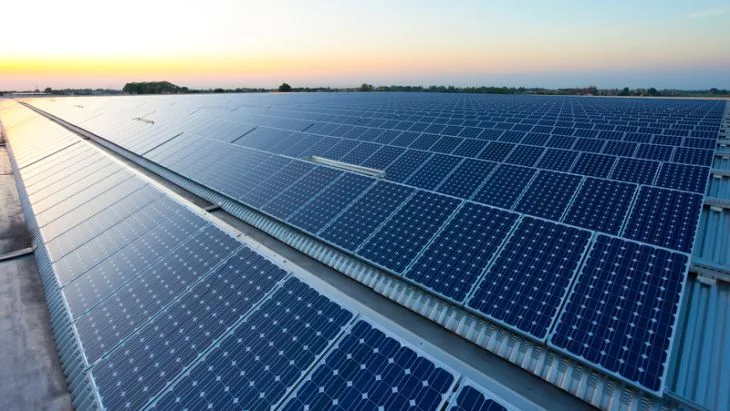
Romania registered on Tuesday, August 17, around 1:00 p.m., an instantaneous production of electricity from photovoltaic sources of 3,301 MW, thus ensuring 70% of the country’s consumption, claim PATRES officials.
On August 14, 2026, at 1:46 p.m., out of a total production of 5,651 MW, photovoltaic plants provided 3,013 MW, respectively 53.33% of Romania’s instantaneous electricity production. Over the weekend, the photovoltaic parks managed to cover more than 80% of the instantaneous electricity consumption in the middle of the day, they say.
“The data are all the more relevant as, at the time, nuclear production was zero, given the unavailability of both reactors. The situation confirms the fact that energy from renewable sources is no longer just a component of the energy transition, but an essential element of Romania’s energy security”, say PATRES representatives.
In the evening of August 13, in the context of the shutdown of Unit 2 of CNE Cernavodă, storage facilities in Romania delivered, according to available data, approximately 680 MW of active energy. In the same period, wind energy provided, in turn, a significant part of the system’s needs.
“The Employers’ Organization of Energy Producers from Renewable Sources in Romania – PATRES expresses its appreciation in particular for the sustained efforts and professionalism of the specialists within the National Energy Dispatcher, who, in this period of energy alert, have an essential role in maintaining the safe operation and stability of the National Energy System.
“At the same time, PATRES welcomes the way in which the authorities, Transelectrica and all market participants are managing this period and reaffirms its willingness to contribute, through the expertise of its members, to the identification and implementation of the necessary solutions to strengthen Romania’s energy resilience”, say the organization’s officials.
“Let’s encourage all kinds of investments, which, however, will not stand without storage. When you design a photovoltaic or wind farm, you must put storage”, is the message that PATRES has continuously sent over the last 5 years, say the association’s representatives.
The energy produced by prosumers is added to the contribution of photovoltaic plants, which is not fully reflected in the statistics on instantaneous production monitored at the level of the National Energy System. The hundreds of thousands of prosumers in Romania contribute daily to covering local consumption, through self-consumption and, where appropriate, through energy injected into the network. Thus, prosumers reduce the pressure on the networks and contribute to reducing the need for energy from other sources.
In the perspective of the coming years, the integration of storage systems both at the level of large producers and in the case of prosumers, will allow more efficient utilization of renewable energy and will bring an important increase in flexibility to the energy system.
Heatwave periods also highlight the importance of photovoltaic energy sources in the energy mix. Very high temperatures can reduce the efficiency of photovoltaic panels to a certain extent, but the long duration of the day and the high level of solar radiation allow the production of significant amounts of energy precisely in the intervals in which the demand for electricity is high.
At the same time, other renewable sources can be affected by weather conditions. Drought and reduced river flows limit hydropower production, while periods of low wind can lead to reduced wind production.
“In the opinion of PATRES, a diversified mix of solar, wind, hydro, but also biogas and biomass, complemented by modern storage capacities and smart electrical networks, represents one of the essential solutions for increasing the flexibility and resilience of the National Energy System”, PATRES representatives concluded.