

The Romanian energy market has entered a more mature stage, in which the mere existence of a substantial pipeline of renewable energy projects is no longer enough. The focus is shifting increasingly clearly towards implementation, bankability and the ability of projects to generate sufficiently stable revenue streams to support financing. In this context, “experienced sponsors, well-understood risks, solid contractual structures and sufficiently predictable cash flows are needed”, we learned from Oana Mogoi, Energy Sector Head at ING Bank Romania.
Over the past year, the Romanian market has moved from a wave of renewable energy projects under development to a stage in which more and more projects must demonstrate that they are actually bankable and are now moving into actual implementation. From ING’s perspective, what differentiates today a solar or wind project that can secure project finance from one that remains difficult to finance? How important have the PPA/CfD structure, the sponsor profile, imbalance risk, curtailment risk and grid connection conditions become?
In project finance, the starting point is always the project’s ability to generate sufficiently robust and predictable cash flows to support the financing. In Romania, this analysis must take into account the specific characteristics of the local market, where legislative volatility, market risk and unpredictability can influence the structure of a financing.
A solar or wind project becomes easier to finance when it has a solid contractual structure, an experienced sponsor, mature technical documentation and a clear allocation of risks. PPAs and contracts for difference can play an important role because they provide greater visibility over future revenues by fixing prices fully or partially.
The sponsor profile is equally important. We look at the investor’s experience, its ability to develop, build and operate similar projects, the technology suppliers, the guarantees available and the revenue structure. In project finance, there is no single template, and each project must be analysed according to its specific characteristics.
A bankable project is one that can demonstrate predictable cash flow, a solid contractual structure, an experienced sponsor and well-allocated risks. In Romania, PPAs, CfDs, grid connection conditions and the management of market risks have become essential elements in the financing discussion.
As regards imbalance risk, curtailment risk and grid connection conditions, these have become highly relevant elements in the analysis of renewable energy projects. A project with secured grid access, a clear contractual structure and prudent revenue assumptions has a stronger bankability profile than a project that depends heavily on market developments that are difficult to anticipate.
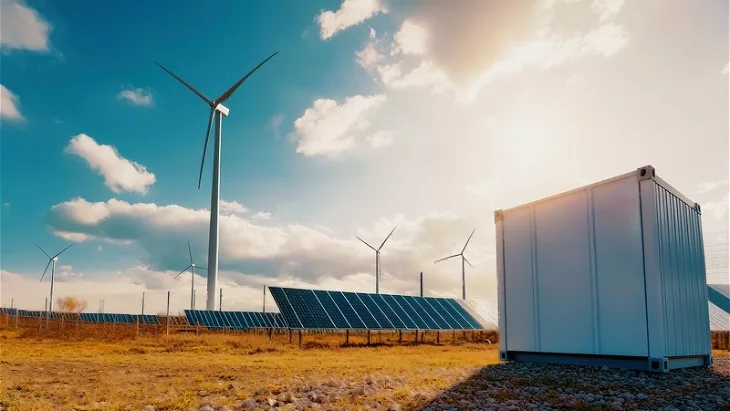
Integrating battery energy storage capacity (BESS) alongside wind and, in particular, solar projects significantly increases the value of the asset because it reduces the impact of intermittent generation, allows energy to be delivered during periods of higher prices and contributes to better integration into the power system. As a result, projects become more profitable, more predictable and more attractive to lenders and investors.
In 2025, you told Energynomics that standalone batteries were still difficult to finance in Romania without mechanisms to reduce market risk, such as tolling agreements, PPAs, CfDs or other forms of contracted revenue. Has that assessment changed in the meantime? What would today be the minimum revenue structure and risk allocation that would allow ING to finance a standalone BESS in Romania on a non-recourse basis?
Our assessment remains cautious. Batteries are very important for the energy transition, and mature markets already have financing structures for such projects. In Romania, however, financing standalone BESS projects remains more difficult, particularly when revenues are largely exposed to market risk.
For any project finance transaction, we look first and foremost at the project’s cash flow. In the case of a standalone BESS, the challenge is that revenues can come from multiple sources with different degrees of predictability. Mechanisms that reduce market risk, such as tolling agreements, PPAs, CfDs or other forms of contracted revenue, are therefore important in building a financeable structure.
For Romania, I would not yet speak of a standard structure applicable to all standalone BESS projects. The analysis depends on the contracts in place, the quality of the revenues, market and regulatory risks, the technology used and the sponsor profile.
As the number of BESS projects increases, revenues from arbitrage and system services tend to compress. From a lender’s perspective, the most bankable revenue sources are those based on long-term contracts or direct integration with existing renewable assets, while revenues from arbitrage and certain ancillary services are generally treated more conservatively because they carry a higher degree of volatility and uncertainty.
For projects that combine renewable generation with storage, does the bank look at the BESS primarily as a separate asset with its own revenue model, or as a tool that improves the bankability of the entire project? Under what conditions can a co-located battery increase the debt capacity of a solar or wind farm by reducing imbalances, limiting exposure to negative prices, optimising delivery under a PPA/CfD or accessing multiple markets?
In hybrid projects, the analysis must take into account both the contribution of each component and the way they operate together. The BESS is analysed as a merchant asset, with financing sized on conservative scenarios, limited leverage, stricter debt service coverage requirements and cash-sweep mechanisms, reflecting the bank’s prudent approach to the still volatile revenues of this technology. However, the contribution it makes to the entire project is also taken into account, for example through better management of generation, imbalances, the delivery profile and exposure to price volatility.
Our position remains cautious. BESS is an important technology for the energy transition, but for standalone projects in Romania, bankability depends on revenue predictability and the existence of mechanisms that reduce market risk, such as tolling agreements, PPAs or CfDs.
What matters is that these benefits can be demonstrated and are reflected in a prudent financial model. In project finance, we do not finance just a technology, but the project’s ability to generate sufficient and sustainable cash flows to repay the debt.
We are already seeing relevant transactions in the market for hybrid projects. One public example is the financing of Enery Ogrezeni, a project combining solar generation and battery storage, where ING Bank N.V. and its Romanian subsidiary were mentioned as part of the financing syndicate.
The debt capacity of a solar or wind farm depends on the project’s specific structure: how predictable the revenues are, what contracts are in place, how market risk is managed and how robust the business case is under prudent scenarios. In theory, the benefits provided by BESS could increase a project’s debt capacity, but this is the result of analysing the project as a whole and depends on several parameters.
One of the major difficulties in financing BESS is that revenues can come simultaneously from arbitrage, intraday/day-ahead markets, balancing, system services, optimisation or third-party contracts. How much of this “revenue stacking” is a bank actually prepared to recognise in the financing model, and which types of revenue do you consider sufficiently predictable for debt service calculations?
Revenue stacking is one of the most complex components in the analysis of a BESS project. Revenues can come from several sources, but they do not all have the same degree of predictability and cannot all be treated in the same way in a financing model.
For a bank, the difference lies in the quality of the revenues. Contracted revenues or revenues supported by mechanisms that reduce market risk provide greater visibility than purely merchant revenues. Tolling agreements, PPAs, CfDs or other forms of contracted revenue can therefore contribute to a more robust financing structure.
At the same time, the system services market is complex and requires specialised due diligence. For such projects, the analysis must cover not only the technology, but also the market logic, revenue liquidity, the regulatory framework and the project’s resilience under conservative scenarios.
There is no standard formula for revenue stacking. In the case of BESS, we look at the quality of the revenues. The more predictable they are and the better they are supported contractually, the more comfort they can provide in a financing structure. Purely merchant revenues are analysed more cautiously.
There is no standard percentage that we can apply to all projects. The share of revenues recognised in the model depends on the source of the revenues, their predictability, the duration of the contracts, the counterparties involved and the stress scenarios used in the analysis, as well as the recommendations in the Due Diligence reports.
A bank will be cautious about both arbitrage and system services, but saturation risk is generally higher in ancillary services markets. In the long term, revenues from system services are more exposed to compression than arbitrage revenues because the ancillary services market is limited by the system operator’s requirements. By contrast, as the share of renewable energy grows, the need for flexibility and intraday price differentials will continue to support arbitrage opportunities for storage assets.
Beyond generation and storage, where does ING see the greatest need and the greatest financing potential in energy efficiency? Is there appetite for projects aimed at industrial and commercial consumers, including process modernisation, electrification, self-generation, cogeneration, energy management, flexibility or consumption reduction, and what size or structure do such investments need in order to become attractive financing products for the bank?
Energy efficiency is an important component of the energy transition and forms part of ING’s Energy expertise in Romania. In the large corporate segment, ING covers areas such as electricity, energy efficiency, oil and natural gas and utilities, offering project finance, working capital and investment project financing, factoring, supply chain financing, payments, liquidity management and risk management solutions.
We see potential in projects that help industrial and commercial companies reduce their consumption, improve operational efficiency and support their transition towards more sustainable business models. These may include investments in process modernisation, electrification, self-generation, cogeneration, energy management or solutions that bring greater flexibility to consumption.
At local level, ING Romania mobilised more than 810 million euros for projects supporting the transition to a low-carbon economy in the first half of 2026.
Energy efficiency is an important component of the transition for companies. We look at projects that have a solid economic rationale, can generate measurable benefits and support lower consumption or greater operational efficiency.
For such investments to be attractive from a financing perspective, it is important to have a solid economic rationale, measurable benefits and a clear financial model. There is no single size applicable to all projects. The analysis depends on the company, the type of investment, the savings generated and the project’s ability to support repayment of the financing.
Romania remains an attractive market for renewable energy investment, but the maturation of the market is also bringing greater discipline to project structuring. For financing, it is not enough for a project to be relevant from a technology perspective. Experienced sponsors, well-understood risks, solid contractual structures and sufficiently predictable cash flows are needed. ING continues to support projects that contribute to the energy transition and sustainability objectives, both in Romania and internationally.
About Schneider Electric
Schneider Electric creates impact by maximising the value of energy and resources, connecting progress with sustainability. We are a global leader in electrification, automation and digitalization, providing AI-driven IoT solutions for smart industries, infrastructure, data centres and buildings.
With 150,000 employees in over 100 countries we promote diversity and innovation. Schneider Electric România, with 27 years in business and more than 300 employees, runs operations in Armenia and Moldova and provides support in 17 languages for 26 countries through the Bucharest Hub.
