

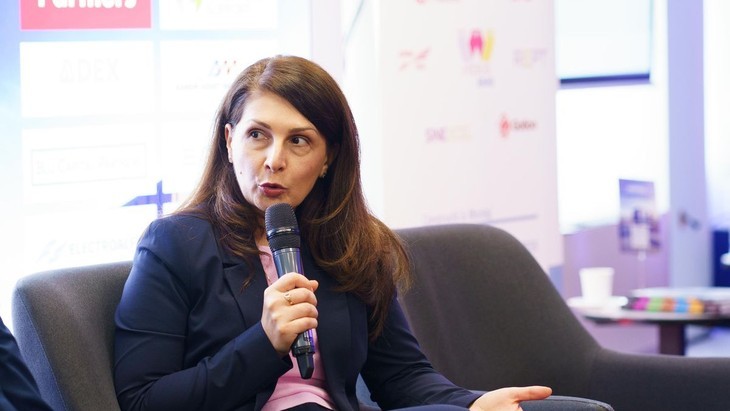
For the owner of a battery storage project, the first decision is the commercial plan, not the equipment: how the system will be operated and how it will earn money determines the engineering, said Mihaela Coroiu, Chief Commercial Officer and Executive Board Member at Electroalfa, at Romanian BESS on the Fast Track, a workshop organised by Energynomics.
“The decision is not on the equipment side, it is on the commercial plan. And the commercial plan, how you will operate and how you will earn money with such a project, will get to the engineering phase,” Coroiu said.
The plan then shapes the technical choices: the features of the storage system and those of the energy management system (EMS), and how the two will work together over the next two to five years. Owners also have to decide whether they intend to operate the project for seven years, ten years or longer. “In the very early engineering phase we should think about the total cost of operating, how upgrades will be made if they are necessary,” she said.
Revenue, not the lowest capex
The early stage of the Romanian market allowed developers to earn in one particular way, Coroiu said, but the market is moving towards more flexibility and different kinds of revenue. “It’s not only about energy arbitrage, because there was a moment for such an approach,” she said.
Balancing and ancillary services have to be part of the plan, in a mix that changes between summer and winter. This calls for an integrated solution, with all the equipment and technologies required to operate the battery storage system as planned.
Total cost of operation matters most to the party that will run the system, less to the developer or the financier. “The decision is not optimizing capex, but optimizing the way you will generate revenues with the project,” Coroiu said.
From manufacturer to EPC contractor to owner
Electroalfa has produced electrical equipment in Romania for 35 years and is steering its factories towards more complex energy systems. The company added engineering, procurement and construction (EPC) capabilities, including for projects with storage, and more recently became the owner of a BESS project.
It chose to buy a ready-to-build project and adapt it through engineering to current market conditions, a riskier route that the company believes it can control internally. “From scratch means that you have to have good land rights and good grid connection conditions, which is difficult and maybe impossible in certain circumstances,” she said. “It’s about time to market, time to energize.”
With the grid connection reserved and the land secured, the company can optimize the commercial model and turn it into a technical solution. A solid project also keeps the options open: Electroalfa can operate it or transfer it to another owner.
Vertical integration is a strategy, not an accident, Coroiu said. Electroalfa wants to cover every phase of an energy project, from early design to operation and services, which gives the client more added value and the company more control over quality and risk.
Romanian BESS on the Fast Track was organised by Energynomics, with the support of our partners: Elektra Renewable Support, ADEX Energy, Adrem Asset Management, BLU Capital, Dongfang Electric, Electroalfa, Enery, Enexus, Gotion, ING Bank, Marsh Romania, Softenerg WEBUS 4 ENERGY.