

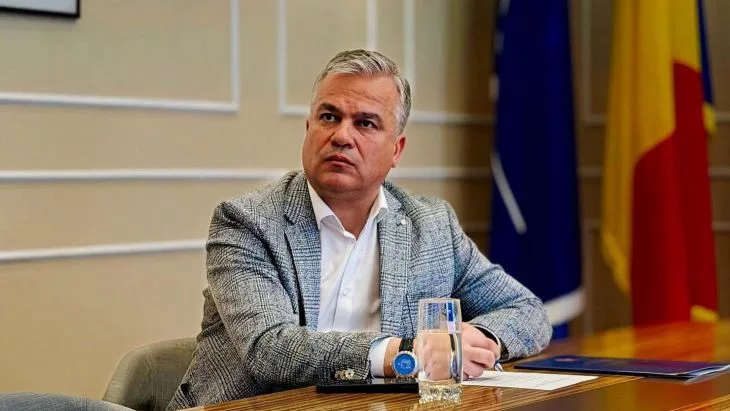
Energy companies’ profits will be distributed to an energy investment fund and the current legislation requiring state-owned companies to issue annual dividends will be repealed, according to the government program proposed by Prime Minister-designate Adrian Veștea.
According to the cited source, the Ministry of Energy, in collaboration with other government institutions, will initiate and propose a series of broad measures and reforms, aimed at transforming Romania’s energy sector, stabilizing prices, combating inefficiencies and ensuring long-term energy security.
“These reforms target multiple aspects of the sector, from restructuring state-owned companies to modernizing infrastructure and promoting new technologies,” the document states.
Thus, regarding the restructuring and optimization of subordinate companies and institutions, the Ministry of Energy has initiated a broad plan to reorganize its portfolio of companies.
Cost and management optimization will continue and unspecified hiring will be stopped.
Strategic mergers and reorganizations are also planned, such as Electrocentrale grup with Electrocentrale București (ELCEN) or the Institute of Research and Engineering for Lignite Mines with the Oltenia Energy Complex, according to Agerpres.
According to the government program, an efficiency analysis will be carried out for each central authority and state-owned company, to support the proposals for abolition/efficiency improvement, and the reform of corporate governance will continue, ensuring the professionalization and independence of the management of state-owned companies, in accordance with the guidelines of the Organization for Economic Cooperation and Development, and implementing a dashboard with performance indicators.
“This includes open recruitment of management, without politicization, and the introduction of performance contracts. The aim is to reduce the number of board members and eliminate politicized positions,” the quoted source states.
Another objective set out in the proposed prime minister’s program is to continue reducing waste, by introducing spending regulations, implementing a performance indicator dashboard, annual evaluation of executive and non-executive members, and using all the prerogatives of the supervisory authority to dismiss members who do not achieve their performance indicators. Vacation bonuses and other unjustified benefits will be eliminated, and the reduction of spending on goods and services (except for investments) will be pursued.
The Ministry of Energy manages entities in difficulty, such as the National Coal Company – S.A. Petroșani (bankruptcy), RADET (bankruptcy) and the Oltenia Energy Complex (restructuring plan). In this regard, the document provides for the renegotiation of the restructuring plan of the Oltenia Energy Complex to correlate the closure of coal-fired capacities with the construction of new natural gas, photovoltaic and storage capacities, the restructuring of Electrocentrale Craiova by completing the SF update for the new gas group, the implementation of the technical solution for switching to thermal engines and CAFs for the winter of 2026-2027 and the transfer of Electrocentrale Craiova to the local authority (Craiova City Hall).
A point act in the government program refers to increasing production capacities and diversifying the energy mix. In this regard, Romania aims to increase domestic production to reduce dependence on imports and ensure energy security.
On the nuclear energy side, the retrofitting of Unit 1 of the Cernavodă NPP and the construction of Units 3 and 4 are envisaged, the development of small modular reactors (SMRs), with the encouragement of a local industry for the supply chain, the construction of the first detritium facility in Europe at the Cernavodă NPP, transforming Romania into a European center for the production and export of tritium (investment with South Korea), disruptive financial solutions such as nuclear energy bonds, tradable energy credit systems and the formation of an international nuclear consortium.
In the oil and gas sector, the priorities are the valorization of the gas fields in Neptun Deep and Caragele to double gas production starting with 2027 and the construction/completion of new natural gas power plants (for example: Ișalnița – 850 MW, Turceni – 475 MW, Iernut – 430 MW, Midia – 80 MW and Mintia – 1734 MW).
In the renewable energy (wind and solar) chapter, the installation of over 5,000 MW of wind and solar and 3,000 MWh of storage capacity by 2027 is envisaged, supported by the PNRR and FM, the development of offshore wind energy and the definition of concession perimeters, the construction of photovoltaic parks and storage on available land within the perimeter of former mining units, the financing of investments in the entire production chain of batteries, cells and photovoltaic panels, the identification of sources for financing lithium and neodymium mining for the development of a national battery and wind turbine production industry.
Regarding hydroelectric energy, the objectives aim to complete halted or delayed hydropower investments (for example: AHE Jiu, Răstolița, Cerna Belareca, Olt, Câineni, Racovița, Lotrioara, Surduc-Siriu, Pașcani) and to build and complete pumped storage hydropower plants (CHEAP) in areas with potential.
Regarding coal energy, BAT (Best Available Techniques) and CCS (Carbon Capture and Storage) technologies will be implemented in the coal mining industry and in energy production, with stimulating tax deductions (these include the capture and storage of CO2 directly in mines, the production of hydrogen from coal with CCS and the extraction of critical minerals from coal), coal-fired power plants will be modernized to operate hybridly with biomass, hydrogen and solar energy, and some lignite mines and coal-fired power plants will be preserved to constitute a capacity reserve in exceptional situations, subsidized as a public service obligation, with the source of financing secured.
The government program also provides for significant investments in the modernization and expansion of energy networks, doubling the capacity of cross-border electricity exchanges by 2030, reaching 7,000 MW through new investments in Transelectrica.
Other objectives are: the development of natural gas transport infrastructure by Transgaz (2.5 billion lei); increasing interconnections with neighboring markets and strategic interconnection with the Republic of Moldova, including the coupling of energy and natural gas markets; continuing projects for the establishment, development and expansion of natural gas networks, approved or announced in various contracting or construction phases through the “Anghel Saligny” National Program; modernizing centralized thermal energy supply systems (SACET) in
major cities (e.g. Bucharest, Craiova, Constanța, Arad, Râmnicu Vâlcea).
On the other hand, the Ministry of Energy aims for a transparent and competitive market, with fair prices and consumer protection. To this end, mechanisms will be developed so that consumers understand how tariffs are calculated and are protected from abuses, competition will be stimulated by implementing the market maker mechanism, a reform of cost components will be carried out, with proposals to lower the final price of electricity by reforming structural components (for example: implementing the binomial tariff for distribution activity, single purchaser for CPT).
At the same time, regulations that require energy companies to provide high-quality services, with transparent billing and rapid complaint resolution mechanisms will be strengthened, investments in storage for prosumers will be prioritized, and the legislation and subsequent normative acts in force regarding the production of renewable energy will be adapted, so that local authorities that own photovoltaic power plants can become prosumers and settle the surplus energy produced to vulnerable consumers.
It is also proposed to digitize the National Energy Regulatory Authority and integrate responsibilities for offshore operations. Solutions include an AI platform for regulatory prediction, long-term regulatory contracts and a public-private regulatory advisory board.
The debureaucratization, digitization and governance measures aim to digitize processes by developing automated digital platforms for authorizations (reducing time from months to days) and for strategic decision-making, with a single digital platform to be implemented for all public services, simplifying regulations by codifying the energy sector and legislative reform, and digitizing the energy infrastructure, including smart metering and migrating all data to the private government cloud.
In order to address cyber security in energy, a Cyber Security Incident Response Center in Energy (CRISCE) will be established and SOC (Security Operations Center) and CSIRT (Computer Security Incident Response Team) teams will be created at the level of national companies, and disruptive solutions such as Digital Twin for infrastructure optimization, smart materials for retrofitting, robotics for maintenance and gravitational storage in old infrastructure will be used.
An AI GIga Factory solution using nuclear energy as a source will also be implemented.