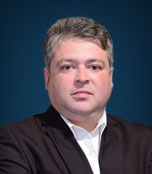
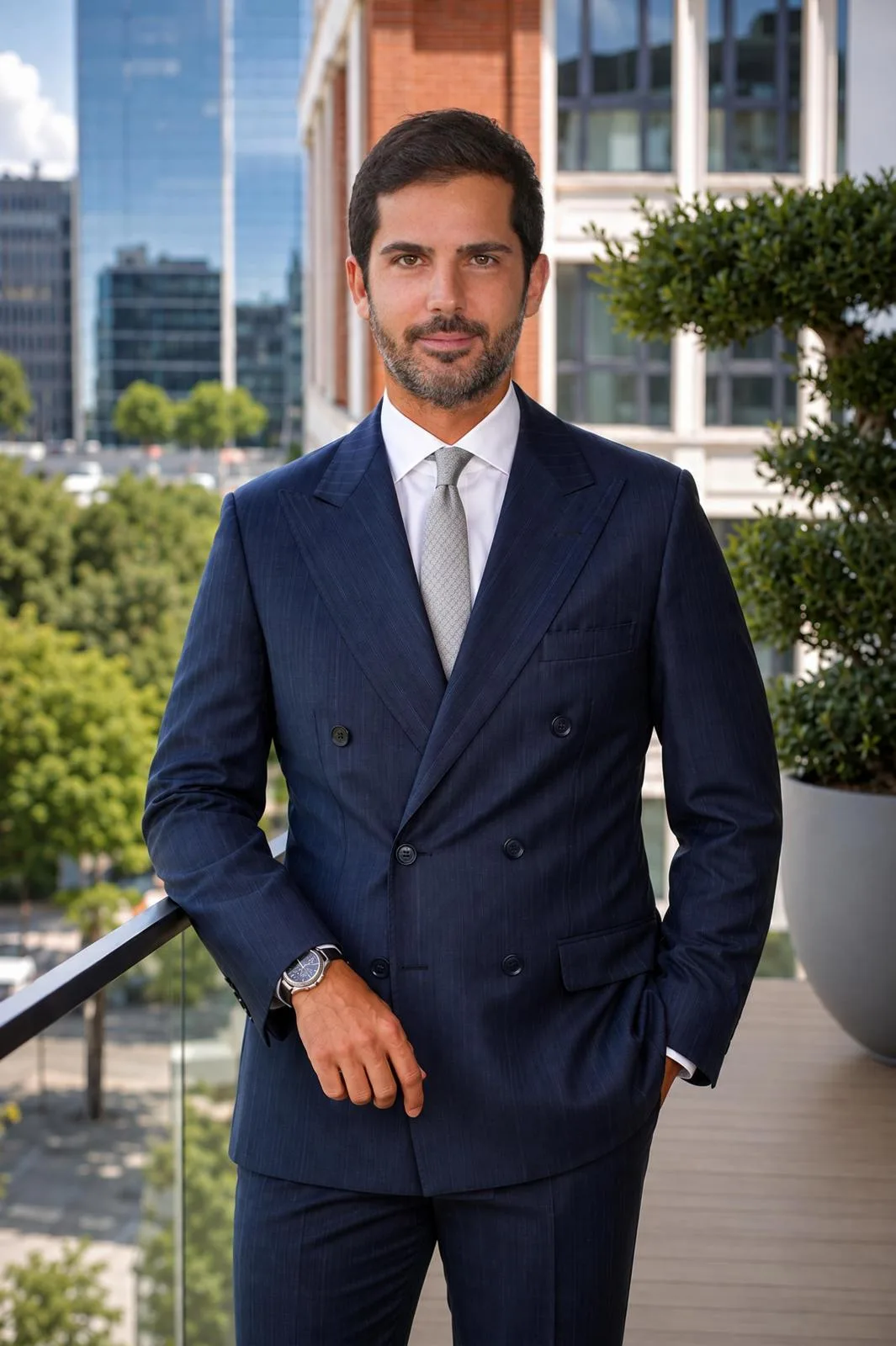
Giacomo Billi, founder and CEO of Alive Capital
Storage, aggregation, fl exible consumption, intraday optimization and system services will become essential infrastructure, says Giacomo Billi, founder and CEO of Alive Capital, in an interview with Energynomics. Alive Capital has completed the construction of the Stâlpu 1, Stâlpu 2, Nanov and Mihăilești projects and is expanding its regional model, he claims. Giacomo Billi explains why the next energy competition will not be won by simply accumulating MW, but by the ability to transform each MWh into value, using forecasting, dispatching, aggregation, energy management, hedging strategy, storage and supply in a single platform.
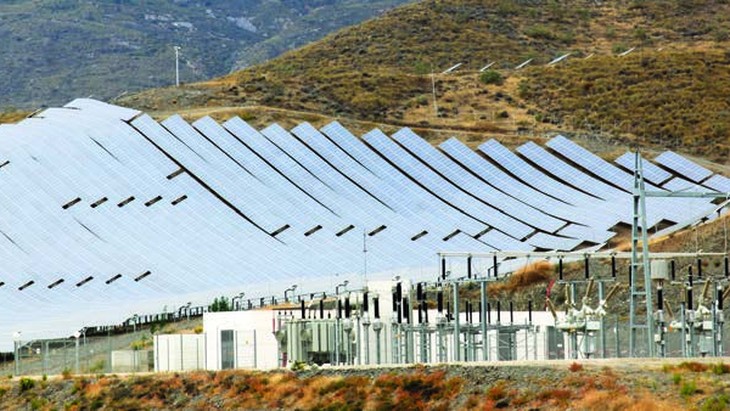
Alive Capital recently completed the construction of four major projects, Stâlpu 1, Stâlpu 2, Nanov and Mihăilești. What does this moment represent for the company?
It is proof that we can turn an idea into an energyproducing asset. Many projects are announced in our sector. Far fewer end up built, connected and ready to operate in real market conditions.
At Stâlpu 1, Stâlpu 2, Nanov and Mihăilești, I coordinated a complex process, from development and construction to the testing stage. Each project required technical discipline, financing, contractor coordination, relationships with network operators and thousands of timely decisions. In energy, a seemingly small delay can change the economics of a project. Execution matters.
For me, this evolution also has a personal dimension. I was born in Cortona, a small Etruscan town in Tuscany, with a history of almost three thousand years. I started working at 18, in parallel with my studies. Professional experiences at the London Metal Exchange in London, and later at RREEF Fondimmobiliari SGR in Milan, part of the Deutsche Bank group, taught me to look at capital through the lens of risk and return. But I quickly understood that I wanted to build, not just analyze what others were building.
In May 2013, I moved to Bucharest and founded Alive Capital at the age of 29, without external capital. I had experience in fi nance, but I didn’t have a company behind me and no certainty that I would succeed. However, I had the freedom to decide and the obligation to be responsible for each decision. Romania was a young market, with a lot still to be built. This is exactly what attracted me. We started with a simple idea: to understand energy better than the market and to create services with real value. Today we can develop, build, operate and optimize energy assets. We invested in this competence, in people and in systems. Nanov is a relevant example. Alive Capital invested over 1.5 million euros in ALO, Automation for Operational Limitation. The solution allows the safe connection and operation of the plant in an area where the grid has capacity constraints. The system monitors the operational parameters and automatically adapts the power injected into the grid to the available limits. The innovation lies in integrating control, protections and communications into a mechanism that reacts in real time. Without this solution, the project could not have operated under current grid conditions. For us, the completion of construction opens the real test: the asset’s longterm performance.
You say that MWs are no longer enough. What does a good energy project mean today?
An installed MW does not have the same value at noon and in the evening. It does not have the same value in an area with a solid grid and in a congested one. Energy has a geography, a time and a risk. A good project starts with a performing asset, but the analysis must go much further. Where does it connect? What is the production profi le? What is its exposure to imbalances and negative prices? Can it integrate storage? Does it have access to relevant markets? What is the commercial strategy for ten or twenty years? The decrease in the cost of technologies has made development more accessible. It has not guaranteed profi tability. As the system gets more solar and wind, the power produced by many plants simultaneously can lose some of its value. You can build at a competitive cost and still lose money if the power is produced at times when the market doesn’t value it. In the coming years, the diff erence won’t be who announces the most MW. It will be who can turn every MWh into value, every hour. That requires technology, market access, and a team that makes quick decisions.
What is the difference between Alive Capital and a traditional renewable energy operator or investor?
We understand energy along the entire path, from asset to consumer.
We know how to build and operate a power plant, but Alive Capital’s work does not end when the energy enters the grid. We have integrated asset management, supply, energy management, hedging policies, aggregation, local dispatching, forecasting, long-term contract management and market access. Few operators can cover the entire energy path end-to-end, based on over thirteen years of experience and the management of over 200 power plants.
A park can operate technically flawlessly, and the owner can lose money from imbalances, from a poor forecast or from concentrating production during lowprice hours. Conversely, a good commercial strategy cannot compensate indefinitely for a poorly managed asset. We work with both realities simultaneously.
Alive Capital manages over 1.8 GW of renewable capacity. In 2025 we delivered approximately 1.95 TWh of energy and reached a share of about 1.64% in the non-household segment in Romania. The real advantage comes from the thousands of trading intervals and the direct relationship with producers and consumers.
We are building an integrated regional energy platform. We do not want to sell a list of services. We want to take on an energy problem and solve it completely.
If renewable production is growing so fast, where do you see the next big opportunity?
In flexibility. Romania can produce a lot of solar energy at noon and may need imports a few hours later. The problem is no longer just the annual quantity. The problem is the availability of energy when the system and the consumer need it.
Storage, aggregation, flexible consumption, intraday optimization and system services will become essential infrastructure. They allow energy to be moved over time and reduce the distance between production and need.
I don’t believe in installing batteries indiscriminately.
The battery is a tool, not a strategy. The value comes when you know what to do with it, when to charge, when to discharge, which market to participate in and what risks to avoid. Two identical batteries can have completely diff erent economic results. Operational intelligence makes the diff erence. Alive Capital was among the pioneers of storage implementation and optimization in Romania. We built a dedicated team, which works 24 hours a day with data, forecasts and the market. We want each battery managed by us to be an asset that thinks and reacts, not a piece of equipment that waits.
Can the battery become the next big business of the energy market?
Yes, but only for those who treat it as an energy asset, not as a simple investment in equipment. The return will depend on the forecast, energy management, intraday optimization, hedging strategy and system services. The operator must understand degradation, guarantees and technical limits. The market will quickly separate batteries that just exist from those managed with a commercial strategy. For Alive Capital, storage is a natural evolution. We come from asset management and the energy market. We view the battery simultaneously as a piece of equipment, a commercial position and a resource for the system. The next step is to automate decisions. We build EMS capabilities, SCADA integration, advanced forecasting and data-driven optimization. Artifi cial intelligence creates value when it reduces imbalance, protects the battery or chooses the right market for the next interval. The battery itself is not the business. How you operate it is the business.
What is changing for industrial consumers?
Energy becomes a management decision, not a simple purchase. Companies will combine supply, long-term contracts, own production, storage and consumption management. The goal is to control cost and risk. The question can no longer be just “what price do I get next year?”. An industrial consumer must ask themselves what exposure they accept, what predictability they can build over fi ve or ten years, and how energy aff ects their competitiveness. A factory with a stable profi le has diff erent needs than a logistics center, a food producer, or an operator with high consumption peaks. There is no universal recipe. The strategy must be built on the customer’s real data.
For example, a factory that operates 24 hours a day can combine a fixed-price energy volume, an indexed component, their own production, and a battery. This reduces consumption peaks, limits exposure to expensive hours, and maintains flexibility when the market changes.
Alive Capital works with both sides of the market.
We understand the producer who needs to capitalize on their energy and the consumer who needs to protect their cost. We can connect these interests and build solutions that work economically for both parties.
In Europe, the price of energy directly influences industrial investment decisions. Those who manage their energy intelligently protect their margins and their ability to grow. Those who treat it as a bill will always react too late.
What will be the biggest change in the energy market in the next five years?
Energy will become a real-time decision-making system. In the next five years, the difference between an energy company and a technology company will disappear.
The next frontier will be autonomy: millions of assets that will anticipate, decide and react in real time, without manual intervention. A power plant, a battery, a factory and an electric vehicle will all work as part of the same system.
The old model was relatively linear: we produce, transport and consume. The new system has millions of active points. Energy is produced locally, stored, aggregated, moved over time and traded on different markets. The consumer can become a producer. The electric car can become a resource. A battery can respond in seconds.
In this system, data and speed have economic value. Weather forecasts, grid conditions, prices and consumption behavior must be interpreted together. The winners will not be the companies with the most reports, but those that transform data into decisions.
I am not talking about digitalization as a decorative goal. Technology matters when it reduces an imbalance, prevents an outage, optimizes the charging of a battery or improves the price obtained for energy.
In five years, it will not only matter how much energy we have. It will matter when, where and under what conditions it is available. Energy will be more electric, more distributed and smarter. Companies need to prepare now, not after the change becomes obvious.
You have completed four projects. What comes after construction?
After construction begins the period that decides the real value of the investment. An asset must be monitored, maintained and optimized throughout its entire life cycle. You need to compare actual production with the model, identify losses, manage guarantees, improve the forecast and adapt the commercial strategy to the market. This is where Alive Capital’s asset management DNA comes in. We connect technical performance to fi nancial results. We don’t look at the inverter, the forecast, the imbalance and the price separately. They all infl uence the same result. For us, the reception of a plant does not close the relationship with the project. It opens it. An energy asset must perform for twenty or thirty years, in technologies and markets that will change many times. Our role is to keep it relevant, effi cient and profi table. Construction proves that you can deliver. Operation proves that you know energy.
What is the message you would like the market to associate with Alive Capital?
That we understand energy from asset to consumer and that we execute what we promise. I don’t want the market to associate us with a list of services. Services change. The client’s problems remain clear: a producer wants to get more value, an investor wants control and yield, a battery owner wants a good strategy, and a consumer wants predictability and competitiveness. Alive Capital must be the company that connects them. We have the assets, the team, the market access, the technology and the operational experience. More importantly, we have the culture to take responsibility for the result. A serious company should not be described by adjectives, but by results. For Alive Capital, this is the only message that matters.
Where do you want Alive Capital to be in fi ve years?
I want Alive Capital to be one of the reference energy companies in South-Eastern Europe.
I do not measure this ambition only in MW or in revenues. Romania provided us with the foundation on which we built our operational experience and was the market in which Alive Capital grew from a small asset management company to an integrated energy platform. Here we learned to manage volatility, work with hundreds of assets and respond quickly in a changing market.
The next step is regional. In Serbia we are building local capabilities and taking the know-how developed in Romania to a market with high potential. We will grow selectively in other markets in the region, maintaining the same discipline.
I want to be able to build and manage assets, manage energy in the market, develop storage and connect production with consumer needs. All of this must work as a single energy competency.
We do not want to export just capital. We want to export an operating model. Capital can buy assets. It cannot instantly buy the experience of a team, the systems built over years and the ability to make decisions every hour.
Alive Capital’s ambition is to grow through what it knows how to do. I want a relevant and agile company in the region. Alive Capital must not depend on the energy of its founder. It must have people, rules, technology and a culture capable of evolving over a generation. Thirteen years later, my motivation is the same as on day one: to build a company that is meant to last, not to impress for a season. This is the meaning of our phrase, ”Energy. Built to Last.”
_____________________________________________
The interview also appeared in the print edition of Energynomics Magazine, Q3 2026 issue.
In order to receive the printed or electronic issue of Energynomics Magazine, we encourage you to write us at office [at] energynomics.ro to include you in our distribution list. All previous editions are available HERE.