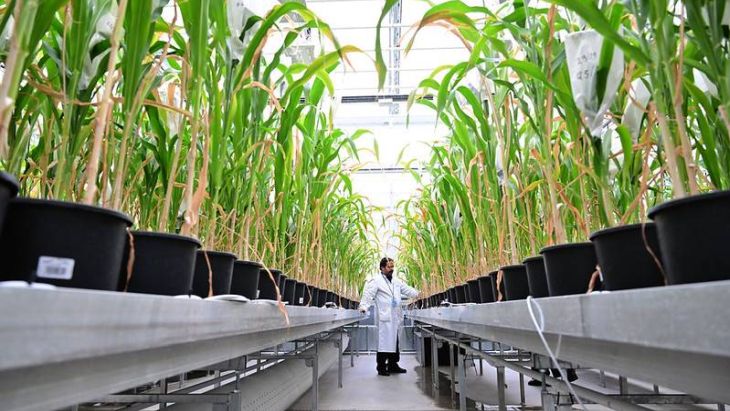
Using nuclear techniques, the International Atomic Energy Agency (IAEA), through the Joint FAO/IAEA Centre of Nuclear Techniques in Food and Agriculture, builds national capacities in plant breeding to develop crops that are more resistant to diseases, pests and environmental stressors. By inducing mutations with radiation, scientists create new plant varieties that improve product quality, have higher yields and yield stability, and more tolerance to environmental stressors, contributing to a more robust and sustainable food supply.
Climate-Smart agriculture is a set of agricultural practices and technologies that can be used to sustainably increase agricultural productivity. The IAEA strengthens the capacities of countries in using nuclear and isotopic techniques to sustainably increase agricultural productivity, adapt and build the resilience of agricultural and food security systems.
Insect Pest Control
Up to 40% of global crop production is lost to plant pests and diseases. The IAEA, through the Joint FAO/IAEA Centre, leads global efforts to implement and further develop the sterile insect technique (SIT), which uses radiation to sterilize male pests.
Sterilized males are released to mate with wild females, reducing pest populations. This eco-friendly method controls agricultural pests, reduces the need for chemical pesticides and protects crops and the environment.
Animal Health
The IAEA, through the Joint FAO/IAEA Centre, utilizes nuclear and related techniques to monitor and control animal diseases, which in turn improves livestock health and productivity. This allows countries to ensure a steady supply of safe and nutritious animal products, supports sustainable agricultural practices, and protects public health through early disease detection and vaccination programmes
The Veterinary Diagnostic Laboratory Network, supported and coordinated by the IAEA, is a network of national veterinary laboratories in Africa and Asia, with plans to expand to Central and Eastern Europe, the Caribbean and Latin America.
Support is provided through the procurement of laboratory reagents and equipment and the provision of training courses to strengthen the proficiency of designated national veterinary laboratories in deploying diagnostic tests for transboundary animal and zoonotic diseases, and vaccine quality assurance.
The IAEA, through the Joint FAO/IAEA Centre, assists countries in employing nuclear methods to detect contaminants and residues in food, verify the origins and authenticity of food, and meet international standards. Countries are also supported in the use of ionizing radiation. Techniques such as irradiation eliminate harmful bacteria and pests, extend shelf life and reduce food waste. These measures ensure that food is safe and nutritious and foster international trade.
To date, the IAEA has trained over 400 scientists from more than 40 countries in these techniques and technologies.