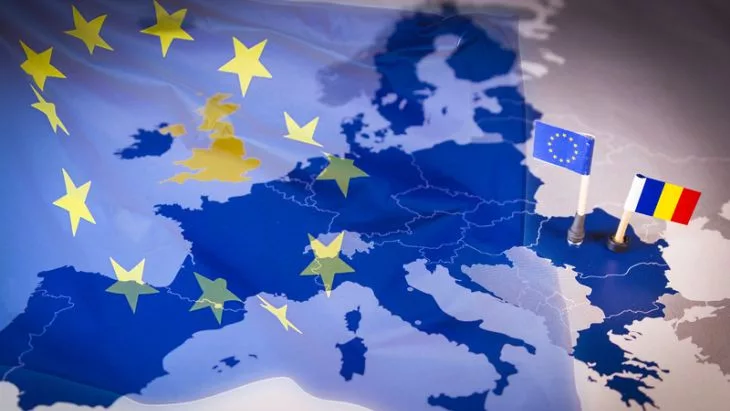
The European Commission announced that it has launched an in-depth investigation to assess whether a court ruling ordering Romania to pay compensation to ten investors complies with EU state aid rules.
Following the green certificate subsidy, the first wave of renewables emerged in Romania, but investors did not benefit much from the subsidies, which were substantially reduced by the Government.
Romania has set up a scheme to support the production of electricity from renewable sources through green certificates, which was approved under state aid rules in July 2011. Romania has amended the aid scheme several times in 2013, 2014 and subsequently. The Commission approved the amendments to the scheme under State aid rules in May 2015 and December 2016.
A group of ten companies that invested in five solar photovoltaic plants benefiting from the scheme initiated arbitration proceedings against Romania following the amendments. They are: LSG Building Solutions GmbH, Green Source Consulting GmbH, Core Value Investments GmbH & Co. KG Gamma, Core Value Capital GmbH, Anina Pro Invest Ltd., Giust Ltd., Risen Energy Solar Project GmbH, Pressburg UK GmbH, Solluce Romania 1 B.V. and SC LJG Green Source Energy BETA S.R.L. The companies requested compensation representing the support they would have received if Romania had not amended the support scheme.
An arbitral tribunal found that Romania had breached the Energy Charter Treaty (‘ECT’) and, on 20 February 2024, ordered Romania to compensate the investors for the losses they claimed to have suffered as a result of the amendments. The damages awarded amount to EUR 42.2 million, plus interest and other costs. Romania notified the Commission of this award under State aid rules and informed the Commission that it had made a payment under the award into an account opened in the name of the beneficiaries of the award.
At this stage, the Commission’s preliminary view is that the arbitral award and its execution constitute State aid within the meaning of Article 107(1) of the Treaty on the Functioning of the EU (“TFEU”), which is incompatible with the internal market. The Commission will further investigate its extent and compatibility with the internal market and, in particular, a possible infringement of the EU Treaties by the aid measure.
About Schneider Electric
Schneider Electric creates impact by maximising the value of energy and resources, connecting progress with sustainability. We are a global leader in electrification, automation and digitalization, providing AI-driven IoT solutions for smart industries, infrastructure, data centres and buildings.
With 150,000 employees in over 100 countries we promote diversity and innovation. Schneider Electric România, with 27 years in business and more than 300 employees, runs operations in Armenia and Moldova and provides support in 17 languages for 26 countries through the Bucharest Hub.