

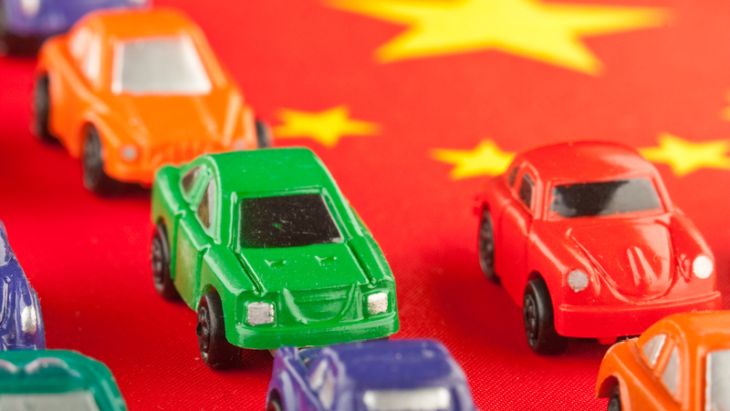
Chinese carmakers are rapidly increasing their market share in Europe, with the latest data showing they captured more than 11% of the European new car market last month, amid steady demand for lower-priced plug-in hybrid models, according to an analysis by eToro.
According to the source cited, Dataforce figures show that a third of plug-in hybrid vehicle registrations in July were made by brands such as Jaecoo, owned by Chery Automobile Co.
“Unlike fully electric vehicles, these models are not currently subject to additional EU tariffs, although there are reports that the European Commission may also consider imposing countervailing duties on Chinese hybrid vehicles. Affordability is a key factor in this growth in sales of Chinese brands. Earlier this month, Citi analysts estimated that three-quarters of Chinese car sales in the EU come from SAIC Motor (owner of the MG brand), BYD and Chery, companies that generally offer lower-priced models. Consumers are also becoming less concerned about brand origin. A Bloomberg Intelligence survey found that 38% of respondents had no qualms about buying a Chinese brand,” says Bogdan Maioreanu, an eToro analyst.
Although data from the European Automobile Manufacturers Association (ACEA) for July is not yet available, in the first half of 2026, Chinese brands registered around 663,000 cars across Europe, up around 107% year-on-year. Their combined share of the European new car market rose to around 9.2%, from around 4.5% in the first half of 2025.
In terms of registrations, MG remains the largest Chinese-origin brand, but BYD is quickly closing in. Omoda-Jaecoo and Leapmotor are expanding even faster, highlighting the rapidly changing competitive landscape of the European auto market.
“One well-known Chinese brand is missing from these booming figures, however: NIO, which competes in the premium market segment. Its European sales have fallen sharply. By July 2026, registrations in Germany had fallen by almost 90% compared to the same period last year, reaching just 18 vehicles, while registrations in the Netherlands had fallen by 88%, reaching 8. The company’s European range is still based on the older NT 2.0 platform from 2023-2024, while new models destined for the Chinese market, including the ES8, ES9 and ET9, are not expected to arrive in Europe until late 2027. Battery swapping technology, a key competitive advantage for its China business, has had a slow start in Europe due to a lack of charging stations and a small number of existing customers,” Maioreanu explains.
NIO reported its second-quarter financial results a day ago. Quarterly revenue of RMB 32.14 billion (about $4.74 billion) rose 69.1% year-on-year, but missed the consensus estimate of $4.95 billion.
Deliveries rose to 107,658 vehicles, up 49.4% year-on-year, including 60,945 NIO-branded cars, 29,124 ONVO vehicles, and 17,589 FIREFLY units.
Vehicle sales rose 80.1% to RMB 29.06 billion (about $4.3 billion), supported by higher volume and a more favorable product mix. But China remains the company’s main market, the eToro analyst points out.
For the third quarter, NIO expects deliveries of 108,000-111,000 vehicles and revenue of almost $5 billion at the median value, still below market estimates.
“So far, despite impressive sales growth and narrowing losses, the share price has continued to decline. It has lost over 10% in the last week and almost 24% since the beginning of the year. This may not be very good news for investors, but our data suggests that many of them have a long-term perspective on the company. At the end of the second quarter of this year, the Chinese premium electric vehicle manufacturer NIO was the third most held stock by Romanian individual investors and ranked 8th globally on the trading and investment platform eToro,” Bogdan Maioreanu emphasizes.
About Schneider Electric
Schneider Electric creates impact by maximising the value of energy and resources, connecting progress with sustainability. We are a global leader in electrification, automation and digitalization, providing AI-driven IoT solutions for smart industries, infrastructure, data centres and buildings.
With 150,000 employees in over 100 countries we promote diversity and innovation. Schneider Electric România, with 27 years in business and more than 300 employees, runs operations in Armenia and Moldova and provides support in 17 languages for 26 countries through the Bucharest Hub.