

Victor Gavrilă, EFdeN expert in energy efficiency
We know that in Romania we have a problem with the energy efficiency of buildings, especially when we talk about the built stock older than 2000, but not only. It is not a new statistic, and, unfortunately, none that would surprise anyone anymore, at least not those who have an idea about the energy industry.
Over two-thirds of the buildings in our country were built before 1990, informs the OECD, in a period when thermal performance standards were lower than today. National strategies talk about renovating a considerable part of the built stock, by 2025, but the pace of implementing these targets is far below what is necessary.
This slowness has a huge social cost. According to the 2025 Annual Report of the Romanian Energy Poverty Observatory (ORSE), over 21% of households in Romania fall below the poverty line after paying their energy bills, and the pressure is also spreading to middle-income classes. In rural areas, where three-quarters of families are affected by underconsumption (a sign of energy poverty) and excessive costs in relation to income, the problem is access to resources, while in urban areas, it is about energy waste and lack of optimization (of both consumption and the built stock). Beyond temporary financial support, the sustainable approach is not just about “lowering the bill”, but about structurally reducing consumption and waste through more efficient buildings.
So, the question, at least for me and the EFdeN team, becomes: how do we get from the need for rehabilitation to interventions with an impact on building performance?
A decision that is not overwhelming
Let’s imagine an apartment owner in a block of flats built in the 70s or 80s, who probably knows from the bills and feels firsthand the low efficiency of the building he lives in. In winter, perhaps the walls are mostly cold or in summer the apartment overheats and there are also noticeable temperature differences between rooms.
What solutions could contribute to higher comfort without increasing the bill in such a situation? Should the windows be changed? Would it help if the owner re-insulated the walls? Or would it help him to change his heating system? Would a shading system be more efficient? Or should he install photovoltaic panels on his terrace? And in what order should these changes be made? How much does the investment amount to and what impact could it have? How can someone make such decisions without undertaking a consistent, tiring and overwhelming market research process or without being a specialist in energy efficiency?
Through the projects and contact we have at EFdeN with people in Bucharest and the region, it seems that this is one of the problems that is insufficiently discussed in our country. We have national objectives, the technology exists, the money can be found in funding programs, but between all this and the person who has to make a very concrete decision, there is still a significant information and education gap.
In recent years, solutions such as photovoltaic panels, batteries or heat pumps have become more well-known, and this is a good thing, but we must take into account the fact that the availability of a technology does not automatically mean that this is the first intervention that a home needs.
The loss of thermal factor through the walls of the building is not solved by changing the heating source. A home that is overheated in the summer, cooled with an air conditioner, represents a one-time intervention, but one that does not solve the root of the problem.
That is why, at EFdeN, we believe that one of the most important questions is “what is the problem I need to address first?”.
We need to know where we live
From our experience with the construction of passive houses, we have seen how much the relationship between the quality of the walls, the installations, the energy production and the way the building is used matters.
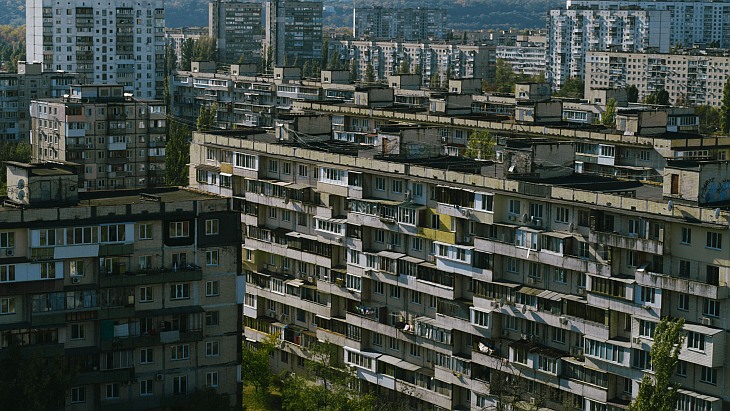
We also see another reality in which we start from a building built decades ago, with specific technical limitations, perhaps with interventions made over time and, in the case of apartment buildings, with several tens or even hundreds of owners. Several million Romanians live in such buildings, who need, first of all, to better understand the building they live in and how to make the right decisions together.
From this need emerged the EFdeN Energy Efficiency Simulator, a tool through which we make the first step of evaluating our own home more accessible, so as to transform a very general problem into a more concrete discussion about causes, possible interventions and priorities.
As colleagues at ORSE have well shown, the emergence of prosumers, storage solutions, digitalization and energy communities radically reconfigure the relationship between man and resources: we are no longer talking about a passive consumer connected to a grid, but about an active citizen in the energy transition. In this new landscape, vulnerability takes on a new form: the inability to understand and invest in efficiency deepens social gaps. The EFdeN simulator aims to do just that: to make the citizen an active actor, offering him practical education through simulation. Once he understands the profile of his home, he can correctly prioritize interventions, reducing waste, decreasing his exposure to price volatility and building long-term resilience.
For example, setting the heat to 24°C in winter leads to massive losses through the walls, ceiling and floor to the neighbors, whether they depend on the centralized system without the possibility of adjustment, or are more attentive to consumption. Basically, we are heating them with our own money, a detail directly visible in the final diagram of a simulation.
A recommendation does not renovate a block
However, if we look at another reality, in which we assume that the owner already understands what needs to be done, there is an assessment of the building, as well as a technical solution, perhaps even the source of financing. Here the question that arises is “who puts the project into practice?”.
Accelerating the renovation of buildings does not only mean technology and money, but also people with specific skills, who are able to evaluate, design, install and correctly execute the decided interventions. We are talking here about energy auditors, designers, installation specialists, builders, electricians, plumbers and other technical professions, adjusted to the technologies and materials specific to the energy transition.
And thus another difference appears between a target on paper and the real renovation capacity: the market’s capacity to deliver. Unfortunately, in Romania’s neighborhoods, there is a high chance that with a simple short walk we can see with the naked eye that there are not enough resources to insulate a building, if the execution is done poorly or people do not know how to maintain it. I firmly believe that the discussion about energy renovation cannot take place without talking about the skills available in the labor market.
Are all the links well connected?
Romania has set ambitious goals for the renovation of the built stock, and the current pace of implementation does not seem to be able to support the written plans. It is time to look at renovation more as a chain of processes, rather than as a stand-alone problem, with many unknowns and limitations. What can we do so that the citizen is an ally in this national development and not a person frightened by misinformation, unable to make decisions?
The energy transition is not only about decarbonization and technical indicators, but also about equity and social justice. The citizen can become a real ally of national objectives only when he is informed, empowered and protected from wrong decisions.
I invite you to look at these elements as links in a chain of renovation of the built stock in Romania. On the one hand, we need to understand how to look at the buildings we live in, then we need the tools to help people find out what options they have, financing mechanisms, but also specialists to transform recommendations into projects, and, last but not least, qualitative execution.
If one of these links is missing, there is every chance that the country’s objectives will remain very far from the apartment where someone, on a December morning, is trying to understand why it is cold in the house, although the radiator is hot.