

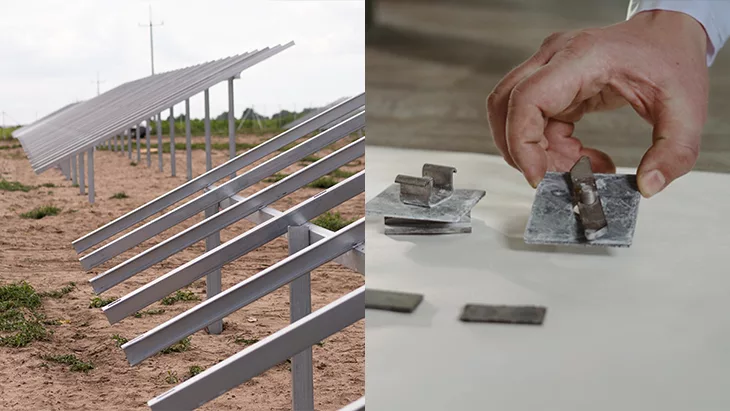
A photovoltaic system is designed for an operating life of 25 to 30 years. The mounting structure must withstand this entire period, as repairing it on an operating site requires the removal of modules and involves an interruption in energy production. Structural failures, however, rarely begin with the load-bearing beams. Degradation usually starts with bolts, nuts and the contact areas between components. Corrosion processes develop fastest in these locations, while their effects become visible only after the durability of the entire system has already been reduced.
We publish an article provided by Enzeit Technik, a European manufacturer of mounting systems for photovoltaic installations and part of the GTV Group. The company is conducting research into the corrosion resistance of protective coatings in collaboration with the University of Warmia and Mazury in Olsztyn, Poland.
What accelerates corrosion
Corrosion is a process that occurs when a material interacts with its environment. The most aggressive factors are salinity, acid rain and industrial gases containing sulphur and nitrogen oxides. Combined with moisture, they create an acidic environment that promotes metal oxidation.
Moisture itself plays an essential role. It enables ion transfer between the area undergoing degradation and the protected area. Without moisture, the process develops considerably more slowly.
Why connections are particularly vulnerable
In photovoltaic structures, large components are assembled using relatively small bolts and nuts. When two different metals come into contact in the same location and moisture is present between them, a galvanic cell is formed. The less noble metal corrodes faster, protecting the more noble one. The ratio between the surface areas also matters. If the less noble component is a small bolt in contact with a large surface of the structure, its degradation can proceed particularly rapidly.
Damage to protective coatings during installation and crevices between components further increase the risk.
Why this is an investor issue, not only a design issue
Fasteners account for only a fraction of the value of the structure. The cost of replacing them, however, is determined not by the price of the component but by the difficulty of accessing it. Replacing a corroded bolt in an operating installation requires modules to be removed, personnel and equipment to be mobilised, while the affected section produces no energy during the intervention.
The effects develop over time and are difficult to identify during a standard inspection. A weakened connection changes the distribution of loads within the structure, which, under wind or snow loads, can lead to damage extending beyond the connection itself.
From an investor’s perspective, assessing the environmental conditions at the site should therefore precede the choice of mounting structure, just as the analysis of solar irradiation or grid connection conditions does. In Romania, this is particularly relevant for sites in Dobrogea and along the Black Sea coast, where atmospheric salinity is high, as well as for areas near industrial platforms in Galați, Ploiești or Năvodari. Roads treated with salt during winter also alter corrosion protection requirements and influence the total investment cost over a period of several decades.
Crevice corrosion
Crevice corrosion is particularly dangerous because it develops in hidden spaces between connected components. Moisture trapped inside the crevice changes its chemical composition: impurities and corrosion products accumulate, while oxygen access is limited. Conditions inside the crevice therefore differ from those on the exposed surface.
This type of corrosion can also affect materials that show good resistance under standard conditions. It develops in locations that are difficult to inspect.
How corrosion resistance is tested
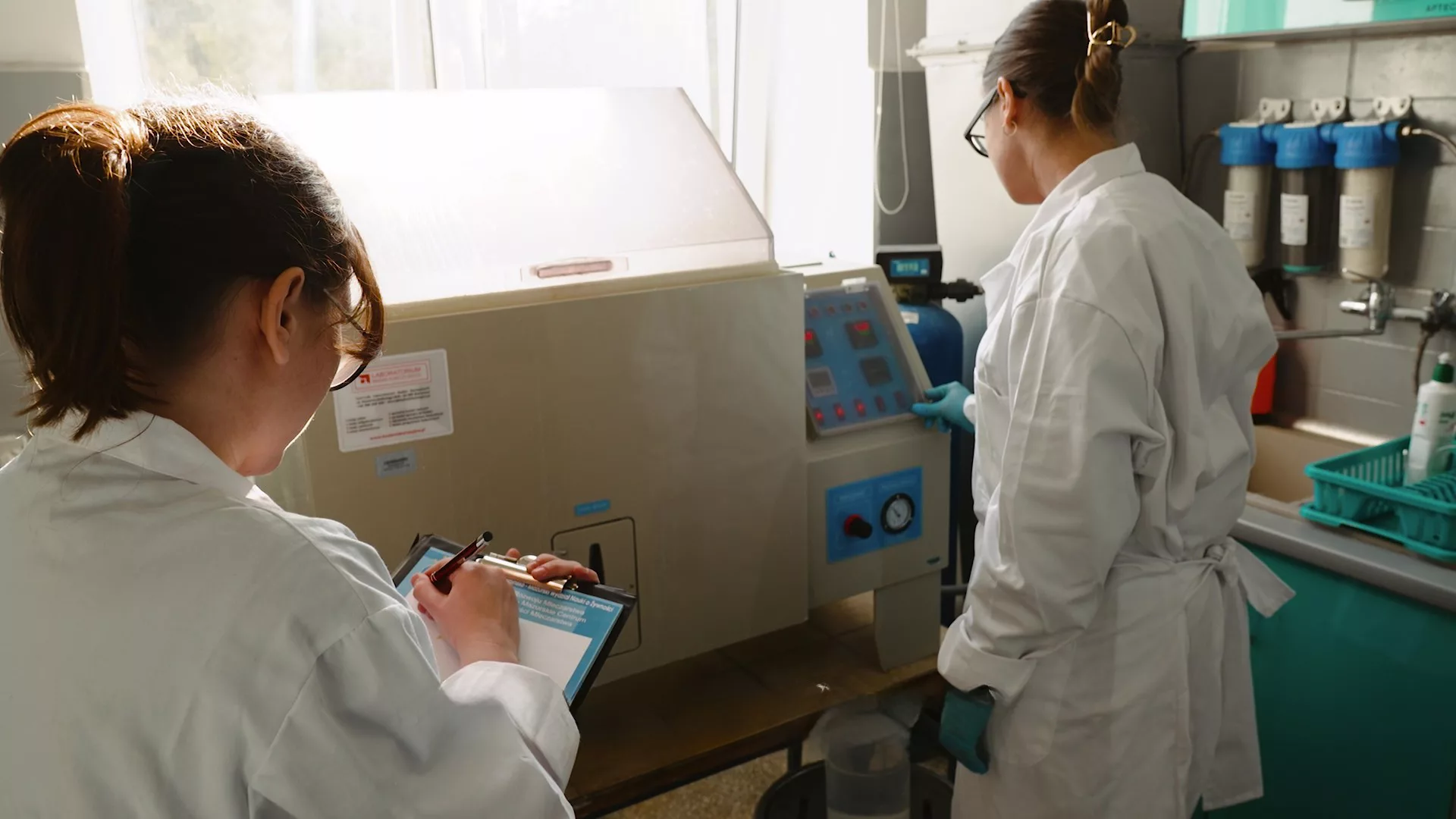
The basic method is the salt spray chamber test. Samples are exposed to a mist generated from a five-percent sodium chloride solution, with exposure periods ranging from 24 to 1,440 hours depending on the standard. Test variants using acetic acid or copper chloride can shorten the required testing period.
Electrochemical methods use the relationship between the corrosion process and the flow of electric current. They make it possible to estimate the rate of material degradation in a specific environment without requiring exposure over several months.
Research results
Enzeit Technik conducts corrosion resistance research in cooperation with the University of Warmia and Mazury in Olsztyn, Poland, using both salt spray chamber testing and electrochemical methods.
The research was conducted under conditions corresponding to corrosivity category C5 under ISO 12944, covering highly aggressive industrial and coastal environments. Zinc-magnesium-aluminium coatings retained their resistance under these conditions. The fasteners showed signs of degradation, while the coated surfaces displayed no visible signs of corrosion.
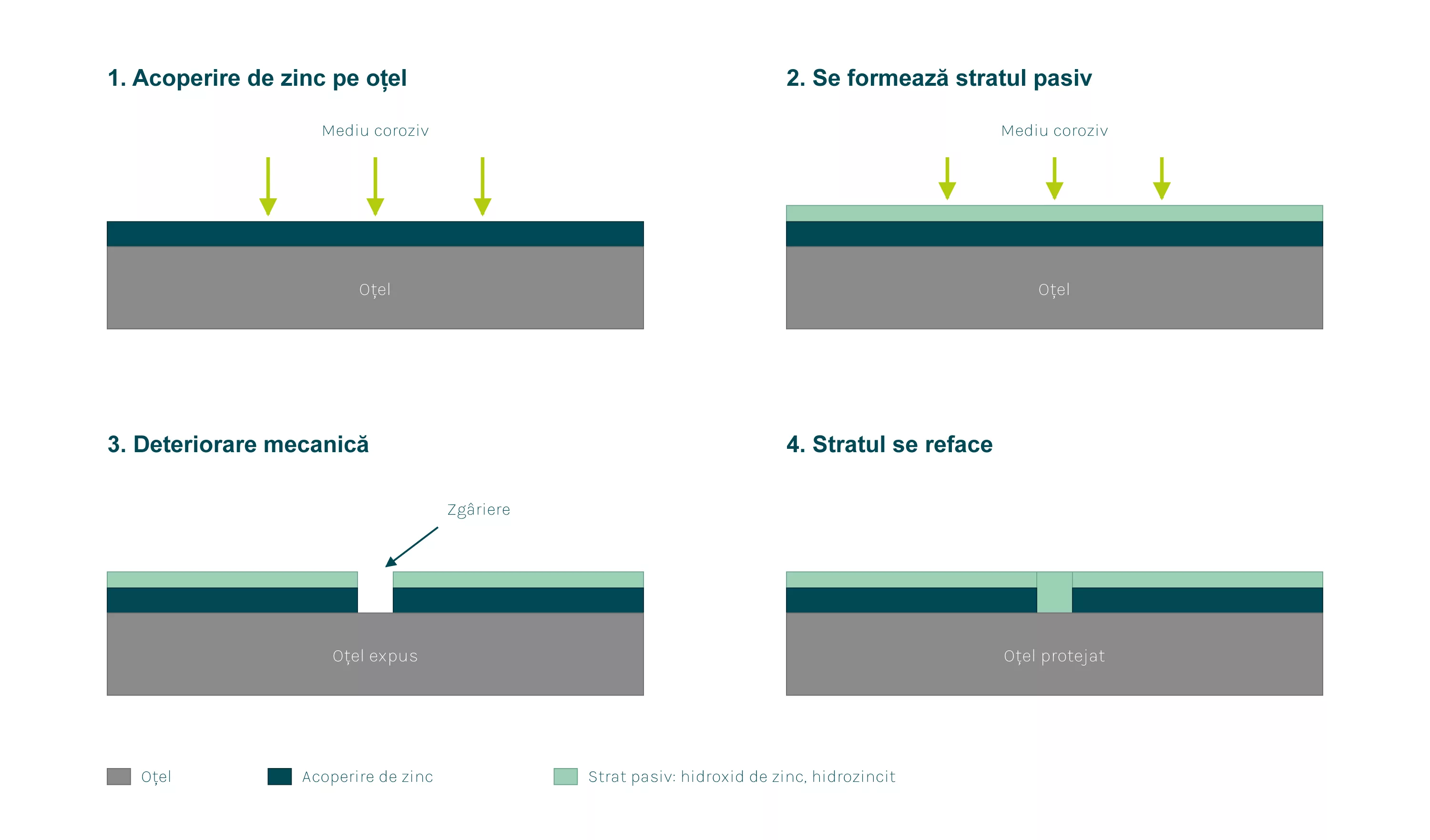
Coatings of this type work differently from materials protected by an oxide layer. Zinc has a lower electrochemical potential than the steel beneath it. As a result, when the coating is damaged, the zinc degrades first, protecting the base material even in scratched areas. The presence of magnesium also stabilises the pH of the surface environment, allowing stable zinc compounds with greater resistance in aggressive environments to form.
The electrochemical research used environments with varying pH levels and different concentrations of chlorides, sulphates and sulphides. The presence of chlorides had the greatest impact on durability. Acidity also played a role: in solutions with a lower pH, the coating protection period was approximately 30 percent shorter.
The results of this research have been published, among others, in the journal Coatings and in The Paton Welding Journal.
Practical conclusions
Corrosion cannot be eliminated, but its rate can be controlled. In photovoltaic structures, attention should focus primarily on connections: selecting appropriate materials for fasteners, limiting contact between different metals and avoiding crevices where moisture can accumulate.
Authors
Dr Wojciech Rejmer, Eng., is a senior lecturer at the Department of Materials and Machinery Technology within the Faculty of Technical Sciences at the University of Warmia and Mazury in Olsztyn, Poland. He specialises in materials chemistry and engineering, and his research focuses, amongst other things, on the corrosiveness of materials and the physico-chemical properties of fuels. He is the author and co-author of scientific papers in the field of materials engineering. He collaborates with Enzeit Technik on research into the corrosion resistance of protective coatings used in photovoltaic structures.
Dominik Połoniewicz, MEng, is the head of the design department at Enzeit Technik. He has been working in the photovoltaic sector for ten years. He is the designer of mounting systems currently in operation on rooftops and on the ground in numerous European countries, and the structural projects carried out under his supervision have involved investments totalling hundreds of megawatts. He delivers training courses and webinars for photovoltaic system installers, focusing on the selection and installation of mounting systems.
Enzeit Technik designs and manufactures mounting systems for photovoltaic installations, with coatings selected according to the environmental conditions of each site.