

The book “Prosumatorul, de la consumator pasiv la utilizator activ al sistemului energetic” (The Prosumer: From passive consumer to active user of the energy system) was published in 2026 by U.T.PRESS in Cluj-Napoca. Written by Andrei Ceclan, Mihaela Crețu, Levente Czumbil and Dan Micu, the volume takes a term that has become commonplace in public debate and places it within a broader framework, where residential, public-sector and business prosumers interact with grids, markets, aggregators, installers and financiers.
The book’s foreword was written by Gabriel Avăcăriței, Chief Editor of Energynomics. We publish it in full below for readers interested in understanding the book’s purpose and intended audience before reading it.
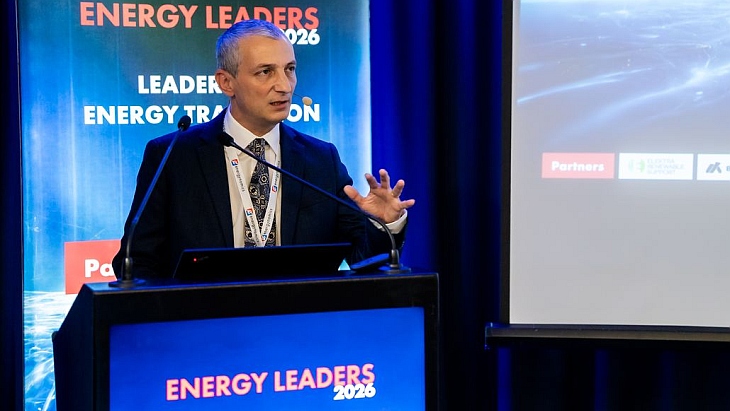
The volume was also presented at the opening of the Leaders in Energy Transition, North-West Region event, held on 27 October 2026 in Cluj-Napoca. The presentation, covering the book’s key ideas, can be watched in the video below (in Romanian), starting from the moment Gabriel Avăcăriței introduces the subject.

Foreword by Gabriel Avăcăriței
Prosumatorul, de la consumator pasiv la utilizator activ al sistemului energetic, written by Andrei Ceclan, Mihaela Crețu, Levente Czumbil and Dan Micu, is an excellent work of popularisation that makes some of the energy transition’s most important and often difficult-to-explain issues accessible to a broader audience.
The book presents the current state of Romania’s energy system within a conceptual framework that places the prosumer at its centre. Not as a final destination, however, but as an intermediate stage on the path towards becoming an active user of the energy system, capable of understanding and increasingly controlling how they produce, consume, store or feed energy into the grid.
This shift in perspective is one of the book’s greatest strengths. In public debate, prosumers are frequently portrayed either as saviours or as sources of imbalance, but always as a definitive figure in the energy transition: consumers who have installed photovoltaic panels, generate electricity and reduce their bills. The authors convincingly demonstrate that installing one’s own generation capacity is merely the beginning of a much deeper transformation.
Prosumers remain connected to the grid, dependent on its operation and influenced by market rules, storage capacity, their own consumption profiles, price signals and the limitations of local infrastructure. Individual benefits cannot be separated from the condition of the energy system as a whole. Independence, so frequently invoked in commercial and political messaging, gives way to a less spectacular but far more useful reality: interdependence.
The authors demonstrate a thorough understanding of the specific roles that each stakeholder has played, plays today and may play in the near future, and explain them clearly. Prosumers, grid operators, suppliers, aggregators, installers, public authorities, property developers, financiers and technology manufacturers emerge not as isolated players but as parts of the same mechanism.
The book is written with passion and, for the most part, balance, although it does not shy away from polemics. Nor could it reasonably do so when addressing regulatory delays, poorly prepared investments, missed opportunities, vulnerable infrastructure and public programmes that have financed technology deployment without always preparing the ground for its intelligent use.
The criticism extends, discreetly, to traditional energy-system players for whom maintaining existing flows and business models may seem more comfortable than adapting to a more distributed and active energy system. Nor are prosumers spared when, after installing solar panels, they remain passive consumers, concerned primarily with their bills and compensation arrangements, without adapting their consumption, using available data or accepting the responsibilities that come with their new position in the system. Installers also come under scrutiny when they sell the illusion of energy independence, provide customers with insufficient information, promise warranties they may struggle to honour, or encourage makeshift solutions and unauthorised interventions instead of durable technical solutions.
14 chapters as a mental map
The structure itself contributes to educating readers by organising information into chapters devoted to crucial issues, key stakeholders and perspectives that cannot be ignored. The breadth of the approach is impressive, and the figures are thought-provoking and, more often than not, convincing, including when they are based on estimates or extrapolations. The authors’ enthusiasm is infectious.
More careful editing could have eliminated some repetitions, discontinuities, inconsistencies in terminology and abrupt shifts between technical, polemical and legal registers. Yet the book’s purpose, ideas and the authors’ experience are sufficiently strong to outweigh such imperfections.
The first three chapters examine the three main categories of prosumers: residential, public-sector and business. The parallel structure allows readers to identify both their similarities and their differences. Each category produces, consumes and feeds electricity into the grid, but does so according to distinct profiles, with somewhat different needs, resources and opportunities.
Residential prosumers are examined in relation to household consumption, self-consumption, storage, the electrification of heating and mobility, maintenance and vulnerability to overvoltage or power outages.
Public-sector prosumers are considered through the lens of government buildings, schools, hospitals and public property, where photovoltaic generation can provide the starting point for integrated energy management. Business prosumers bring competitiveness, cost predictability and the relationship between energy, production and business models into the equation.
The repetition of the same structure, sometimes using the same formulations several times, may occasionally seem excessive. Yet it serves an obvious educational purpose. General readers come to understand that the same issues, energy independence, metering, storage, cybersecurity, autonomy and electrification, take on different meanings depending on the type of user.
The analysis then turns to grid operators, suppliers, aggregators, installers, property developers and financing institutions. The electricity system is addressed separately, alongside topics such as cybersecurity, equipment recycling, blackout risks and the training of new generations of specialists. Some of these sections are shorter and, in places, burdened with observations tied to particular circumstances. Nevertheless, the recommendations are consistently grounded in practical experience, direct engagement with projects and institutions, technical studies and teaching practice.
Even when the tone becomes uncompromising, readers can sense that the authors are not observing the energy system from a distance. They understand it from within, shaped by its evolution while also influencing those who, having read the book, will in turn influence the energy system.
Energy for everyone
One of the book’s achievements is that it makes highly technical subjects understandable without oversimplifying them, while showing what they mean in practice.
What does energy independence actually mean for someone who owns photovoltaic panels but cannot use them when the grid goes down? What happens when too many prosumers inject electricity simultaneously into a local grid that was not designed for such flows? What is the value of electricity generated if it cannot be efficiently consumed, stored or delivered to the grid? Who controls the thousands of internet-connected inverters? What responsibilities come with generating one’s own electricity?
The volume explains why the most valuable kilowatt-hour is often the one consumed directly, and why storage should be regarded not merely as a battery connected to solar panels but as an instrument of flexibility. Energy can be stored electrically or thermally, in hot water and within the building envelope, while household activities and industrial processes can be shifted to hours of solar generation.
This leads to one of the ideas with the greatest potential for public policy: prosumers can become drivers of electrification. Renewable electricity can connect sectors previously treated separately and be converted into mobility, heat for buildings and district heating systems, hydrogen, chemicals, data processing or energy used in food production. Beyond their acronyms, Power to Mobility, Power to District Heating, Power to Hydrogen, Power to Chemicals, Power to Data and Power to Food describe several ways in which surplus electricity can generate value across the economy. The objective is not simply to increase electricity consumption, but to shift it towards periods when electricity is available, inexpensive and generated with low emissions.
Photovoltaic panels encourage the adoption of heat pumps, electric vehicles, electrical equipment and energy management systems. In industry, the same logic may involve replacing steam-powered presses with electric ones, deploying heat pumps that recover waste heat, using electric furnaces and dryers, installing electric steam generators or electrifying materials handling. The transition is no longer described solely through large power plants and industrial investment, but also through change taking place from the ground up, consumer by consumer, building by building and community by community.
The book repeatedly returns to energy communities, one of the most promising yet also most delayed developments in Romania’s energy transition. Generation, consumption and storage are no longer optimised exclusively for an individual household or building, but for groups of users who can share both benefits and responsibilities.
Here lies the transition from individual to collective solutions. A school may generate electricity during periods when its consumption is low. A government building may have a different load profile. A vulnerable consumer may need support. An energy community can connect them, provided that legislation, metering arrangements and market rules allow it.
Target audience and intended purpose
Is the book comprehensive? No, nor could any single volume be. It does not examine utility-scale projects or major investors and owners of generation assets. Gas transmission and distribution networks receive little attention in the context of electrification. Fuel supply infrastructure and electric vehicle charging networks, although relevant to both the present and future energy system, remain outside its main scope.
Their absence does not weaken the argument, however, because the book has deliberately chosen a central point of observation: the prosumer. All other subjects are examined to the extent that they intersect with the emergence, operation and evolution of prosumers. It would be unfair to judge the book by what it does not attempt to accomplish, rather than by what it achieves so well within its stated purpose.
The book does not claim to be an encyclopaedia of the energy system or an academic monograph. It is a work of popularisation in the best sense of the term: it organises complex subjects, explains mechanisms, introduces concepts that clarify difficult issues, raises questions and helps readers understand the consequences of technical or administrative decisions.
The book’s natural audience is broader than its title might suggest. Current and prospective prosumers will gain a better understanding of the technology they own. Mayors and public property managers will discover that installing solar panels is not enough without monitoring, maintenance and energy management. Members of parliament, regulators and public officials will encounter issues requiring swift and carefully targeted intervention. Grid operators and suppliers will recognise both opportunities and tensions that can no longer be ignored.
The book presents possible scenarios, including some that are dystopian or catastrophic. The risks of cyberattacks on internet-connected equipment, the simultaneous shutdown of large numbers of inverters, grid instability and the challenges of operating in island mode are sometimes portrayed in stark terms. In every case, however, the emphasis falls on the concrete actions available to each of us, as individuals, companies and institutions.
Prosumers should not be encouraged to see themselves as separate from the system. They should be helped to become a more intelligent and responsible part of it. The grid is not the prosumer’s adversary, and prosumers are not a problem that needs to be contained. Their relationship must be designed and managed so that the benefits of distributed generation can be realised without transferring costs and risks to other users.
The final chapter brings together the main ideas and frames them within a positive outlook that is both serious and encouraging. The energy transition will not be simple, and technology alone cannot solve all the problems of the energy system. Nor is the destination predetermined, whether as success or disaster.
Yet the book shows us that solutions exist and that, through our decisions, each of us can contribute to a robust and efficient energy system characterised by solidarity rather than the illusion of anarchic independence. To paraphrase Nietzsche, a good book is one that makes us fertile: it gives rise to new ideas, questions and initiatives.
Behind this observation lies another idea: a book is only as good as its readers. A book can organise information, explain and provoke thought. But it is up to readers to ask further questions, make decisions, initiate projects and change their behaviour.
Prosumatorul is such a book. It does more than describe a transformation already under way. It creates the conditions for understanding that transformation and participating in it more intelligently.
I invite you to read it and, when you reach the final page, answer the question: have I read a book that makes an impact? My answer, speaking for myself, is yes!

