

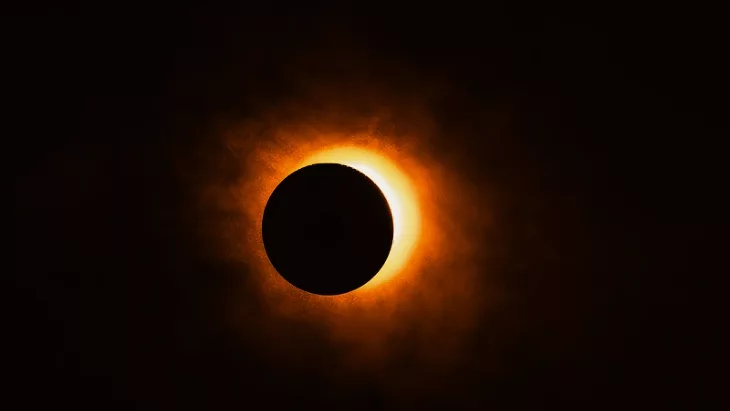
A total solar eclipse will cross Greenland, Iceland and Spain on August 12, while the phenomenon will be partially visible across much of Europe. Romania lies at the edge of the visibility zone: the eclipse will be observable only in certain regions, particularly in the west and northwest, very close to sunset, while it will not be visible in Bucharest.
Beyond the astronomical spectacle, eclipses have also become events closely monitored in the control rooms of transmission system operators. The reduction in sunlight causes a rapid drop followed by an equally rapid recovery in photovoltaic generation, and these variations must be offset by other power plants, batteries, cross-border exchanges or system reserves.
The eclipse will completely cover the solar disc in northern Spain and northeastern Portugal, while across much of the United Kingdom, France and northern Italy, coverage will exceed 90%, according to Financial Times. The same source cites an estimate by system operator Red Eléctrica, according to which solar generation in Spain could fall by as much as 5 GW, equivalent to approximately 13% of peak demand on a typical Wednesday in August. The impact, however, will be European, not merely Iberian. Financial Times cites French operator RTE and ENTSO-E, which estimate a temporary loss of approximately 9.7 GW of generation in Europe during the period of maximum eclipse intensity, around 19:15-21:30 local time. ENTSO-E has brought together national experts to assess preparations and the impact on the power system, while transmission system operators are preparing to offset the decline in solar generation with other energy sources.
Europe already has experience with such episodes. During the partial eclipse in March 2025, ENTSO-E estimated a temporary reduction of up to 21 GW in solar generation across Central Europe and, together with national operators, prepared fast reserves, real-time monitoring and cross-border coordination. The event was managed without major problems.
The direct impact on Romania should be limited because the phenomenon occurs in the evening, when photovoltaic generation is already declining, and the eclipse is not visible across the entire country. The implications are primarily European and only minor and indirectly relevant to Romania: power systems are interconnected, and simultaneous variations in solar generation across several countries can briefly alter electricity flows and balancing requirements.
Without posing a threat to power supply, the August 12 eclipse shows how much the European power system has changed: the movement of the Moon between the Earth and the Sun, predictable years in advance and visible for only a few minutes, is now sufficiently relevant to electricity generation for grid operators to include it in their preparations for system operation.
About Schneider Electric
Schneider Electric creates impact by maximising the value of energy and resources, connecting progress with sustainability. We are a global leader in electrification, automation and digitalization, providing AI-driven IoT solutions for smart industries, infrastructure, data centres and buildings.
With 150,000 employees in over 100 countries we promote diversity and innovation. Schneider Electric România, with 27 years in business and more than 300 employees, runs operations in Armenia and Moldova and provides support in 17 languages for 26 countries through the Bucharest Hub.