

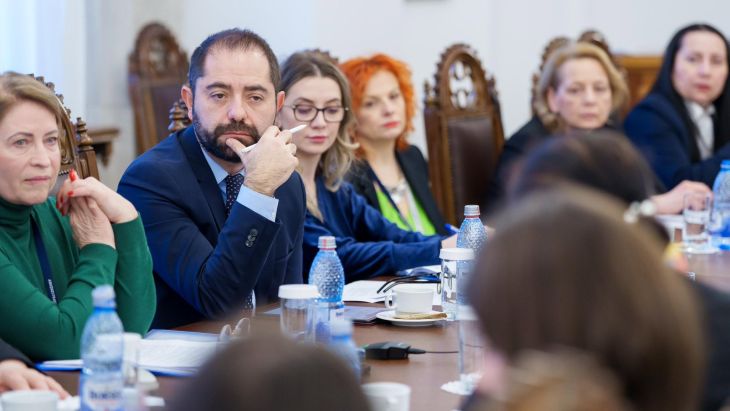
Romania must pay increased attention to energy infrastructure, interconnection, and the training of the specialists who manage the national energy system, stated Radu Burnete, Presidential Advisor for Economic and Social Affairs, during the second edition of the “Energy for Romania” event—organized by the Electrica Group and the Electrica Foundation, in partnership with the Atlantic Council.
In his remarks, Radu Burnete highlighted the role of energy sector specialists in maintaining the operation of the national system, even during challenging periods, noting that they deserve recognition for their work, according to Agerpres.
The Presidential Advisor also addressed the issue of human resources, drawing attention to staff shortages and the need to train the individuals who will manage energy infrastructure in the future.
Another topic covered in his address concerned the importance of interconnecting energy systems.
“Integration means connectivity. If we lack connectivity, we cannot have integration,” Radu Burnete asserted.
He also discussed the necessity of financing energy infrastructure and ensuring competitive tariffs for energy transmission. In doing so, the Presidential Advisor underscored the link between infrastructure development, interconnection, and the competitiveness of the energy system, within the context of the transformations the sector is currently undergoing. “In Romania, as you well know, we have a miraculous capacity to sometimes operate right at the limit. I think we even surprise ourselves with this at times, but things shouldn’t remain this way. This investment in people is extremely important. If you look at the Ministry of Labour’s website, you will see that the Ministry already reports a shortage of electricians—something I am sure many of you in this room experience in your own work. So, let’s solve this problem. A second point I would like to share—a lesson I believe we all relearned this past summer—is that resilience implies integration. Even with two reactors offline, we still had electricity—not by some stroke of luck, but because we were able to import it from our neighbours. This integration works both ways: if you want to import energy, you must also export it, and if you want to export energy, you must also import it. This applies in both good times and bad. The tendency I have sometimes observed—thinking only of ourselves when things are going well, and continuing to think only of ourselves even when our neighbours are struggling—is not productive; I would encourage us all to keep this in mind,” the presidential advisor noted.
In Burnete’s view, natural gas infrastructure is significant, and the most critical aspect concerns its financing. “Integration also implies connectivity; without connectivity, integration is impossible. In this context, energy corridors and interconnections are crucial—an area where Romania performs quite well. If I am not mistaken, regarding electricity, we are above the minimum threshold set by the European Commission. These corridors also ensure diversification, which, in turn, fosters resilience. We need diversification for both gas and electricity, and these two must be considered together. And since I’ve brought up gas, I’d like to add a few words. I believe this issue has been addressed somewhat superficially—I won’t go into further detail, as you know what I’m referring to. This infrastructure is vital; it is essential for Romania to be able to diversify its gas supply, and for Europe to break away from its reliance on Russian gas. Our primary concern must be infrastructure. How do we finance the necessary infrastructure? How do we ensure that the transport tariffs for this infrastructure remain competitive? Many of you in this room know that if infrastructure with competitive tariffs is in place, both sellers and buyers will naturally converge along that infrastructure, free from external pressures,” emphasized Radu Burnete.