

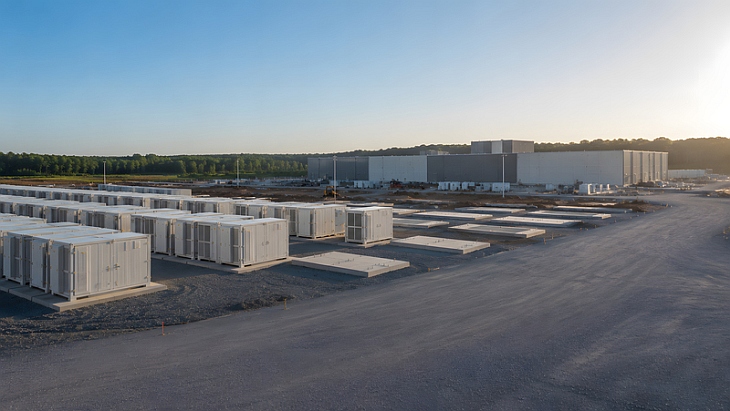
In the competition for 150 million euros in funding for stand-alone battery energy storage, state aid requests could fall to as little as 5,000 euros per MWh of storage capacity, compared with the maximum ceiling of 69,000 euros. Four companies consulted by Energynomics expect widely differing grant levels and warn that excessively low bids could undermine project viability.
Energynomics spoke with representatives of Think Blu Solution, REI Grup, Vector Capital and TDP Partners, companies involved in preparing battery storage projects or providing related advisory services.
According to MySMIS2021 data as of 6 November, 66 project applications had been submitted, alongside 241 drafts. The grants requested totalled 10.57 billion lei, 13.4 times the available budget. On 8 October, Energynomics reported that only 12 projects had been submitted. The Ministry of Energy extended the application deadline to 15 November 2026, at 23:59.
Estimates range from 5,000 to 30,000 euros/MWh
Cosmin Cheran, CEO of Think Blu Solution, says his company has prepared eight funding applications, three for its own projects and five for other beneficiaries. The amount of aid requested varies according to project size: approximately 25,000 euros/MWh for projects of 20-30 MWh and 10,000-15,000 euros/MWh for those exceeding 100 MWh.
Cheran believes that projects larger than 300 MWh could bid as low as 5,000 euros/MWh, anticipating “fierce competition” for funding. In his view, the selection process should also reward project maturity, including the availability of a building permit and a valid technical grid connection approval (ATR), while avoiding the concentration of the budget in a very small number of large-scale investments.
Roxana Mircea, managing partner at REI Grup, estimates that competitive bids could range between 5,000 and 10,000 euros/MWh, with an anticipated upper level of 15,000 euros/MWh. She stresses that the actual funding threshold cannot be determined before the call closes, as each project’s score depends on competing bids.
Andrei Gavriliță, CEO of Vector Capital, a company providing revenue modelling and developing business plans for medium-sized and large clients intending to apply under the funding call, believes that the attractiveness of grant funding must be assessed against the economic and operational advantages investors give up when choosing to access a grant.
“From our perspective, grants below 25,000-30,000 euros/MWh become difficult to justify economically. Savings of a comparable magnitude can be achieved through direct commercial negotiations with equipment suppliers, without the constraints and obligations associated with grant funding. Furthermore, developing a project without a grant gives investors significantly greater flexibility in structuring the investment, selecting suppliers and setting the implementation schedule. In the current storage market, speed of implementation is an essential competitive advantage that may be worth more than the benefit of a relatively small grant,” explains Andrei Gavriliță.
More storage for the same budget, but also implementation risks
TDP Partners refrains from putting forward an estimate of the competitive grant level per MWh, arguing that public estimates could influence other applicants’ bidding strategies. The company does, however, highlight the potential impact of competition on the amount of storage capacity funded. At the maximum ceiling of 69,000 euros/MWh, the 150 million euro budget would support approximately 2.2 GWh of storage capacity. A substantial reduction in the average aid requested could allow more than 4 GWh to receive funding. TDP believes that a project’s economic viability must be demonstrated even without the grant. The cost of capital, grid connection expenses and revenue structure are decisive in determining investors’ ability to deliver their projects.
Marian Dobrilă of TDP Partners says the deadline extension changes the competitive landscape because some projects would otherwise have missed the application window. He considers the figures reported in MySMIS impossible to justify economically: approximately 2 billion euros requested for 66 projects would imply more than 30 million euros per project, twice the ceiling of 15 million euros per beneficiary, even before accounting for the fact that a single beneficiary may submit several projects.
Dobrilă describes bids of 5,000 euros/MWh as “irrational”, arguing that they can only come from companies that do not understand how European funding works. At a project cost of 130,000-150,000 euros/MWh, he says, applicants requesting such low amounts lose money because accessing European funds entails substantial additional costs. As an example, he points to previous funding rounds under Romania’s National Recovery and Resilience Plan (NRRP) and the Modernisation Fund, where implementation rates for utility-scale projects have been low. TDP does not provide further details at this stage, saying that its market share gives it a statistically representative view of the sector. The company offers to present its data and methodology after the application window closes.
Andrei Gavriliță warns that highly aggressive bids, through which investors seek to maximise their chances of securing funding, could create a significant risk of projects never being implemented. “A grant secured at a very low level may subsequently become insufficiently attractive economically for the investor, particularly given the obligations and restrictions undertaken. There is therefore a risk that some projects will secure funding but ultimately not be implemented if the benefit of the grant does not justify the financial and administrative effort and the additional time required,” stresses the Vector Capital CEO.
Grid connection presents another risk. Cheran estimates that projects with an export capacity exceeding 5 MW, which are still at an early permitting stage, could face major difficulties in obtaining technical grid connection approval (ATR) and securing access to grid capacity. For certain projects in this category, he puts the risk of non-implementation at over 80%, a personal assessment rather than a statistic covering the entire portfolio of applications.
Questions over eligibility and implementation timelines
REI Grup also highlights provisions in the Applicant Guide that, in the consultants’ interpretation, require clarification. These include the CAEN codes (Romania’s classification of economic activities) applicable to stand-alone storage projects, the documentation required to demonstrate authorised business activities, and the relationship between energy storage capacity (MWh) and installed power (MW) in projects developed in phases.
The evaluation procedure allows a maximum of two requests for clarification, each with a response deadline of five working days, which may be extended under the conditions set out in the guide.
Investments must be completed and commissioned within a maximum of 48 months from the award of aid, with commissioning demonstrated through the grid connection certificate. Roxana Mircea warns that delays in grid reinforcement works, evaluation or contracting could affect project implementation schedules and financial close.
The competition will test not only how little aid developers are willing to request, but also their ability to turn winning bids into operational battery storage facilities.