

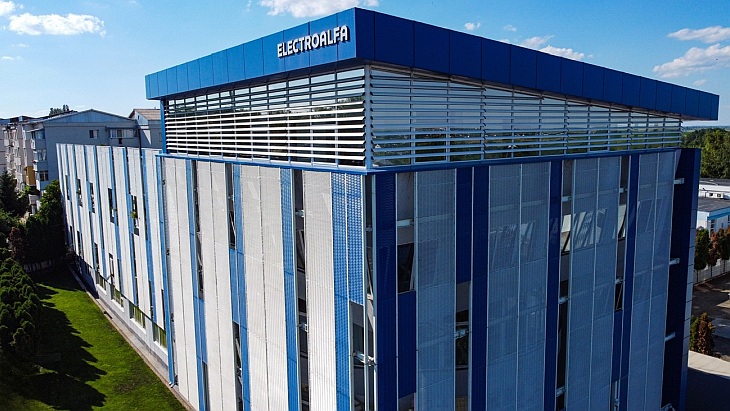
The local electrical equipment industry can invest in new capacity only if grid operators state clearly, for two to three years ahead, how many substations and how many projects they will put into operation, said Sorin Hanja, EPC Commercial & Development Director at Electroalfa, at the Leaders in Energy Transition North-West Region conference, an event organised by Energynomics.
“If we do not have predictability, if we do not know that the transmission and system operator, as well as the distributors, will put out so many substations, so many projects in the next two to three years, then you cannot make a plan,” said Sorin Hanja. Without such a programme, he explained, a company cannot justify a local production plan to an investor. Predictability in the development of the National Energy System is a type of support that the industry can receive without subsidies and without scrutiny from the Competition Council or the European Commission.

Gigawatts on paper, fewer in execution
 Investors come to Romania because the price of energy is high. “The price of energy is very high and there is a window: the next two, three, five years, in which investments are favourable.” But projects have to be completed within a certain time to be profitable, and without infrastructure they cannot be connected. “That is why we have very many gigawatts on paper and perhaps fewer gigawatts in execution.”
For Hanja, energy infrastructure is a critical element, and its development can be accelerated from both the public and the private side.
The most direct image of the bottleneck came in the discussion about 2027-2028. “It is pointless to install panels and batteries, fields of panels and batteries, if we cannot export them to the grid.” Hanja estimated about 2 GW of new capacity for 2027 and three or four for 2028, but specified that these figures depend heavily on infrastructure.
Skills, digitalisation and AI-assisted design
Electroalfa, a partner of the Romanian market for over 35 years and a manufacturer of medium- and low-voltage equipment and automation, has shifted its focus in recent years to integrated EPC projects. The company already uses artificial intelligence in design, and the digital twin will separate, in Hanja’s view, the designer who simulates scenarios from the one who stays with classical design.
The market is growing steeply, and to cope, companies must become ever more competent. “We have Academia Alfa in Botoșani, a modern training centre for young people and employees, where we offer access to practical training and an environment that encourages continuous development.”
Energy infrastructure, Hanja added, is no longer a subject for specialists but a normal, mandatory requirement for the proper functioning of electric cars, electrified trains at higher speeds, heat pumps and home air conditioning. With a clear plan from the operators, he suggested, the local industry could respond accordingly.
Leaders in Energy Transition North-West Region was organised by Energynomics, with the support of our partners: Elektra Renewable Support, Big Store, Electroalfa, ELNOS, EnergoBit, KSTAR, MBK Power Energy, SAJ Electric. Strategic partners ALEA, FREE, SAMER.
