

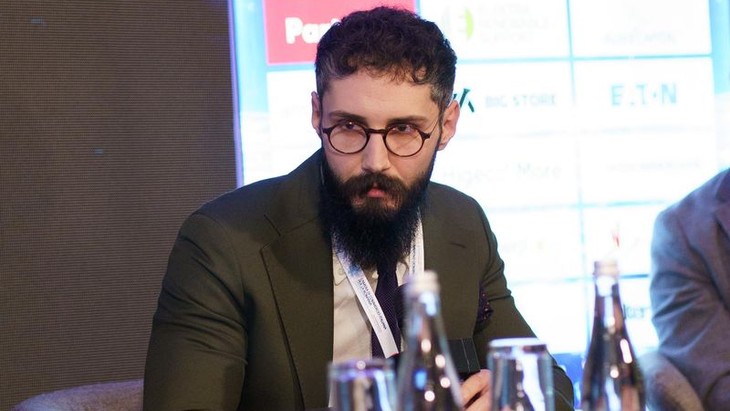
Romania’s energy transition is facing a growing challenge: while the country has strong engineering expertise, the available technical capacity is struggling to keep pace with the volume and complexity of new investments. According to Alexandru Costache, CEO of Tremi Group, strengthening specialised engineering capabilities and ensuring proper testing and commissioning are essential to delivering reliable energy infrastructure. He made the case at Leaders in Energy Transition – Bucharest, an event organised by Energynomics and the Italian Chamber of Commerce in Romania.
“To energize a substation or to energize a renewable park doesn’t mean that it’s also commissioned,” Costache said. In Romania, he explained, energising an asset is often treated as the finish line, because everything is expected to be done yesterday so that investors can start recouping their money. Tremi sees the consequences when it works with beneficiaries in the consultancy or operation and maintenance phase: poor execution, poor design and gaps left by rushing.
Capacity, not knowledge
Costache was direct about the root of the problem. “It’s not a matter of knowledge but a matter of capacity,” he said. Romania has always had great, well-prepared engineers, but there are not enough of them to cover the projects under execution and the pipeline in development.
He gave two reasons. Part of the expertise accumulated by previous generations of engineers has been lost through retirement and insufficient knowledge transfer to younger specialists. And many companies grew to meet demand, so their most experienced engineers moved into management, business development or project management, leaving too few in the field to execute a project properly. In many organisations, a small number of experienced engineers are expected to support multiple complex projects simultaneously, creating pressure on technical quality and limiting opportunities for mentoring and independent review.
His conclusion was practical. “In brief, we have knowledge to execute the projects, but we need to invest a little bit more in capacity and to grow technical teams, not only business development oriented teams or management oriented teams,” he said. Romania needs specialised companies for engineering, testing and commissioning, where deep know-how can be built and mature engineers can train younger ones.
The EPC mentality
Part of the reason, Costache argued, is a market habit. “If you ask a company what they want to be when they grow up, they will say an EPC company,” he joked about the way firms in Romania aim for the general contractor role. In his view, the Romanian market could do more to encourage the involvement and development of specialised engineering companies, with stronger support from project owners, EPC contractors and network operators.
Drawing on his international project experience, Costache noted that involving specialised engineering, testing and commissioning companies is an established practice in many complex energy projects across Europe, the Middle East and Asia. Depending on project requirements, independent technical verification or specialist involvement may also be explicitly required by project owners or utilities.
To grow such firms, he said, young and established engineers should be encouraged to set up their own, beneficiaries and EPC contractors should back them, and bank financing for equipment and team growth would help them reach 20, 30 or 50 experts who reuse know-how from one project to the next.
What success looks like
Asked what would signal progress in three years, Costache wanted projects in Romania that last and keep the grid sustainable.
His condition is about sequence. “We should also emphasize more on the engineering that has to be involved since the beginning, when we are sitting together to plan the project,” he said, alongside investment, equipment, financing and the supply chain.
A specialised engineer should follow the project from the earliest phases through to final handover, he emphasised, to help deliver reliable infrastructure. For investors focused on accelerating energisation, that is the difference between an asset connected to the grid and one that has been tested, verified and properly commissioned.
Leaders in Energy Transition – Bucharest was organised by Energynomics and the Italian Chamber of Commerce in Romania, with the support of our partners: Elektra Renewable Support, Alive Capital, Ansaldo Nucleare, Big Store, Eaton, Elnos, Higeco More, Intesa Sanpaolo Bank, KSTAR, MyEnerji, Renew Storage Energy, Tremi Group, Walter Tosto.