

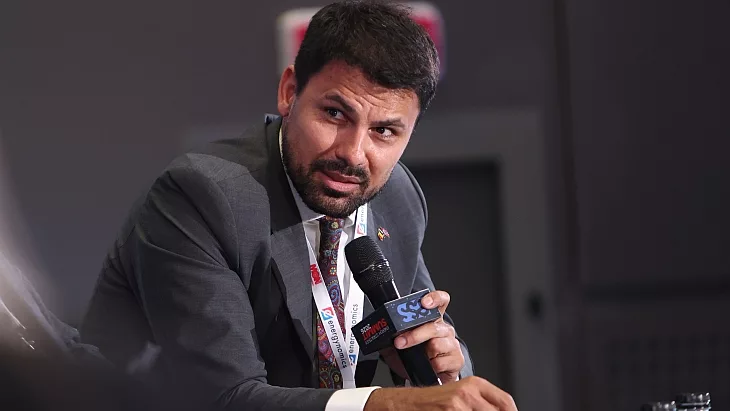
Developers of renewable projects in Romania face prohibitive costs for accessing the grid, and the future auction system for connection capacity could discourage investment, said Alexandru Pătrașcu, Country Lead Romania and Senior Business Development Manager of Scatec, at the Energy Strategy Summit 2026, organized by Energynomics.
“We have to solve the grid problem. We are very much in agreement with the idea of reducing from these 86 GW and 1,500 projects, but we have to think about the future. Let’s not reach two or three years from now and say we have no projects. From my perspective, what is happening now with ANRE is OK, but let’s not go with paying the connection right in four months, because it is not feasible from a developer who wants to build in Romania”, said Pătrașcu.
Scatec’s representative gave the example of a 200 MW greenfield solar project analyzed by the company in Oltenia, for which the solution study showed the existence of connection requests totaling 2.8 GW before the project. In these conditions, the connection to the Ghizdaru station would have required either its modernization with approximately 8 million euros, or the construction of a new station and the realization of network strengthening works estimated at approximately 170 million euros.
According to him, the introduction of guarantees for the reservation of network capacity is a welcome measure to eliminate speculative projects, but the real challenge will arise with the implementation of auctions organized by the transport operator. Pătrașcu estimated that for a 200 MW project the cost of accessing the network through the new mechanism could reach approximately 20 million euros, an amount to which are added the guarantees, development costs and commercial risks associated with finding energy sales contracts.
In his opinion, Romania risks becoming less attractive for investors compared to other European markets. He pointed out that in the absence of support schemes such as contracts for difference (CfD), developers will have to rely mainly on bilateral corporate PPA contracts in a market that is still insufficiently mature. At the same time, funding for grid modernization should not be transferred to renewable project developers. Otherwise, the economic feasibility of investments will be significantly affected, and Romania could lose important projects in the competition to attract international capital.
At the same time, Pătrașcu showed that the development of standalone batteries, following the Polish model, could contribute to solving some local problems in the energy system and to a more efficient use of the existing infrastructure.
Energy Strategy Summit 2026 was organised by Energynomics, with the support of our partners: Elektra Renewable Support, 4P Renewables, ABB, Alive Capital, Atmoce, Baringa, BCR, Big Store, Capalo AI, CBRE Romania, Distribuție Energie Electrică România, Eastship, Distributie Oltenia parte din Evryo, Eaton Electric, Electrica Furnizare, Electroalfa, Electroprecizia, EnergoBit, Enery, Enexus, Eurowind, Evryo, Exim Banca Romaneasca, Hagag Energy, KStar, LONGi, MBK Power Energy, MET Romania Energy, Monsson Trading, Nextpower, OX2, Romgaz, Schraubram, Sigenergy, Softenerg WEBUS 4 ENERGY, Solar Today, Sunotec, TBEA, Think Blu Solution, Transelectrica, Waldevar Energy, WTW Romania. Coffee Break Partner Enerta. Lanyard Partner Monsson Operation. Beverage Partners Aqua Carpatica, Alexandrion. Digital Partner Imsol. Mobility Partner BlackCab.