

Romania’s renewable-energy market is entering a phase in which the size of the project pipeline matters less than the ability to turn projects into construction. For investors with financing, procurement and execution capabilities, the gap between projects under development and projects that can actually move forward could create an opportunity.
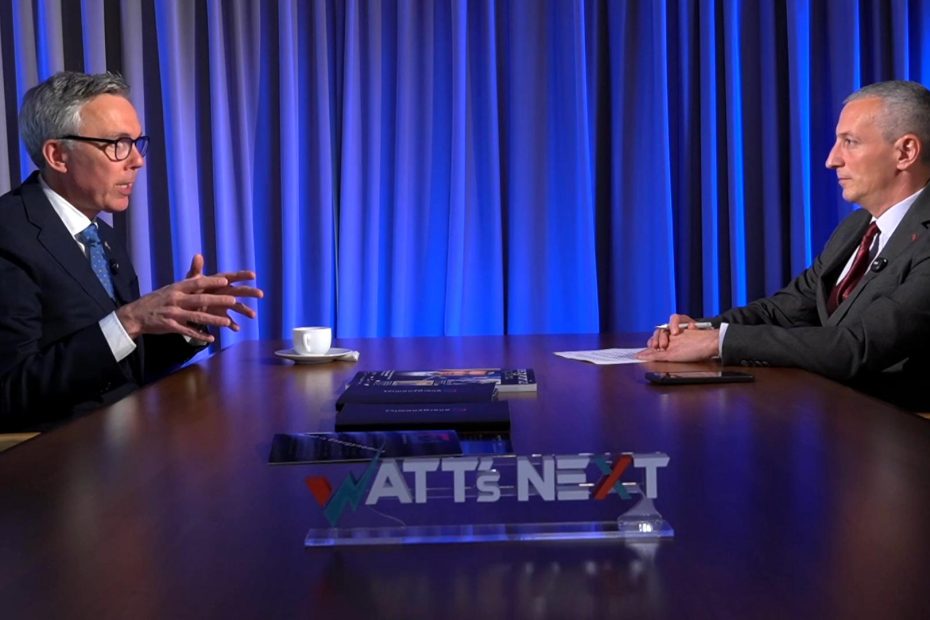
“There are, as you said, quite a lot of projects in the market, not so many projects moving forward,” Terje Pilskog, CEO of Scatec, said in a conversation at WATTs Next, the Energynomics podcast.
Pilskog described a market with projects at very different stages of development and considerable variation in quality and readiness. Terms such as “mature” or “ready to build” are not necessarily used consistently, he noted, so Scatec’s local team is filtering potential acquisitions and partnerships to identify projects that can reach construction relatively quickly.
The pressure is increasing as some developers are approaching grid-connection deadlines and will have to decide whether they are able to move forward. That pressure could create opportunities for investors looking for projects they can move forward.
Scatec argues that its integrated model, covering development, financing, engineering, construction and long-term operation, can help it move faster by reducing some of the commercial interfaces and negotiations required when those capabilities sit with different parties.
“Predictability is obviously incredibly important in what we do,” Pilskog said. “We do not want to make any commitment related to any project without being certain that we are able to deliver on them.”
Scatec says the contracts required for its current Romanian developments are in place and that it can draw on procurement activity across a global construction portfolio of between 1 GW and 2 GW. The company has also opened a Romanian headquarters and is recruiting locally, with Pilskog pointing to the availability of professionals who understand renewable energy and the Romanian power market.
Romania is also significant for Scatec because its local wind development is the company’s first wind project in Europe, requiring relationships with a different set of European suppliers and contractors.
A market where investors can enter faster
The existing pipeline is one of the reasons Pilskog considers Romania attractive compared with other European markets.
“It is possible to get into the market relatively quickly,” he said.
Investors do not necessarily have to start from greenfield development. They can enter through projects already under development, find partners or secure projects and move relatively quickly towards construction.
Technology economics are also improving. Pilskog pointed to continued declines in solar-module and battery prices, with wind-turbine costs also easing. Together with the existing project pipeline, falling technology costs strengthen the case for entering Romania now.
Pilskog cited roughly 11 GW of renewable capacity in Romania and a target of 22 GW by 2030, implying substantial additional deployment over the rest of the decade.
Renewables could attract new investment
Scatec’s investment case is not limited to supplying existing electricity demand. Pilskog sees competitively priced renewable energy as a potential factor in attracting new consumers and industrial investment, with data centres one possible source of future demand. Pilskog argued that competitive renewable electricity could also help attract new investment to Romania.
Romania’s solar and wind resources and the scale of the country support that proposition. The argument also depends on new electricity demand emerging alongside new generation, with data centres one potential source identified by Pilskog.
For Scatec, the more relevant distinction is between the large number of projects under development and the smaller number that can actually move forward into construction.
The longer-term investment case still depends on predictability. Renewables are long-term investments, Pilskog said, making predictability particularly important even as technology costs continue to fall.
Pilskog’s conclusion is that the economics have moved far enough to justify investment now. He believes renewables are now competitive with most other sources of electricity generation. That, he said, “gives us the comfort that it’s good to invest now.”
Romania’s pipeline shows that investor interest is already present. The next phase will test how much of that pipeline can be financed, built and brought into operation. For investors with the capacity to execute, that gap is also part of the opportunity.
