

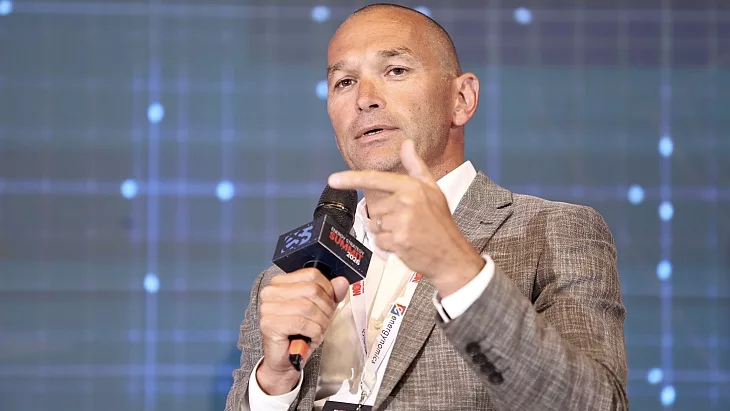
The gap between the pace of private investment in power generation, the rate of grid development, and the institutional capacity for regulation has become a systemic risk for Romania’s energy transition, said Zoltan Nagy-Bege, director of the energy markets department at CIGA Energy.
“We have a problem related to the synchronization of these three different paces and the gap between them. Unfortunately, we must acknowledge that this is a systemic risk that we need to address as soon as possible,” said Nagy-Bege at the Energy Strategy Summit 2026, organized by Energynomics.
He noted that Romania has passed the point where it must decide whether or not to undertake the energy transition, and the real question now is whether it can do so in a timely and coordinated manner. In his view, this transition is taking place in three simultaneous phases that are not synchronized.
First, private capital and generation projects are moving at full speed, as evidenced by the fact that there are currently about 1,500 projects in various stages of authorization, representing tens of gigawatts. Second, grid infrastructure and storage are already lagging behind installed generation capacity, while institutional and regulatory capacity is moving the slowest of all.
“We say we want cheap energy, we want investments in grids, we want investments in generation capacity, yet the measures actually taken are delaying these investments,” he said.
Another overlooked aspect is the skilled workforce, an issue that is already having a visible impact on the nuclear sector. Similarly, the ability to respond to crises—whether cyberattacks, hybrid events, or supply shocks—remains insufficiently discussed. Nagy-Bege also drew attention to the lack of a contingency plan in the event that the 6–7 GW planned for construction by 2030 are not built, as well as if investments in energy storage do not materialize in time, and thus thousands of MW of renewable energy projects will create significant congestion in the system.
“The fact that, in general, we don’t have a contingency plan is a risk we need to address as soon as possible,” Bege added.
Energy Strategy Summit 2026 was organised by Energynomics, with the support of our partners: Elektra Renewable Support, 4P Renewables, ABB, Alive Capital, Atmoce, Baringa, BCR, Big Store, Capalo AI, CBRE Romania, Distribuție Energie Electrică România, Eastship, Distributie Oltenia parte din Evryo, Eaton Electric, Electrica Furnizare, Electroalfa, Electroprecizia, EnergoBit, Enery, Enexus, Eurowind, Evryo, Exim Banca Romaneasca, Hagag Energy, KStar, LONGi, MBK Power Energy, MET Romania Energy, Monsson Trading, Nextpower, OX2, Romgaz, Schraubram, Sigenergy, Softenerg WEBUS 4 ENERGY, Solar Today, Sunotec, TBEA, Think Blu Solution, Transelectrica, Waldevar Energy, WTW Romania. Coffee Break Partner Enerta. Lanyard Partner Monsson Operation. Beverage Partners Aqua Carpatica, Alexandrion. Digital Partner Imsol. Mobility Partner BlackCab.