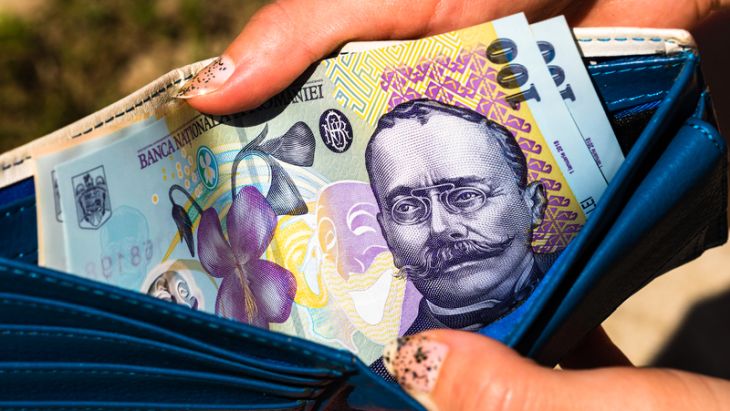
Romania has officially entered stagflation, with a stagnation of economic activity in 2026 and with inflation that continues to strongly affect consumption and economic competitiveness, a Frames analysis shows. Consumption fell by 2.5%, and the economy contracted by 0.7% in the first semester.
Estimates regarding the increase in prices in the energy area this autumn (electricity, gas, gigacalories, water) risk prolonging this economic freeze until the second semester of 2027, the analysis shows. The only good news is that the economy is surviving all the challenges, the resilience of the business environment being remarkable considering the business conditions, from unpredictable taxation to high inflation, negative sales dynamics and the deepening financial blockage.
The press release of the National Institute of Statistics published on Monday, September 7, brings the first provisional version of the Gross Domestic Product for the second quarter and confirms the signal estimate from August. The official title is neutral: GDP remained unchanged compared to the previous quarter. The figure behind it is not.
In the second quarter of 2026, the Romanian economy produced a GDP of 494.4 billion lei on the gross series, 10.8% more in nominal terms than in the second quarter of 2025. In real terms, it produced 0.4% less.
“The difference between the two figures — the GDP deflator, which was 11.2% — is the technical definition of stagflation. All of the apparent growth in the economy is price. None of it is volume,” says the analysis by the Frames think tank.
On a semester-by-semester basis, the picture is identical: nominal GDP of 900.4 billion lei, up 9.4% from the first semester of 2025, but down 0.7% in real terms. And on the seasonally adjusted series, which eliminates calendar effects and is the series that analysts read for trend, the annual contraction is 2.0% in the second quarter and 1.6% per semester.
Three quarters without growth
The most useful table in the press release is not the one with the title, but the seasonally adjusted series compared to the previous quarter. It shows 98.1 in Q4 2025, 99.9 in Q1 2026 and 100.0 in Q2 2026. Translated: a 1.9% drop in the last quarter of last year, a 0.1% drop at the beginning of this year and a perfect stagnation in Q2.
Cumulatively, the real level of the economy is about 2% below the peak reached in Q3 2025.
Romania has not technically entered a recession — for that it would have needed two consecutive quarters of quarterly decline, and Q2 narrowly avoided that, by zero. But it has not grown for a year.
The comparison with last year is brutal. In 2025, the annual indices on the raw series showed 100.6, 102.5, 101.3 and 98.8. In 2026: 98.5 in Q1 and 98.1 in Q2. The breaking point was Q4 2025, which is exactly when the fiscal consolidation package — VAT increase, excise duty increase, and elimination of energy cap — began to take effect.
Where the economy broke
The INS press release allows, for the first time this year, a reading by branches. Contributions to the change in GDP in the first semester are systematically negative where the share is high.
“The hardest hit comes from the wholesale and retail trade, transport and storage, hotels and restaurants block — 21.6% of GDP, the largest share in the economy. Its volume of activity decreased by 3.9%, which cut 0.9 percentage points from GDP. It is the sector that is directly related to population consumption and the circulation of goods,” say the experts from Frames.
Industry, with 16% of GDP, lost 2.9% of volume and decreased GDP by another 0.5 points. Information and communications, the sector that Romania has been invoking for a decade as the engine of modernization, lost 3.5% of volume. Real estate transactions lost 4.5%. Public administration, education and health, taken together, lost 1.7% — a direct effect of the reduction in public spending.
On the positive side, three branches remain, all with a small share. Construction grew by 12.3% in volume and added 0.7 percentage points, but weighs only 6.2% of GDP. Entertainment, cultural and recreational activities rose by 11.7%, with a share of 4.3%. Agriculture grew by 3.5%, with a share of 1.7%.
“The arithmetic is inescapable: total gross value added fell by 1.0 percentage point. What limited the GDP contraction to 0.7% were net taxes on product, which added 0.3 points. In other words, part of the difference between an economy that shrinks by one percent and one that shrinks by seven tenths comes from the fact that the state collected more, not from the fact that the economy produced more,” the analysis shows.
Consumption has broken down, public investment keeps the economy afloat
According to the Frames analysis, on the use side, the picture is even clearer. Household final consumption expenditure, which represents 61.2% of GDP, fell in volume by 2.5% and cut 1.5 percentage points of GDP alone. In the second quarter, its negative contribution rose to 1.9 points. It is the most severe contraction in private consumption in the last decade outside the pandemic year.
In the mirror, gross fixed capital formation increased by 10.9% in volume and added 2.4 percentage points, and in the second quarter alone, 4.1 points. The effective collective consumption of public administrations rose by 6.0%. Public investment and collective state spending are, practically, the only components that still push the economy upwards.
However, their effect was almost entirely canceled by the variation in inventories, which decreased GDP by 2.2 percentage points per semester and by 2.0 points in the second quarter. Companies are consuming their inventories instead of producing — the classic signal of an economy in which demand has suddenly stopped and producers are no longer renewing.
Net exports fell another 0.1 points, with imports increasing by 1.6% in volume compared to 1.3% in exports. The trade balance remains a structural deficit of almost 50 billion lei in six months alone.
About Schneider Electric
Schneider Electric creates impact by maximising the value of energy and resources, connecting progress with sustainability. We are a global leader in electrification, automation and digitalization, providing AI-driven IoT solutions for smart industries, infrastructure, data centres and buildings.
With 150,000 employees in over 100 countries we promote diversity and innovation. Schneider Electric România, with 27 years in business and more than 300 employees, runs operations in Armenia and Moldova and provides support in 17 languages for 26 countries through the Bucharest Hub.