

UPDATED
We have corrected and expanded the original text to include further details on the legislative procedure and a comment from Eusebiu Stamate, senior public policy analyst for energy and the environment at Issue Monitoring, a platform for legislative monitoring and analysis.
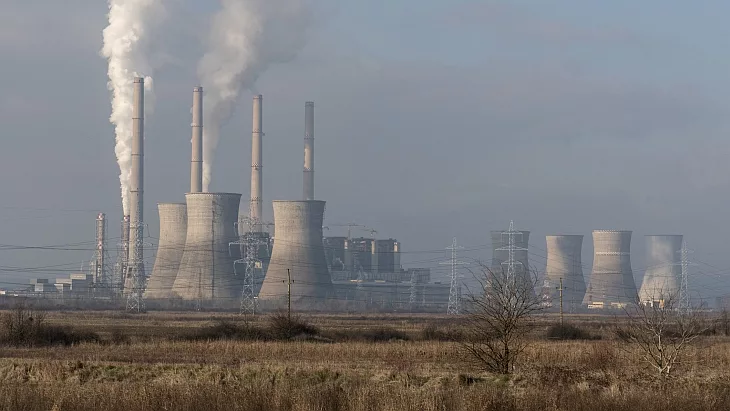
Yesterday, the Chamber of Deputies completed its part of the procedure for amending Government Emergency Ordinance No. 108/2022 on the decarbonisation of the energy sector. The adopted text makes the phasing out of lignite and hard coal-fired capacity conditional upon the installation, connection and commissioning of ‘similar energy capacity’ with low carbon emissions. These must, individually or collectively, replace the withdrawn available electrical capacity and must not affect the adequacy or safe operation of the national electricity system (SEN). If the coal-fired units supply thermal energy or process steam, the new installations must also take over these functions. Compliance with these conditions must be demonstrated, prior to decommissioning, by means of the commissioning documents and authorisations issued in accordance with the law.
The bill has gone through the Chamber of Deputies – Senate – Chamber of Deputies, and the parliamentary procedure has been completed. The next stage, prior to promulgation, is the period during which a referral may be made to the Constitutional Court.
The amendment comes amid a contentious political debate over the commitments undertaken by Romania under the National Recovery and Resilience Plan. The Minister of European Investments and Projects, Dragoș Pîslaru, warned that failure to meet the decarbonisation milestones could result in the loss of hundreds of millions of euros and put payments worth billions of euros at risk.
Lawmakers supporting the new version argue, by contrast, that closing units before the alternatives are effectively available would create a risk to energy security.
However, the adopted text does not clarify the mechanism by which new capacity will be officially identified as a replacement for a specific coal-fired unit. The law does not specify who makes the designation, by what administrative act it is approved, according to which methodology the equivalence is calculated, or which authority definitively confirms that all conditions have been met. ANRE can authorise and licence a power station, and Transelectrica can assess the impact on the grid and its adequacy, but neither institution is explicitly assigned the role of designating the alternative capacity. “It remains a matter of implementation,” observes Eusebiu Stamate, senior analyst for energy and environmental public policy at the legislative monitoring and analysis platform Issue Monitoring. “The law uses the term ‘similar energy capacities’ without defining it and without designating the institution responsible for establishing equivalence between the withdrawn capacity and its replacement.” Authorisations, licences and adequacy assessments cover distinct elements, but it is not clear which of them certifies that all the conditions imposed by the law have been met, emphasises Eusebiu Stamate.
A clear mechanism could reduce the dispute over closures
A transparent procedure for linking retired units with the capacities replacing them could ease the political and institutional conflict. Romania is commissioning new renewable power plants, storage facilities and other generation capacities, while ANRE frequently includes the granting of establishment authorisations and commercial operation licences on the agendas of its meetings.
The number of authorised projects and newly commissioned capacities does not, however, automatically resolve the issue. An establishment authorisation does not mean that the investment has been built, while an operational renewable power plant is not necessarily equivalent to a thermal unit with the same nominal capacity. Its contribution to adequacy depends on the generation profile, firm capacity, location within the grid, system services and, in the case of batteries, power and discharge duration.
A complete mechanism should include the nomination of the replacement capacity, technical assessment, official designation and publication of the association in a registry. The procedure should prevent the same power plant from being used to justify the closure of several units and should establish whether the new capacities can take over district heating and steam supply to industrial consumers in addition to electricity generation. The adopted text, however, sets out neither the procedure nor a timetable for its definition and implementation.
Can CE Oltenia continue operating until the alternatives are available?
The debate over keeping coal in the system is based on the assumption that the existing units can continue operating under technically and financially sustainable conditions. The situation at Complexul Energetic Oltenia, however, calls that assumption into question. According to an article published exclusively by Profit.ro, the company lacks the resources needed to purchase emissions allowances, while the state does not have the funds required to cover the obligation. CE Oltenia is seeking to borrow allowances worth up to approximately 120 million euros.
The lack of funds for CO2 allowances adds to the need to finance maintenance, lignite supply and the continued availability of the units. Under these conditions, the debate should not be limited to a choice between closure and continued operation. The relevant question is whether Romania can keep its coal-fired capacities operational until the replacements become available, and at what cost. Without a financial and technical answer, the new law may postpone the retirement obligation without guaranteeing that the units concerned will be able to generate the electricity on which the system relies. In addition, Romania risks losing funding under the National Recovery and Resilience Plan if the amendment is interpreted by the European Commission as a departure from the agreed timetable and from the irreversible nature of the decarbonisation reform.
