

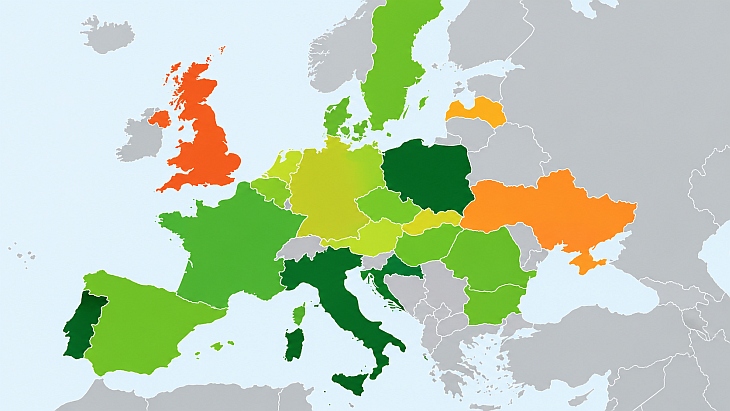
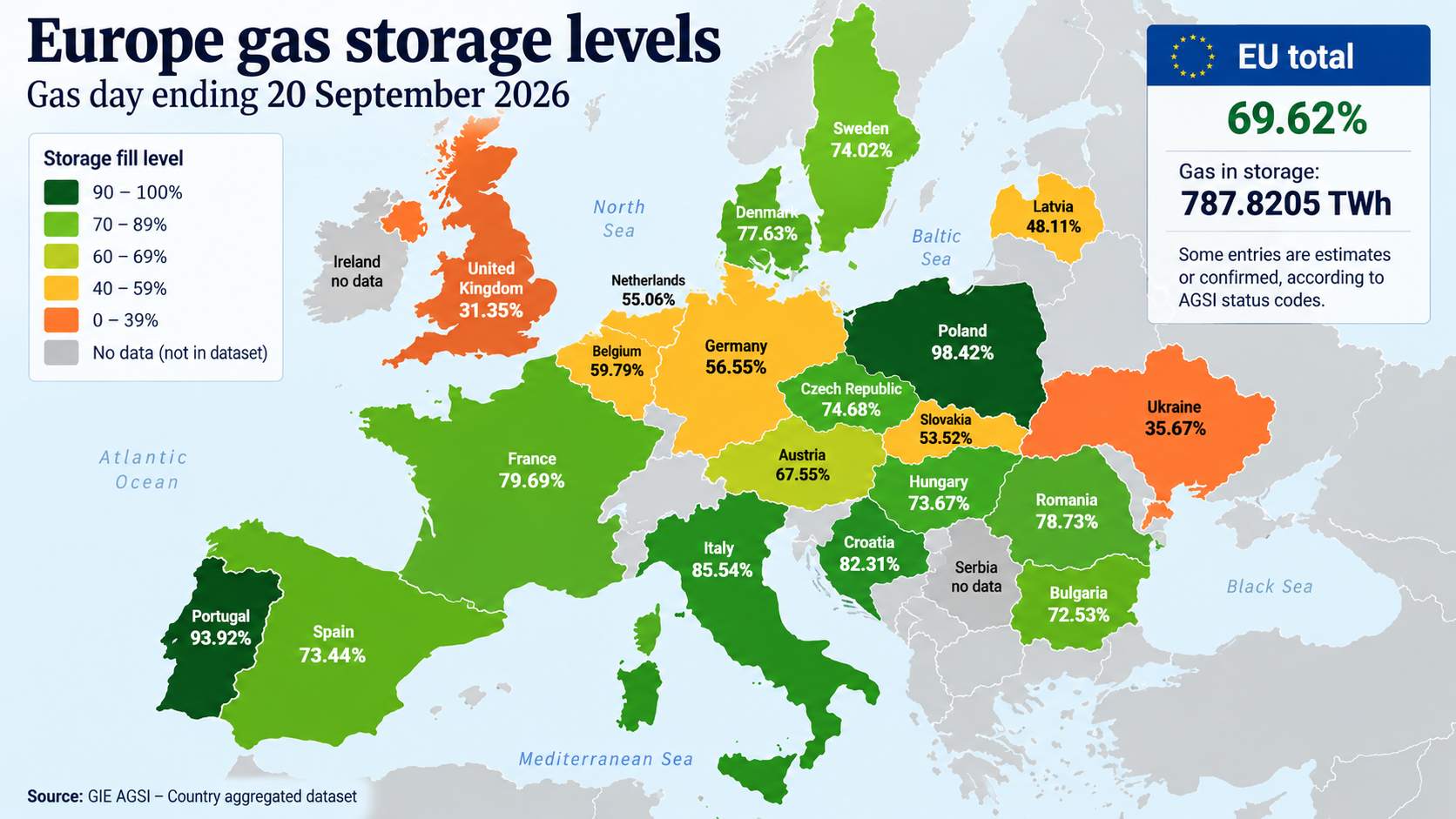
Europe is approaching the cold season with gas storage facilities filled to only 70% capacity—compared to the 85% average recorded at this time over the last five years—while high prices for gas, diesel, and other fuels are mounting economic and political pressure on governments, Reuters reports.
Germany and the Netherlands, which together hold 35% of the EU’s storage capacity, are among the countries lagging furthest behind in replenishing reserves. High prices driven by disruptions linked to the US-Israel conflict with Iran have discouraged companies from purchasing gas and governments from mandating the achievement of national storage targets, according to News.ro.
The initial strategy relied on the assumption that the conflict with Iran, which began in late February, would end quickly, prices would fall, and companies would be able to replenish stocks at lower costs.
“Every month that Europe delays replenishing stocks increases pressure on prices as we approach the peak winter consumption period,” said Jonathan Schroer, a strategist at UniCredit.
The European benchmark gas price has reached €81/MWh—150% above the level seen a year ago and exceeding the adverse scenario factored in by the European Central Bank. Morgan Stanley estimates that, depending on the weather, the price could climb as high as €100/MWh.
Pressure is also mounting regarding other fuels. With oil prices having surpassed $100 per barrel, gasoline in the EU is 24% more expensive than a year ago, diesel is up 38%, and jet fuel has risen by over 100%.
Analysts warn that even a winter with normal temperatures could severely deplete gas reserves. Replenishing them via imports in 2027 could keep the liquefied natural gas market under pressure for several months.