

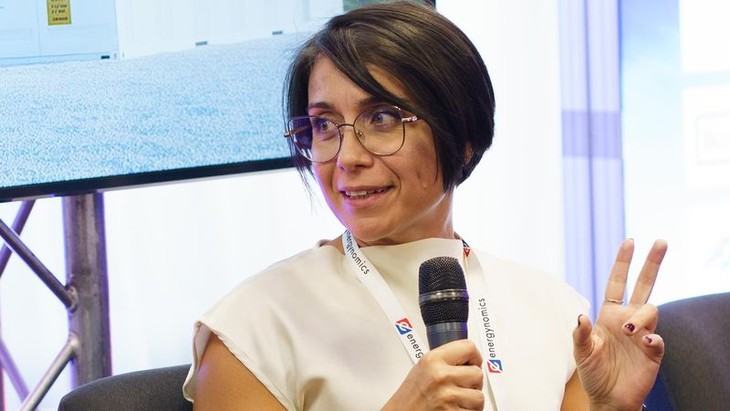
No single insurance policy can cover every risk and exposure of all the parties involved in a battery storage project, and the most effective way to avoid gaps as far as possible is a program controlled by the owner/beneficiary, said Diana Tobă, Vice President, Energy & Power Leader Romania at Marsh Romania, at Romanian BESS on the Fast Track, a workshop organised by Energynomics.
“There’s no single insurance policy that can answer to all these risks,” Tobă said.
Developers, EPC contractors, suppliers, lenders, optimizers, consultants and designers each have an interest and an exposure in the same project, and everything is interconnected. An owner’s controlled insurance program, in which the owner arranges the main cover for the project and the contractors are insured under it, best answers what lenders expect and protects the owner’s own exposures, as well as those of all the other parties involved, she said.
Where the gaps appear
Under such a program, EPC contractors and suppliers keep only the risks that are strictly theirs: professional indemnity for the designer, third-party liability for the contractor’s own activities, marine cargo for a supplier that delivers the equipment to the site, etc.
Other exposures usually concern only the owner and the lenders, such as a delay in start-up caused by damage during construction or transport. For example, if a transformer is damaged in shipment, a standalone battery project could be delayed by at least 18 months, a loss of potential revenue that is not the EPC contractor’s risk, Tobă said.
The problem grows when each contractor brings its own policy for its works, for example one issued by the contractor for the grid connection works and a separate one for the battery installation works. If a single loss affects both scopes of work, it is unclear which policy responds and which deductible applies, or what indemnity each of the parties that suffered a loss will receive. With responsibilities set out from the start, a claim is easier to settle and lenders are more comfortable with the exposures of the project they finance.
What insurers check, from design to testing
“Local insurers weren’t really prepared for the BESS revolution that happened in the last years,” Tobă said. Appetite for battery projects exists, but mainly among specialised insurers, supported by markets with longer experience such as the UK and the Nordics.
Insurability also weighs on financing, since the insurance programme is one of the protections a sponsor offers to lenders. “We always facilitate preliminary discussions with insurers for our clients, from the early stages of their project,” she said.
In co-located projects, a failure in the shared transformer station affects both the generating unit and the battery. “For insurers it’s very important that the BESS can operate independently from the solar or the wind project,” Tobă said.
The highest risk exposure comes before commercial operation. “There’s a lot of risk that happens during testing, and that’s the peak moment of exposure,” she said, including for cyber incidents. Cyber cover has broadened: “What is new, and has happened this year, is cyber property damage, which was completely excluded until this year.”
Romanian BESS on the Fast Track was organised by Energynomics, with the support of our partners: Elektra Renewable Support, ADEX Energy, Adrem Asset Management, BLU Capital, Dongfang Electric, Electroalfa, Enery, Enexus, Gotion, ING Bank, Marsh Romania, Softenerg WEBUS 4 ENERGY.