

Romania’s renewable energy market is entering a new stage, in which speed of execution is still important, but no longer sufficient. The next competitive advantage will come from the ability to control risks, integrate technologies and maximize the value of each project over its full lifetime.
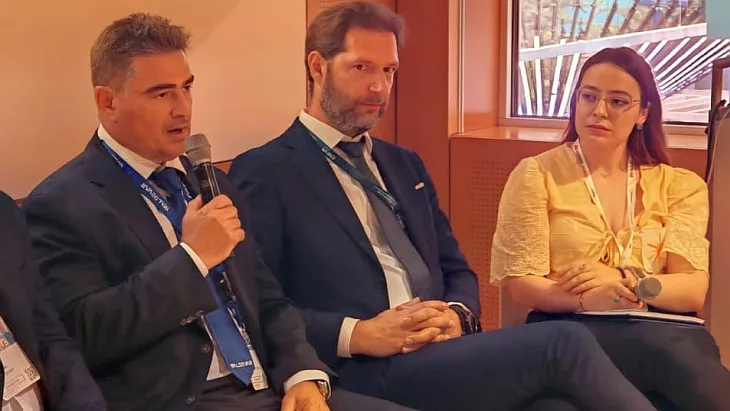
This was the main message delivered by Christian Leonte, CEO Waldevar Holding, during the Romanian market workshop organized by RPIA at Intersolar Europe 2026.
Leonte described the evolution of the Romanian market as a shift from dependence on large international EPC contractors to a more mature phase, in which local companies have built the technical, financial and organizational capacity to deliver large, complex and bankable projects. “The local market reality is the most important thing,” he said, referring to the practical knowledge needed to deliver projects in Romania. Permitting, grid connection, Transelectrica protocols, real timelines and administrative constraints cannot be fully understood from outside the market or learned from books. They require local experience and operational presence.
According to Leonte, this is where Romanian EPC companies have become increasingly relevant. They combine market knowledge with economic efficiency, without compromising quality, and have grown by working with international investors, utilities and IPPs that brought demanding standards to the market.
He also emphasized the importance of continuity. A renewable energy project does not end at commercial operation date. It is an asset with a lifetime of around 30 years, which must be designed, built, connected, operated and maintained with that perspective in mind. Local EPCs, he argued, can remain involved across the full life cycle of the project, from design and construction to grid connection and operations and maintenance.
For investors and lenders, this continuity is directly linked to risk. Renewable projects are, in Leonte’s words, a permanent exercise in risk mitigation. The credibility of risk transfer depends not only on the contract, but also on the real capacity of the partner delivering the project. A company with its own workforce, equipment and technical teams can manage execution risk differently from a model that depends heavily on subcontractors.
Waldevar has built this model deliberately. Leonte said the company invested strategically in internal capacity, not only in human resources, but also in equipment, engineering, grid connection, operations and maintenance. The objective is to reduce dependency on subcontractors and to control the rhythm of project execution.
This approach allows the company to move teams quickly from one project to another, manage several projects in parallel and preserve organizational knowledge. Experience accumulated in Romania, Italy, France, Germany, Kenya or other markets becomes part of the company’s internal know-how and helps it identify problems before they become critical.
The same logic applies to technology. Waldevar has developed its own SCADA solution, works on cybersecurity alignment, and delivers EMS solutions for hybrid projects combining solar, wind, batteries, hydro and other technologies. This reflects a broader market transformation: Romania is moving from simply adding new megawatts to using each megawatt more intelligently.
Leonte framed this transition as a move from volume to maximization. In the first phase of the market, the priority was to bring more capacity online. Now, developers and investors must focus on more efficient capacity, closer to consumption points, better connected to the grid and capable of integrating storage and digital control.
Floating PV is one of the technologies that illustrates this shift. Waldevar is implementing what Leonte described as the largest floating PV project on a hydropower dam in Europe. The project uses water surfaces instead of land, reduces pressure on agricultural areas and benefits from existing hydro infrastructure, including connection points, access roads and O&M teams.
The technology also brings efficiency gains. Water cooling can improve module performance, while the floating system can reduce evaporation and limit algae formation. At the same time, it allows renewable capacity to be added without competing directly with land use.
Waldevar is also investing in the supply chain behind this technology. Leonte said the company is developing what he described as the largest floating systems factory in Europe, designed to reduce transportation costs, strengthen local production and support deployment not only in Romania, but also in other European and regional markets.
For Leonte, the Romanian renewable sector has already demonstrated that it can build at scale. The next challenge is to build smarter, manage risk better and turn local expertise into a long-term competitive advantage.