

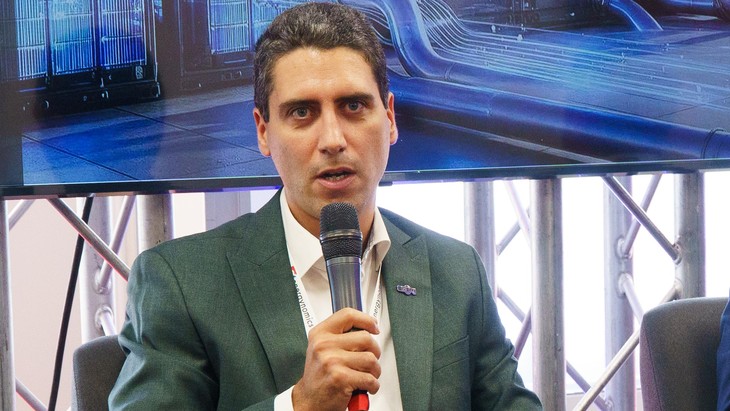
Romania’s battery storage capacity will probably reach 3 GWh by the end of the year, three times the level of a year ago, but the projects already in operation were built on a high equity share and complex financing, and the country can do much more, said Krasimir Zhivachki, Senior BESS Product Manager at Enery, at Romanian BESS on the Fast Track, a workshop organised by Energynomics.
“Those projects that are already on the market have been built the hard way. By the hard way I mean on a high equity share, with a complex financing structure or a complex offtake, or very good offtake conditions,” Zhivachki said.
Romania now has about 2.3 GWh of batteries, by his count. The easy opportunities have been used up, and the next projects will need better lending opportunities or a strong investment side. Bulgaria grew faster on the back of large CAPEX support schemes; Romania moves more slowly but could spend public money better, he argued, “because the market for batteries is there. You just have to look for the right partners in order to make your project bankable.”
What saturation looks like in Bulgaria
Enery aims to co-locate batteries with its solar projects where possible. “We view solar and BESS as hedging each other. If the market is volatile, the BESS has the larger profit; if the market is flat, you would expect higher profit from the PV,” Zhivachki said.
Bulgaria, probably the first European market to show saturation on the battery side, is changing the calculation on duration. “In a market that is very saturated, like Bulgaria, those two-hour evening spikes are becoming levelled out, and the spread difference between the two-hour and the four-hour battery goes down to around 12%,” he said. Enery is now considering four-hour and even longer-duration systems for markets where it expects saturation.
The most lucrative opportunities saturate first, Zhivachki said. Large batteries can then earn from spreads across the majority of off-peak hours, while smaller ones still find room to be fully optimized on the intraday market and in ancillary services. Intraday liquidity in Bulgaria has grown by close to 150% since February, he added.
The EMS as the owner’s audit layer
Many investors give the energy management system (EMS) a low priority, although it shows the owner how both the equipment and the trader perform. “The EMS is the layer that gives you independence, or let’s say an audit perspective, on the equipment on one side and on the trader on the other side,” he said.
A weak EMS costs revenue. Zhivachki described projects that needed three months to integrate the EMS with the trading software, and assets that lost communication at the moment of activation. “You get an activation from Transelectrica, you don’t perform it, you’re kicked out of the market,” he said.
Enery began trading almost four years ago on its own assets and now also optimizes batteries and renewables for third parties, in several markets.
Merchant pays more, lenders want contracts
In Romania, Enery is building a hybrid project of about 700 MW of solar with a 1 GWh battery, financed by around 9 lenders. “The hardest part of this project, apart from the construction, was finding the right offtake to secure a bankable structure,” Zhivachki said.
Enery assesses merchant risk (exposure to market prices, without a contract) from four angles: its own analysts, the consultants’ price curves, past performance, and long-term offtake quotes from large European traders. The traders are usually the most conservative, and the past results are the most optimistic guide.
He expects merchant revenues to remain the most profitable for the owner for the next 3-5 years, because offtakers now charge heavily for future uncertainty. “Imagine you have an insurer and he charges you 30% of the revenues just to be sure that in some bad times you still receive the money to serve the lenders,” he said.
Romanian BESS on the Fast Track was organised by Energynomics, with the support of our partners: Elektra Renewable Support, ADEX Energy, Adrem Asset Management, BLU Capital, Dongfang Electric, Electroalfa, Enery, Enexus, Gotion, ING Bank, Marsh Romania, Softenerg WEBUS 4 ENERGY.