

The growth of renewable capacity is forcing Transelectrica to adapt system reserves and balancing, while also influencing how it plans maintenance work. Gas, storage, the response of market participants and resources capable of providing inertia are all part of the same system adequacy equation, explained Virgiliu Ivan, director of Transelectrica’s National Power Dispatch Centre.
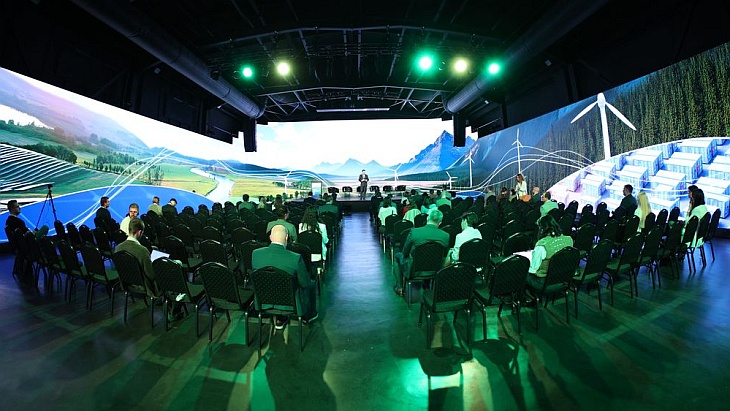
Ivan spoke during the workshop “Power system adequacy in a changing climate”, held as part of the launch conference for the Code of Good Practice in Renewables, 2026 edition, organised by RWEA and RPIA. The discussion focused on the impact of climate change, data and new sources of flexibility on power system operation and adequacy.
Renewables integration requires more flexibility
Romania is entering a stage in which growing volumes of solar and wind power must be integrated into a system capable of managing wider fluctuations in generation. Under these conditions, gas-fired power plants remain, in Transelectrica’s view, a stable source that can support renewables integration, alongside the accelerated development of storage.
As the share of renewables increases, Transelectrica needs to better assess both periods of very high generation and periods of low generation, as well as rapid shifts between them. Forecasting and risk-assessment tools make it possible to size the reserves needed to cover these fluctuations and forecasting errors from renewable power plants.
Weather data influence maintenance scheduling
Wind generation data are already being used to plan work on the transmission grid. Ivan explained that some maintenance outages may be postponed when generation in Dobrogea is high. Teams can have alternative work scheduled in parallel, allowing interventions to be rescheduled depending on weather conditions and the level of renewable generation.
The shift shows that forecasting and data are no longer only tools for dispatching. They are becoming part of the physical planning of the grid, allowing the operator to reduce the risk of maintenance work coinciding with periods when the infrastructure is needed to carry high generation volumes.
The first response to imbalances, however, must come from the market, Ivan said. Batteries can help renewable producers adjust their positions and reduce the impact of fluctuations on the system. “By the end of this year or the beginning of next year, we will reach around 2,000 MW of installed storage capacity, about 4,000 MWh,” he said.
For needs related to grid stability, Transelectrica also supports the development of pumped-storage hydropower plants, including for their contribution to system inertia, a service that current storage facilities cannot provide.
The Code of Good Practice in Renewables is an initiative of RWEA and RPIA. The third edition, produced in 2026 with the involvement of Energynomics, benefited from the contribution of partners AI Clearing, Alerion, CMS, DLA Piper, Enercon, Enery, Enevo, Eximprod, GE Vernova, Monsson, Nordex, Nyerges and Partners, OX2, Parapet, Raiffeisen, REIB, Scatec, TDP, Vestas and Waldevar. The Code was launched on October 1 at a conference held in Bucharest and is available free of charge, including in electronic format.