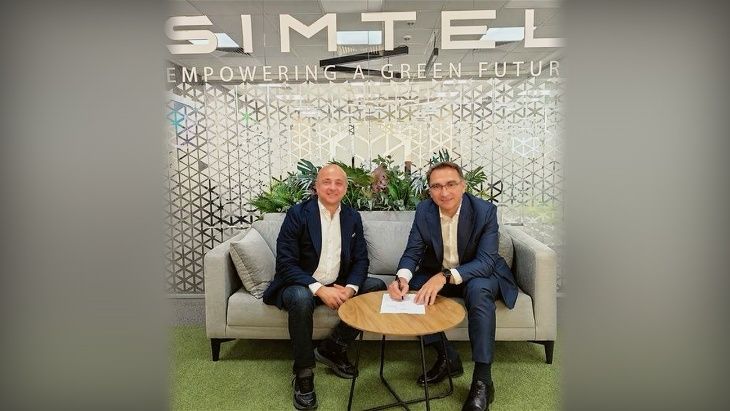
Simtel Team has signed a turnkey engineering, procurement, and construction (EPC) contract—valued at €17.50 million (excluding VAT)—with Vienna Energy for a new solar park. Vienna Energy Forța Naturală is wholly owned by Wien Energie International GmbH and is part of the Austrian energy group Wien Energie GmbH, Austria’s primary electricity supplier. The contract entails the development of a photovoltaic power plant, including its associated high-voltage substation, located in the Barabant area of Alba Iulia, in Alba County. Under the terms of the agreement, Simtel Team will carry out all activities typical of an EPC project, including design, equipment procurement, construction, installation, commissioning, and testing of both the photovoltaic plant and the associated substation.
In Romania, Vienna Energy has a portfolio of solar projects totaling 100 MW currently under development for 2026, with an additional 200 MW of photovoltaic projects slated for development between 2027 and 2029. “We are evaluating wind projects that are either ‘ready-to-build’ or already in operation—initially up to a capacity of 50 MW—with the aim of balancing our portfolio and optimizing our production profile. In the hydropower sector, we have been operating a portfolio of 28 micro-hydropower plants, totaling 21 MW, since 2008. A key strategic pillar for us is the development of storage capacity; we currently have BESS (Battery Energy Storage System) projects in the pipeline totaling 600 MWh,” said Dan Prodan, Managing Director of Vienna Energy, in an exclusive interview with Energynomics. Vienna Energy, part of Austria’s Wien Energie GmbH, is strengthening its position in Romania through an integrated strategy that combines renewable energy production, storage, and direct supply to end-user industrial clients.
Our investment strategy is balanced and disciplined, built with a medium- to long-term horizon in mind. Unlike aggressive approaches focused solely on volume, we prioritize stability, predictability, and technological integration—reflecting our profile as a strategic investor backed by public capital and a long-term vision.
We are present in over eight regional markets: Romania and Austria, followed by Hungary, Bosnia and Herzegovina, North Macedonia, Republika Srpska, Serbia, the Czech Republic, and Germany. Wien Energie is wholly owned by Wiener Stadtwerke GmbH—a municipal company controlled by the City of Vienna—which provides the group with institutional stability and a long-term strategic orientation.
In Austria, the consolidation of our position was accelerated by the acquisition of the ImWind Group. Through this transaction, Wien Energie acquired 52 wind turbines across 14 wind farms and 4 operational photovoltaic power plants, alongside a development pipeline exceeding 335 MW. Following the merger, our combined portfolio in Austria reaches approximately 800 MW of renewable capacity, spanning solar, wind, and hydro.
In Romania, we have 100 MW scheduled for construction in 2026, with an additional 200 MW portfolio of photovoltaic projects slated for development between 2027 and 2029. We are currently evaluating wind projects—either “ready-to-build” or already in operation—initially targeting a capacity of up to 50 MW, for balancing the portfolio and optimizing the production profile.
In the hydropower sector, we have been operating a portfolio of 28 micro-hydropower plants—totaling 21 MW—since 2008. For us, hydropower represents stability, flexibility, and a genuine balancing capacity.
A major strategic pillar is the development of storage capacity. We have BESS (Battery Energy Storage System) projects in the pipeline totaling 600 MWh; integrating these into new photovoltaic projects will allow for production optimization and reduce pressure on the market during peak hours.
Storage is essential for the maturation of the energy market. Given the lack of sufficient baseload generation capacity and the inherent variability of renewables, storage becomes the primary mechanism for stabilizing the system and reducing price volatility—especially during periods when Romania remains dependent on imports.
Drawing on nearly 20 years of experience in operating dispatchable assets—supported by two control centers that operate 24/7—we will integrate these structures into a modern, centralized control center. This facility will be capable of managing production and storage in real time, while also enabling active participation in balancing markets.
Investments are being funded entirely through our own resources, via successive capital increases; the share capital is set to grow from 300 million RON to approximately 500 million RON by the end of 2026,” added Dan Prodan.