

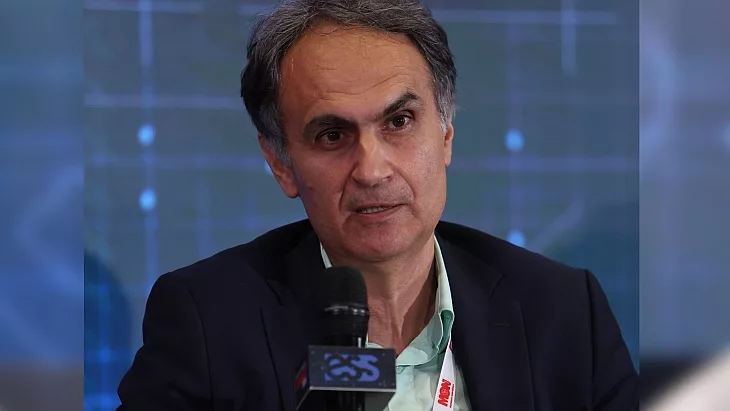
Access to the network and, above all, the predictability of energy infrastructure development represent the main challenge for investors in the renewables sector, and delays in the availability of the network can seriously affect projects already under construction and financed through bank loans, said Adrian Dobre, Country Manager Romania of the Eurowind Energy company, at the Energy Strategy Summit 2026, organized by Energynomics.
“That’s really the biggest bottleneck I’ve come across and I’d say it’s more a question of predictability. You get the capacity through an ATR, but when you build and you see the network is not available, the investment suffers a lot. It’s a time when all the payments have been made, the bank loans are ongoing and the interest is flowing. It’s a very difficult time,” said Dobre.
Romania has managed to attract massive interest from investors in renewable energy, as evidenced by the projects totaling over 80 GW on the connection lists. However, the existence of these projects does not automatically mean that they will be able to be connected to the network. In his opinion, some legislative measures adopted in recent years have contributed to increasing the capacity to integrate new projects without major infrastructure investments. Dobre gave as an example the introduction of flexibility solutions through the ANRE order that allowed the use of the ALO mechanism, which Eurowind Energy benefited from to avoid blocking some investments in situations where certain power lines were not completed on time.
It also helps to transfer control of the capacity allocation process to network operators, as well as to introduce stronger financial guarantees to filter out speculative projects. However, Adrian Dobre believes that the intervention of the authorities would have been more effective if it had been carried out a few years earlier, when the first signals appeared that the development of projects exceeded the pace of infrastructure investments.
Batteries are no longer just a technological option, but an economic necessity for developers of photovoltaic parks, and Eurowind Energy is already testing a storage system at the Teiuș project and plans to integrate batteries into all its future projects. “The economic reality of photovoltaic projects requires collocated battery systems. Otherwise the business case is no longer supported,” said Dobre.
From his point of view, Romania must move from a reactive to a predictive approach in the development of the energy system. He recalled that the state’s strategic documents foresee an accelerated growth in the electrification of the economy until 2050, which will require significant investments in networks and infrastructure. Eurowind Energy has a project portfolio of around 7 GW and technical approvals for connection for over 3 GW, but their implementation depends on the network’s ability to keep up with the pace of investment. In the absence of the necessary financing for infrastructure development, investors will have to look for alternative solutions, including Power-to-X technologies, Dobre also said.
Energy Strategy Summit 2026 was organised by Energynomics, with the support of our partners: Elektra Renewable Support, 4P Renewables, ABB, Alive Capital, Atmoce, Baringa, BCR, Big Store, Capalo AI, CBRE Romania, Distribuție Energie Electrică România, Eastship, Distributie Oltenia parte din Evryo, Eaton Electric, Electrica Furnizare, Electroalfa, Electroprecizia, EnergoBit, Enery, Enexus, Eurowind, Evryo, Exim Banca Romaneasca, Hagag Energy, KStar, LONGi, MBK Power Energy, MET Romania Energy, Monsson Trading, Nextpower, OX2, Romgaz, Schraubram, Sigenergy, Softenerg WEBUS 4 ENERGY, Solar Today, Sunotec, TBEA, Think Blu Solution, Transelectrica, Waldevar Energy, WTW Romania. Coffee Break Partner Enerta. Lanyard Partner Monsson Operation. Beverage Partners Aqua Carpatica, Alexandrion. Digital Partner Imsol. Mobility Partner BlackCab.