

Lyset, a Romanian manufacturer of architectural lighting fixtures, is developing a product range with a colour rendering index of CRI 97, associated with colour reproduction close to natural light. The company says it is the only manufacturer in Romania producing lighting fixtures with a CRI of 97 and one of the few European manufacturers to combine CRI 97, TM-30 colour evaluation and a UGR glare rating below 10 within a single range.
The new range aims to extend advanced specifications generally used in projects such as museums and offices to homes and other interior spaces. According to the company, light quality influences how a space is perceived, visual comfort and the way objects within an interior are presented.
The company estimates that it has invested 50,000 euros over recent years in technology and product development. The next stage announced by Lyset includes expanding its showroom network, including a presence in Cluj, increasing B2B partnerships and strengthening its activity in markets such as Greece, Bulgaria, Hungary and Ireland.
What CRI 97 means for project quality
The Colour Rendering Index, or CRI, measures how accurately an artificial light source reproduces the colours of an object compared with natural light, which has a reference value of 100. Many lighting fixtures available on the commercial market have a CRI of around 80, a level at which colours can lose intensity. At a value of 97, the difference compared with natural light becomes significantly smaller.
For architecture and interior design projects, colour rendering performance influences how colours are perceived and how spaces and interior objects are presented. A lighting system with poor colour rendering can visually alter the tones of wood, stone, textiles, decorative objects or displayed products. The effect is relevant in hotels, restaurants, commercial spaces, showrooms, medical practices and premium homes, where the choice of materials represents an important part of the investment.
Carmen Boangher and Alexandru Boangher, the founders of Lyset, say the objective was to develop lighting that provides both visual comfort and the most accurate possible representation of an interior. The company tested several types of LED chips and optical systems, including solutions that allow lighting to be adjusted according to the time of day.
Product development and component control
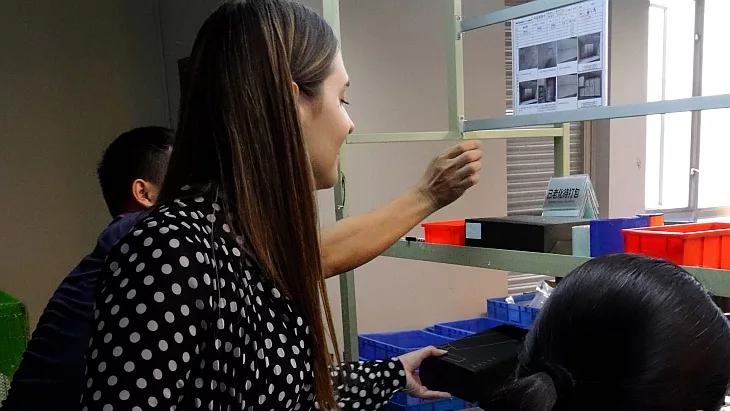
Lyset designs its own range and oversees the development process together with two partner factories in China. The team participates in prototype validation, quality control and component optimisation, covering finishes, LED chips, drivers and optical systems.
The process begins with the structure of the lighting fixture, the targeted specifications and the effect the light is expected to produce. Once the first sample has been manufactured, the light distribution and choice of optics are analysed, and the product is modified to meet lifetime and certification requirements. Finishes are selected at a later stage so that the fixture can be integrated into different types of interiors.
The company says it has previously used advanced solutions in HoReCa projects, including Swissôtel Poiana Brașov, where it delivered the lighting system for the common areas. The project covered approximately 250 square metres and included 54 linear metres of decorative magnetic track lighting. Together with lighting designer Ruxandra Miftodi of Glow Design Studio, the team implemented a system capable of dimming light intensity to 0.1%.
Founded in 2022, Lyset produces architectural and minimalist lighting fixtures for residential, commercial and HoReCa projects, as well as dental practices. The company also runs Lighting Academy, a programme that has delivered 15 workshops and brought together a community of approximately 600 architects. The growth strategy announced by the company includes expanding its showroom network, developing B2B partnerships and strengthening distribution in its targeted European markets.
About Schneider Electric
Schneider Electric creates impact by maximising the value of energy and resources, connecting progress with sustainability. We are a global leader in electrification, automation and digitalization, providing AI-driven IoT solutions for smart industries, infrastructure, data centres and buildings.
With 150,000 employees in over 100 countries we promote diversity and innovation. Schneider Electric România, with 27 years in business and more than 300 employees, runs operations in Armenia and Moldova and provides support in 17 languages for 26 countries through the Bucharest Hub.