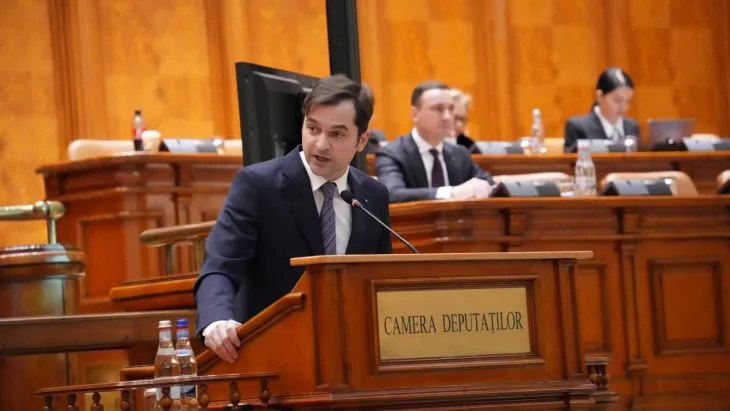
Bulgaria makes money from Romania’s energy because it allocated seven times more money for storage through the PNRR, and the cost differences between exports and imports are very large, claims Sebastian Burduja, former Minister of Energy.
“Why does Bulgaria make money from Romania’s energy? Simple and painful: at noon, when the sun is shining, we sell energy to our Bulgarian neighbors at a low price, because production is high and consumption is low. In the evening, we buy energy from the Bulgarians 7 times more expensive, because our production is low and consumption is high. For example, in April we gave them 33 million euros, we took 5. Why? Because they already have batteries and we have (for now) too few. How did we get here? It’s simple: five years ago the Bulgarians put 600 million euros in their PNRR for batteries. Those who wrote Romania’s PNRR allocated only 80 million euros for batteries, over 7 times less. Bulgaria invested in batteries, Romania promised to shut down coal”, claims Burduja, on his social media page.
“With this situation, I set off in June 2023, when I began my term at the Ministry of Energy, and with only 14 MWh of storage, practically zero.
What I did together with my team, while I was minister, until June 2025:
1. The Ministry proposed in the summer of 2023 to throw away the only money for batteries in Romania’s PNRR. I did not allow this, I negotiated with the European Commission and saved the appeal. Today, the money is in construction sites and in completed projects, such as the largest battery in Banat, 200 MWh, in Iaz, Caraș-Severin.
2. The state taxes the same energy twice: once when it enters the battery, once when it leaves. A stupidity that drove away investors. We eliminated double taxation through the GEO and massively stimulated investments.
3. We brought in 150 million euros for batteries linked to existing solar or wind parks. We finalized the appeal and left projects for evaluation 2,361 MWh. The contracts had to be signed and the construction sites started.
4. We prepared another 150 million for the large, system batteries. They were ready to launch when I left, with an estimate financed from European money of 2,000–3,000 MWh. The call sat in the drawer for a year, until Ilie Bolojan came as interim minister. A lost year, paid by all of us on the bill”, says the former minister.
“And now, the good news that gives us hope for the future:
1. In Florești, near Cluj, the largest battery in the country is already operating. Made by Romanians, with Romanian companies.
2. 36 new projects are ready to start by the end of the year. We reach 4,000 MWh, meaning we double in a single year everything we have today in batteries.
3. With all the other projects started, over 100 in advanced stages, we can reach at least 8,000-10,000 MWh in 2027.
The Bulgarians have won a stage. We will win the race, even if today we are behind because of past errors. The important thing is that we are starting to build, after years of “drought” in the energy sector.
Some politicians are now discovering the hydroelectric power plants blocked for decades, storage, gas from the Black Sea, reactors 3 and 4 at Cernavodă”, Burduja concludes.
About Schneider Electric
Schneider Electric creates impact by maximising the value of energy and resources, connecting progress with sustainability. We are a global leader in electrification, automation and digitalization, providing AI-driven IoT solutions for smart industries, infrastructure, data centres and buildings.
With 150,000 employees in over 100 countries we promote diversity and innovation. Schneider Electric România, with 27 years in business and more than 300 employees, runs operations in Armenia and Moldova and provides support in 17 languages for 26 countries through the Bucharest Hub.