

Moldova’s energy sector is undergoing one of the most significant periods of transformation since independence. International geopolitical developments and the effects of the war in Ukraine have prompted the authorities in Chișinău to accelerate the process of reforming and modernizing the country’s energy infrastructure. At the same time, the volatility of natural gas markets and the historical vulnerabilities of Moldova’s energy system have highlighted the need to strengthen energy security and diversify supply sources.
In this context, the development of renewable energy, investments in storage infrastructure, and the deepening of energy interconnections with Romania and the European market represent fundamental strategic directions for the Republic of Moldova. The energy transition is no longer perceived exclusively as an environmental objective, but also as an essential tool for reducing geopolitical vulnerabilities and increasing the resilience of the Republic of Moldova’s energy sector.
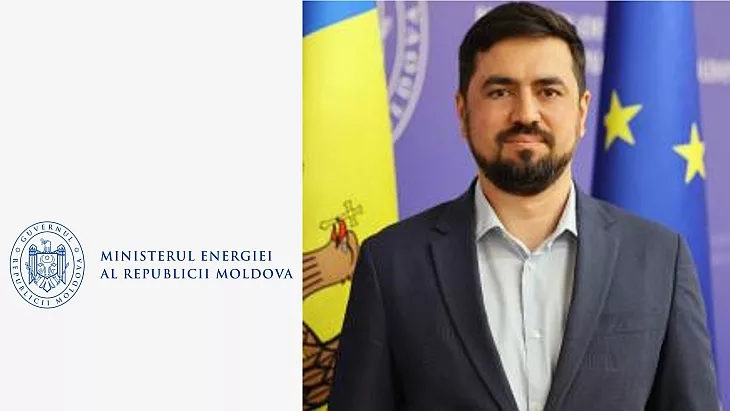
To gain a clear and balanced understanding of current developments, challenges, and prospects in Moldova’s energy sector, Energy Analytical Studies held an in-depth discussion with Vitalie Mîța, State Secretary at the Ministry of Energy, to obtain an institutional perspective on the ongoing energy transition processes.
The discussion particularly highlighted the importance of renewable energy development, the need for investments in energy storage infrastructure, and the strategic role of energy interconnection with Romania.
Development of renewable energy and the need for energy storage
According to Vitalie Mîța, “The Republic of Moldova has shown a strong interest in expanding the renewable energy sector, viewing the energy transition as an essential element in strengthening energy security.” In recent years, the Republic of Moldova has made significant progress in developing renewable energy projects, particularly in the photovoltaic sector, with new solar capacity already contributing to covering a portion of domestic electricity consumption.
However, the rapid expansion of renewables simultaneously creates new challenges for the power system. The intermittent nature of solar and wind energy requires modern energy flexibility mechanisms capable of ensuring system balance and the efficient use of energy produced during peak periods. In this regard, there is growing interest in Battery Energy Storage Systems (BESS). According to Vitalie Mîța, “Moldova needs investments in storage infrastructure to be able to efficiently utilize the renewable energy produced during peak hours. The energy sector is open to investments in BESS.”
In the absence of sufficient storage capacity, the surplus energy produced during periods of high generation cannot be utilized efficiently, which reduces the return on investment in renewables and limits the stability of the power system. From this perspective, the development of storage infrastructure must be analyzed in close connection with the expansion of the renewable energy sector, as these two components form a strategic pairing essential to the energy security of the Republic of Moldova.
Characteristics of energy consumption and energy efficiency in the residential sector
The need to develop energy flexibility solutions is also driven by the unique structure of Moldova’s domestic energy consumption.
A defining feature of Moldova’s energy system is the unique structure of its domestic energy consumption, characterized by the absence of large industrial consumers capable of ensuring a constant and flexible energy demand profile. According to State Secretary Vitalie Mîța, “the residential sector remains the main consumer of electricity and heat, and over 50% of total primary energy consumption is associated with households, mostly for heating.”
This reality results in an energy consumption profile heavily influenced by seasonality, particularly during the cold months of the year, when the demand for heating increases significantly. Consequently, the Moldovan energy system requires not only the development of storage infrastructure but also the implementation of coherent energy efficiency policies.
From this perspective, Moldovan authorities are paying increased attention to improving energy efficiency in the residential sector by promoting building retrofit programs, reducing energy losses, and implementing more efficient technologies. These measures are considered essential for reducing energy vulnerabilities and optimizing domestic energy demand.
Liberalization of the natural gas market and diversification of supply sources
Another key topic of discussion was the process of liberalizing the natural gas market and strengthening energy cooperation between the Republic of Moldova and Romania.
State Secretary Vitalie Mîța noted that “the Republic of Moldova has a strategic interest in Black Sea gas, reflecting the strengthening of Moldovan-Romanian energy cooperation and Chisinau’s focus on diversifying its supply sources.” In this regard, “Energocom has already signed a contract with OMV Petrom for natural gas supplies from the Neptun Deep field, starting in 2027.”
At the same time, the Republic of Moldova aims to participate in the Vertical Gas Corridor and utilize the Trans-Balkan infrastructure. These projects are seen as important tools for developing alternative supply routes and reducing regional energy vulnerabilities.
Referring to the process of liberalizing the natural gas market in the Republic of Moldova, Vitalie Mîța emphasized that “the choice of April for the implementation phase of market liberalization was not accidental, as it coincides with the end of the cold season and a significant reduction in natural gas consumption in the residential sector.” The decline in demand following the heating season creates more stable conditions for market adjustments and for testing the mechanisms specific to a liberalized competitive framework.
At the same time, Vitalie Mîța noted that “natural gas trading is already taking place on the exchange, but current volumes remain relatively low due to low demand and the limited size of the Moldovan market.” Compared to the energy markets in Romania or Ukraine, the natural gas market in the Republic of Moldova is modest in terms of both trading volumes and the number of active participants, reflecting the structural characteristics of the Moldovan economy and the low level of industrial natural gas consumption. “Moldova’s annual natural gas consumption is approximately 8 to 9 times lower than that of Romania.”
The process of natural gas market liberalization is of strategic importance for the Republic of Moldova’s energy future in accordance with European principles. In this regard, we can analyze Energocom’s role through the lens of the balance between the need to strengthen energy security and the objective of developing a functional competitive market. In the short term, the company has played an essential role in stabilizing natural gas supplies and diversifying sources; however, looking ahead, the liberalization process promoted in accordance with European standards entails the gradual transformation of Energocom from the market’s dominant player into a strategic mechanism focused on energy security, the creation of reserves, and interventions in crisis situations.
Thus, the development of a free and competitive market involves expanding consumer access to multiple offers from suppliers and strengthening exchange and contractual mechanisms, with a view to stimulating competition and aligning the Moldovan market with the principles of the European energy market. Otherwise, maintaining limited access for consumers and relevant market participants to exchange mechanisms could create the perception of a lack of interest and insufficient liquidity in the market, which, in the medium term, could affect the functionality and sustainability of exchange activity in the Republic of Moldova.
Energy interconnection with Romania and the modernization of the electricity infrastructure
In addition to the transformations in the natural gas sector, the development of the electricity infrastructure and the expansion of interconnections with Romania play a key role in strengthening Moldova’s energy security.
Regarding the electricity sector, a major strategic project is the 400 kV Vulcănești–Chișinău transmission line, considered essential for integrating Moldova’s energy system into the European energy market. According to Vitalie Mîța, “work on the Chișinău substation is progressing, even though the process has been affected by delays caused by logistical difficulties and equipment supply issues in the context of the war in Ukraine.”
The commissioning of the 400-kV Vulcănești–Chișinău transmission line will directly connect Moldova’s national grid to the European energy system, ensuring the country’s energy independence. However, certain vulnerabilities will continue to exist, particularly due to the infrastructure associated with the 400 kV Isaccea–Vulcănești transmission line, which crosses Ukrainian territory.
Vitalie Mîța also emphasized that “the Republic of Moldova is working intensively to strengthen interconnections with Romania.” In the northern segment of the electricity infrastructure, the Republic of Moldova aims to develop a regional energy ring between Romania, the Republic of Moldova, and Ukraine. Vitalie Mîța noted that “completing the energy interconnection with Romania on the 400 kV Suceava–Bălți transmission line and subsequently the Bălți–Dnestrovsk HPP interconnection could contribute to creating a much more resilient and flexible regional infrastructure.”
Regarding the power grid, Vitalie Mîța noted that, “during the power outage that occurred in March on the Isaccea–Vulcănești line, the restoration of the Moldovan power grid was possible in part due to the connection with the Dnestrovsk HPP and energy cooperation with Romania in island mode.”
In the discussion with the Secretary of State, it was noted that the development of the 400 kV Gutinaș–Strășeni transmission line also remains of major strategic importance.
The discussion held by Energy Analytical Studies with Vitalie Mîța, State Secretary of the Ministry of Energy of the Republic of Moldova, highlights the fact that the Republic of Moldova is going through a crucial phase of its energy transition, and that the country’s medium-term energy outlook depends on the authorities’ ability to integrate four fundamental dimensions into a coherent strategy: the development of renewable energy, the expansion of storage capacity, ensuring effective access for as many participants as possible to gas market exchange mechanisms, and strengthening energy interconnections with the European Union.
Energy Analytical Studies extends its gratitude to State Secretary Vitalie Mîța for his openness, willingness to engage, and constructive dialogue, which contributed to a better understanding of the complex processes of transformation in the energy sector of the Republic of Moldova.