

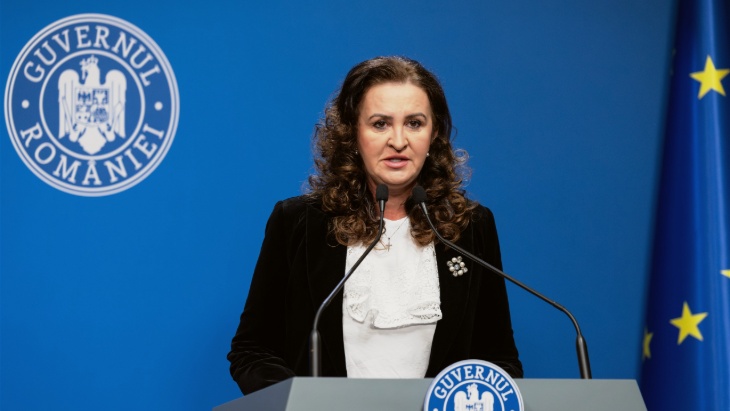
The Rabla car susbidy program could be launched in the first part of each year, starting in 2027, with a focus on affordable, low-emission vehicles, as well as on supporting Romania’s automotive industry, stated Natalia Intotero – the nominee for the position of Minister of Environment, Waters, and Forests—during hearings held by the relevant parliamentary committees.
“In collaboration with the Ministry of Economy, we will prepare a schedule for 2027 and 2028, so that people know well in advance when the program begins. We aim for the launch to take place in the first part of each year. We will introduce criteria to support vehicles manufactured in Romania—and, by extension, within the European Union—while verifying their origin within the limits permitted by EU legislation. We will place the emphasis on affordable, low-emission cars, rather than just expensive models. We will also ensure faster payments to car dealerships. Old vehicles that are turned in will be scrapped and recycled appropriately,” said Natalia Elena Intotero, according to Agerpres.
She emphasized that the ‘Rabla’ program also plays an important economic role by supporting the automotive industry and the jobs within this sector. “We will publicly evaluate the program’s results every year. We will also focus on supporting companies that manufacture components for the automotive industry. Why is this program important for Romania? According to figures included in the program, the automotive industry provides approximately 220,000 direct jobs, and Romania produces about 500,000 passenger cars annually—more than 80% of which are exported. Therefore, the ‘Rabla’ [scrappage] scheme is not just about less polluting cars; it is also about supporting jobs, manufacturing plants, and the Romanian economy. We want the ‘Rabla’ program to be accessible to families, to reduce pollution, and, at the same time, to support the people working in Romania’s automotive industry,” explained the nominee for Minister of Environment.
Another priority presented by Intotero concerns unblocking investments that have been delayed due to environmental procedures, by streamlining the approval stages and establishing clear deadlines for the issuance of permits.
“We want to change course. Protecting the environment is mandatory—I emphasize, mandatory—but it should not mean blocking the country’s development. This priority applies to all investments, whether at the national, county, or local level. What will we do in concrete terms? We will introduce priority procedures for major projects, ensuring that environmental approvals and permits are issued within a clear timeframe, while remaining in compliance with current European legislation. Institutions will be able to review documents in parallel—where the law allows—rather than waiting for each individual stage to be completed. Furthermore, authorities will, as much as possible, request any necessary additional information in a single set of observations, so as to avoid repeated requests,” she stated. Regarding water and sewage infrastructure, the candidate announced the continuation of investments in networks and wastewater treatment plants, noting a total projected budget of 800 million euros for this program.
“In many localities across Romania, people still lack access to water and sewage systems. In other areas, wastewater is not properly treated before being discharged into rivers or the natural environment. Romania has European obligations in this sector and is currently facing legal proceedings for failing to meet them. What will we do? We will continue investing in water and sewage networks, as well as in wastewater treatment plants—specifically in localities that do not yet comply with these European requirements. The total budget allocated for this program is 800 million euros, with 400 million euros earmarked for the 2026–2028 period. Furthermore, should I take office at the ministry, I intend to verify how these funds have been spent—or if they have been spent at all,” stated Intotero.
Concerning waste management, she highlighted the high proportion of municipal waste ending up in landfills and announced measures to expand separate waste collection and the recovery of recyclable materials.
“Approximately 80% of municipal waste in Romania ends up in landfills, rather than being recycled or recovered. In effect, we are burying resources that could otherwise be transformed into raw materials, energy, and jobs. We will approve the National Waste Management and Prevention Plan, thereby unlocking funding from the Just Transition Program (PDD-TJ),” the candidate affirmed. Regarding the protection of forests, Intotero announced the operationalization of the SUMAL 3.0 IT system in 2026, as well as the strengthening of inspections to combat illegal logging.