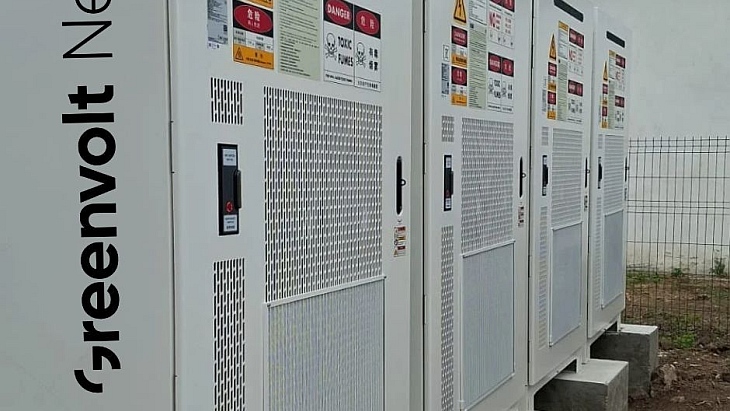
Utility-scale battery storage projects are becoming an increasingly important component of Romania’s energy system. According to Transelectrica, as of April 1, 2026, Romania had an installed storage capacity of 599 MW, corresponding to an energy storage capacity of 1,129.7 MWh.
As battery storage systems develop, their role is expanding—from supporting the energy system as a whole to helping companies manage their energy consumption more efficiently. This evolution is also reflected within the Greenvolt Group, which holds approximately 5 GW of BESS projects in its global utility-scale portfolio, including 209 MW in Romania. At the same time, the technology is gaining significant traction among commercial and industrial (C&I) companies—a trend evident in the growing activity of Greenvolt Next, the Group’s division dedicated to this segment.
For these clients, the benefits go beyond simply storing surplus energy generated by photovoltaic systems. As energy markets become more volatile, companies are placing greater importance on controlling when they produce, store, and consume energy. Particularly for industrial consumers with high energy usage or variable consumption profiles, battery storage can help increase self-consumption, reduce peak demand, and provide greater flexibility in managing energy costs.
This trend is already visible in Greenvolt Next’s operations across Europe. Since the beginning of the year, the company has secured storage projects totaling over 100 MWh—including battery storage systems—with Romania being one of the markets where demand is rising.
“Across Europe, we are seeing growing demand for behind-the-meter battery storage systems, and this same trend is beginning to emerge in Romania. Given the profile of Romania’s commercial and industrial sector, we believe battery storage could become a key growth area in the B2B market. Integrating batteries into on-site photovoltaic systems is a natural step toward smarter energy management, allowing companies to decide not only how much energy they generate but also when to use it and when to draw from the grid. For companies, this means greater control and an enhanced ability to reduce and manage energy costs,” says Gino Gauthier, CEO of Distributed Generation Business at Greenvolt Group.
“The Romanian market is maturing, a shift reflected in how companies are increasingly looking beyond mere solar power generation to seek solutions for more efficient energy management. For industrial and commercial enterprises—particularly those with high, predictable energy consumption—integrating battery storage systems can significantly cut energy costs and boost energy efficiency. Through our PPA model, we can offer these solutions without requiring an upfront investment from the client, thereby making this opportunity accessible to a wider range of companies,” adds Filipe Dias, Country Manager at Greenvolt Next Romania.
Favorable trends in technology costs are another key factor driving this acceleration. Battery costs have fallen by approximately 40–50% in recent years, making storage solutions viable for an increasingly wide range of consumption profiles and applications.
However, demand is not limited to new photovoltaic projects. Greenvolt Next observes that a growing number of companies already operating photovoltaic systems are choosing to add battery storage solutions to optimize the use of the energy they generate. This trend signals market maturation, as companies shift from merely producing renewable energy to managing it more intelligently.