Lucian Peticilă, CEO Visual Fan
Storage is the main vector of development of the EPC market in Romania, says Lucian Peticilă, CEO of Visual Fan, a group that also includes the Allview Energy division. “The EPC market for renewable energy has entered an accelerated maturation stage. If in previous years the development was mainly supported by the installation of new photovoltaic production capacities, in 2026 we see an increase in the complexity of projects and a growing need for integration between production, storage and network infrastructure,” says Lucian Peticilă, in an exclusive interview for Energynomics.
What will be the main growth directions of the company in the coming period? What funds will you attract from banks? But through European projects?
The main growth directions of the Visual Fan company aim to consolidate all business divisions: Allview Energy, Allview Auto and Electro IT, by expanding the portfolio, developing our own capabilities and capitalizing on opportunities in the markets in which we operate.
In the Allview Energy area, the strategy targets the entire energy infrastructure chain: Full EPC photovoltaic projects, BESS storage systems, medium and high voltage infrastructure, as well as the development of our own technology for energy management. In this direction, Allview Certus, the EMS/SCADA platform fully developed by the Visual Fan team and perfected in real operating conditions, extends the company’s expertise towards the control, protection and optimization of storage systems.
For Allview Auto, we continue to diversify the electric mobility portfolio and consolidate the commercial and after-sales infrastructure, by expanding the distribution network and partner services. An important milestone this year was the launch of the Allview 4City model, which completes the electric urban mobility offer and strengthens the company’s presence in the segment of vehicles that can be driven from the age of 16.
Within the Electro IT division, we continue to diversify the portfolio in categories with potential, from electronics and smart products to household appliances. This year, we have expanded the range of televisions, the range of washing machines and are preparing new products developed around a clear direction: useful technology, which simplifies daily activities and contributes to a more comfortable and efficient lifestyle.From a financial perspective, our approach remains prudent and balanced. We have the ability to support investments and projects from our own resources. The relationship with banks is mainly oriented towards facilities and lines intended for current activity, necessary for the effi cient management of operational fl ows specifi c to large-scale projects. Regarding European funds, the company Visual Fan does not seek to attract them as a source of nancing for its own development in the Energy area. However, some of the benefi ciaries of the projects implemented by Allview Energy access European or national fi nancing programs, and our role, as an EPC integrator, is to deliver solutions in full accordance with the technical, commercial and eligibility requirements provided for in the related documentation and specifi cations.
What were the main results of 2026 – H1? What are the targets for 2026?
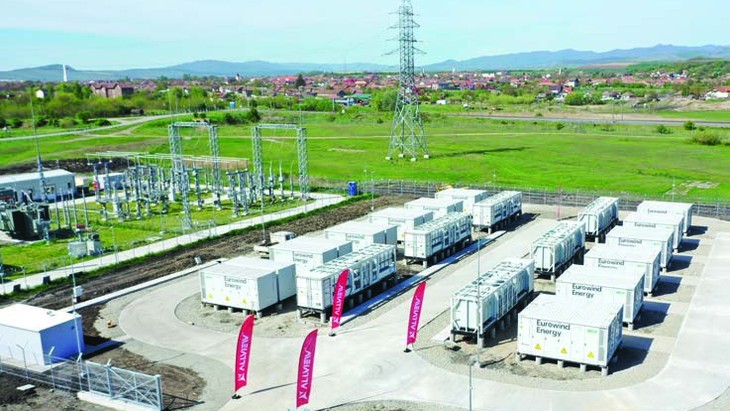
The fi rst half of 2026 confi rmed Allview Energy’s transition to a new stage of development. In the fi rst quarter, Visual Fan reported consolidated revenue of 101.6 million lei and net profi t of 8.91 million lei, with the Allview Energy division making a signifi cant contribution to this development. The results of the rst half are aligned with the budgeted levels for this period, both operationally and in terms of the implementation of the projects in the portfolio, keeping us on schedule to achieve the objectives set for the entire year 2026. From an operational point of view, in the fi rst part of this year, we completed the works for the 46 MWp photovoltaic plant in Țăndărei, a complex Full EPC project, which included the 35/110 kV transformer station, an underground 110 kV power line of approximately 15 km and the integration of the SCADA system. In June, we completed the energizing of the BESS system in Teiuș, with a capacity of 120 MWh, after completing the execution, testing and integration stages, and later we also completed the works for the BESS system in Toplița, with a capacity of 65 MWh. The two projects refl ect Allview Energy’s experience in the implementation and integration of high-capacity BESS systems and the increasingly important role of storage in the company’s portfolio. Beyond the size of the projects, the results refl ect the level of complexity at which Allview Energy operates today. Production, storage, medium and high voltage infrastructure and control systems are integrated in a Full EPC model, under a single contractual responsibility. This approach positions Allview Energy in the area of complex energy projects, where value is no longer given only by the installed capacity, but by the integration of the entire system.
For the entire year 2026, our objective is to continue developing the Full EPC project portfolio, to consolidate our position in the BESS systems segment and to expand our capabilities in the medium and high voltage infrastructure area. In parallel, we aim to increase the added value generated internally by integrating our own technology into energy projects. Allview Certus, the EMS/SCADA platform developed entirely by the Visual Fan team, materializes this direction and marks the evolution of Allview Energy from infrastructure integration to the development of the technology that controls and optimizes it.
How did the EPC segment for the green sector evolve in 2026? What about the large energy infrastructure works? How do you see the future of these two segments in 2026?
The EPC market for renewable energy has entered an accelerated maturation stage. If in previous years the development was mainly supported by the installation of new photovoltaic production capacities, in 2026 we see an increase in the complexity of projects and a growing need for integration between production, storage and grid infrastructure.
For Allview Energy, this evolution is reflected in the current portfolio. An important milestone is the new contract in Turda, where we will implement a 50.9 MWp photovoltaic park in Full EPC mode together with the related energy infrastructure, including the 20/110 kV transformer station. It is the kind of project that confi rms the direction in which we have developed our capabilities: not only the execution of the production plant, but taking on an extended responsibility for the infrastructure necessary to integrate it into the energy system. For the coming period, however, we see energy storage as one of the main vectors of market development. Romania has added renewable capacities at an accelerated pace, and the next challenge is to use them as effi ciently as possible. As photovoltaic production increases, the ability to take over energy during periods of surplus and to use it when the system and the market need it becomes essential. For this reason, we expect BESS systems to increasingly move from the area of independent projects to an integrated component of new energy investments. Storage, connection infrastructure and control systems will play an increasingly important role in the feasibility and performance of renewable projects.
What are the main problems on the electricity market? Why do we have high prices, despite the entry of new capacities into the market?
The accelerated growth of renewable capacities is essential for Romania, but simply installing new MW of production does not automatically translate into cheaper energy at every moment of the day. One of the structural problems is that the development of renewable production has not been accompanied, at the same pace, by the development of storage capacities and the modernization of the energy infrastructure. In the case of energy production from photovoltaic sources, we have intervals in which production is very high and may exceed the need or the system’s capacity to effi ciently utilize it, followed by hours in which production drops signifi cantly and demand remains high. Without suffi cient storage capacities, the energy available during periods of surplus cannot be effi ciently transferred to the hours when the system needs it most. Only in the last year have we seen a signifi cant focus on the development of BESS projects. Without suffi cient storage capacities, the energy produced in excess during certain intervals cannot be effi ciently transferred to hours of high demand. In parallel, the networks and evacuation infrastructure must be modernized and optimized to integrate the new capacities. The next stage is no longer just about how many MW we install, but about how efficiently we manage to store, transport and integrate them into the system.
What were the biggest challenges of 2026, from an EPC perspective?
The main challenges of 2026 were related to price volatility, supply chain predictability and the availability of specialized human resources. In largescale EPC projects, price variations and delivery times of critical equipment can directly influence the budget and execution schedule, which makes procurement and planning essential.
At the same time, the accelerated development of the energy sector has increased the demand for engineers, project managers and specialists in MV/ VT, SCADA and commissioning. For us, building and maintaining a strong technical team, along with developing internal skills, is one of the essential conditions to be able to deliver increasingly complex and large-scale projects.
How do you see the evolution of the energy market in Romania?
Romania needs to move from the accelerated development of production capacities to their efficient integration into the energy system. In many areas, the existing infrastructure is already under heavy demand and cannot always take over the entire production that new renewable capacities can generate.
One of the essential solutions is the accelerated development of BESS storage parks, which can take over energy during periods of surplus and make it available to the system when there is demand. In parallel, substantial investments are needed in the modernization and expansion of the distribution infrastructure.
Equally important is the optimization and digitalization of documentation, approval, connection and commissioning flows. The pace of investment must be supported not only by physical infrastructure, but also by more efficient administrative and technical processes.
The next stage of the energy market will, in our opinion, be about storage, infrastructure and the ability to efficiently integrate the energy already produced, not just about installing new MW.
_____________________________________________
The interview also appeared in the print edition of Energynomics Magazine, Q3 2026 issue.
In order to receive the printed or electronic issue of Energynomics Magazine, we encourage you to write us at office [at] energynomics.ro to include you in our distribution list. All previous editions are available HERE.