


Access to the electricity grid is becoming an increasingly important factor in the valuation of renewable energy projects in Romania. Data published by Transelectrica for its capacity allocation auctions show extremely limited availability in the coming years, while new capacity requiring additional grid development is not expected to become available until 2032. According to Sunai Cadir, founder of BRES Energy, projects that have already secured grid connection rights are gaining significant strategic value.
“A project that already holds grid connection rights is no longer just a development project, it’s a rare asset,” says Sunai Cadir, founder and Managing Director of BRES Energy, in a post published on LinkedIn.
His argument reflects the changing conditions for grid access. In a market with an extensive pipeline of solar, wind and energy storage projects, securing the capacity to feed electricity into the grid can become a competitive advantage just as important as location, permits or the investment’s stage of development.
Transelectrica: 1,566 MW available, subject to grid development
According to official data published by Transelectrica, the capacity available through the auction mechanism for 2028-2031 is zero across all ten grid zones. The first capacity that could be allocated, subject to additional grid development works, appears in 2032.
In total, the table published by the transmission system operator identifies 1,566 MW of available capacity requiring additional grid development works, distributed as follows:

- 2032: 412 MW, in zones H and I;
- 2035: 80 MW, in zone E;
- 2036: 862 MW, in zones B and D;
- 2037: 212 MW, in zones A, D and J.
Auction starting prices range from 724,569 to 3,843,000 lei/MW, depending on the grid zone and allocation year. These are starting prices, not final grid connection costs or the values of transactions already completed.
In zone D, Transelectrica specifies that the 661 MW allocated to 2036 are intended exclusively for connections to the transmission grid, while the 100 MW scheduled for 2037 are designated for the distribution grid.
The data must be interpreted within the framework of the mechanism regulated by ANRE Order No. 53/2024, as subsequently amended. They describe the capacity available through the allocation procedure and do not amount to a declaration that all new grid connections in Romania are impossible until 2032.
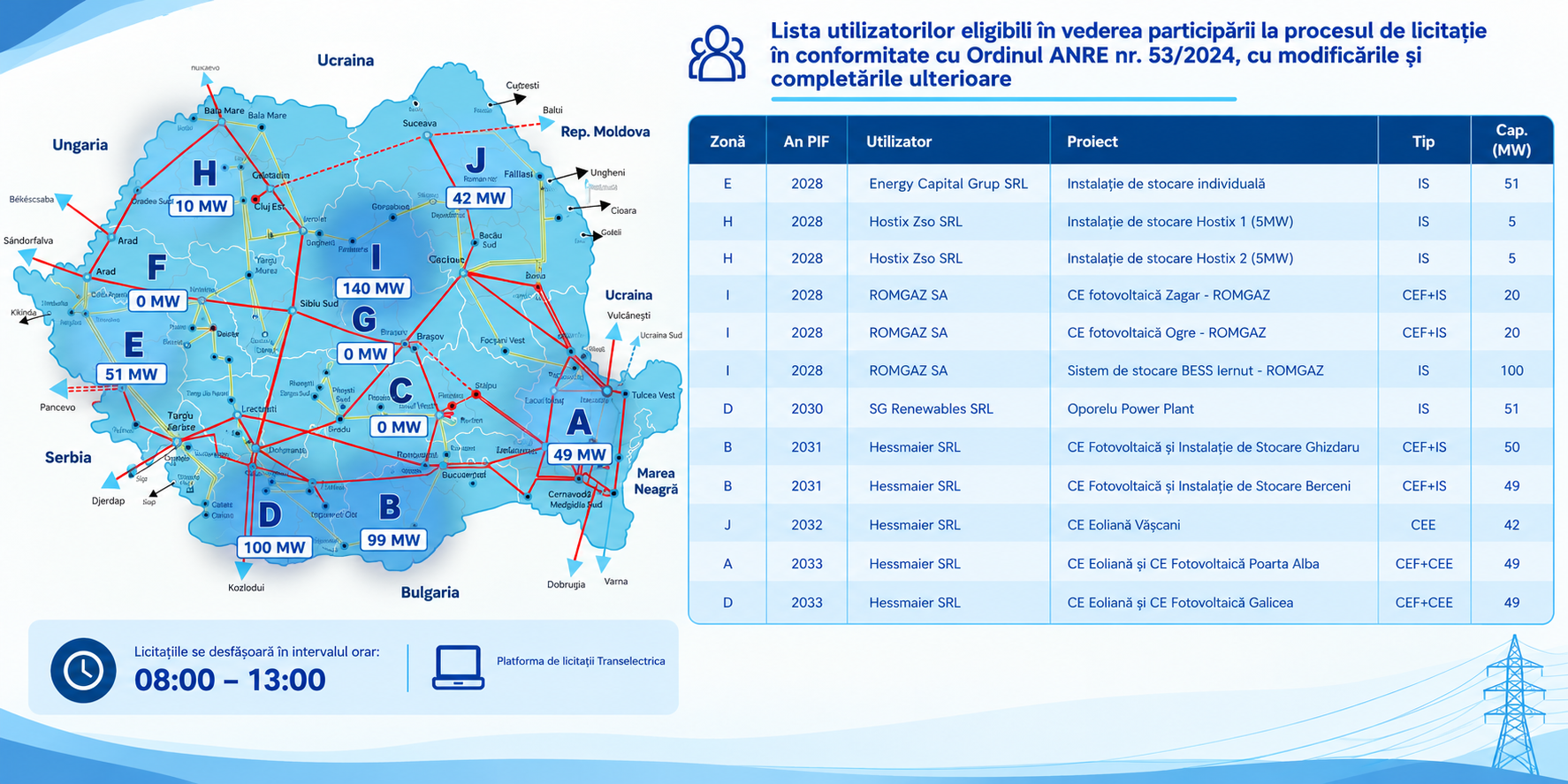
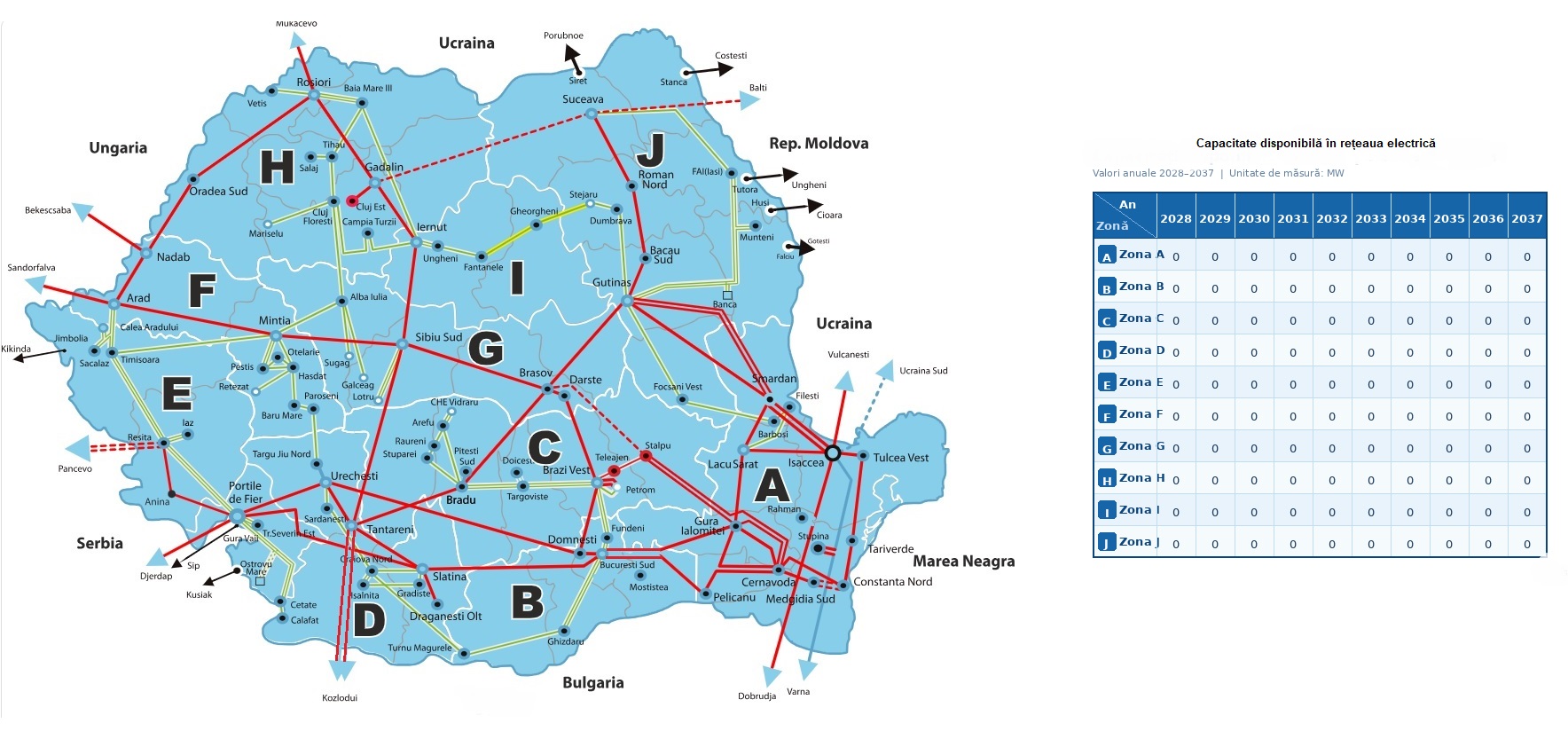
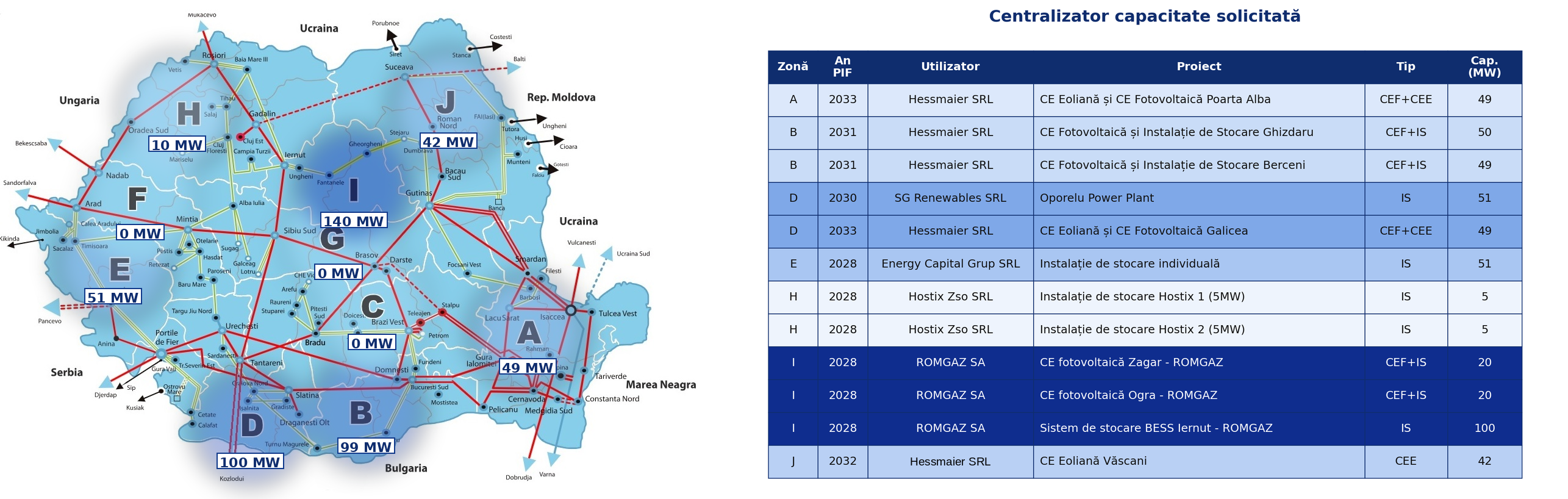
Transelectrica has scheduled the auctions for 30 October – 12 November 2026, with each session corresponding to an allocation year within the 2028-2037 period. The operator has separately published a summary of applications and the list of applicants eligible to participate in the auctions. Eligibility to participate does not mean that the requested capacity has been awarded.
From development project to investment asset
For Sunai Cadir, increasingly restricted access to the grid is changing how investors assess existing projects. A project that already holds a grid connection approval (ATR) and has progressed through the permitting process may have a significant advantage over one that still needs to secure its connection terms from scratch.
The founder of BRES Energy says the company manages, through its bres.energy platform, a portfolio of more than 70 solar, wind, hybrid and energy storage projects in Romania, totalling over 6 GW, at various stages of development, from grid connection approval (ATR) to ready-to-build (RTB). In his view, grid access is making an increasingly important contribution to the commercial value of the portfolio.
The value of such a project nevertheless depends on its specific circumstances: the validity of its grid connection approval, the existence and terms of a grid connection agreement, the works required, guarantees provided, construction deadlines and any technical or contractual restrictions. Grid connection rights should not be confused with already constructed capacity that can feed electricity into the grid without conditions.
Energy storage at the centre of investment interest
Sunai Cadir links grid connection challenges to electricity price volatility and growing interest in battery storage. In his post, he refers to episodes when prices on the Day-Ahead Market (DAM) fell to approximately minus 98 euros/MWh, as well as periods when they approached 1,000 euros/MWh.
Price differences between hours of abundant generation and periods of high demand are among the economic drivers behind interest in energy storage. Batteries allow electricity delivery to be shifted from one period to another and can combine price arbitrage with participation in other markets and flexibility services.
However, commercial opportunities do not automatically translate into profitability. Revenues depend on actual price patterns, the number of operating cycles, system efficiency, operating costs and market access rules. Energy storage is also one of several sources of system flexibility, alongside demand-side management, interconnections and other dispatchable resources.
