

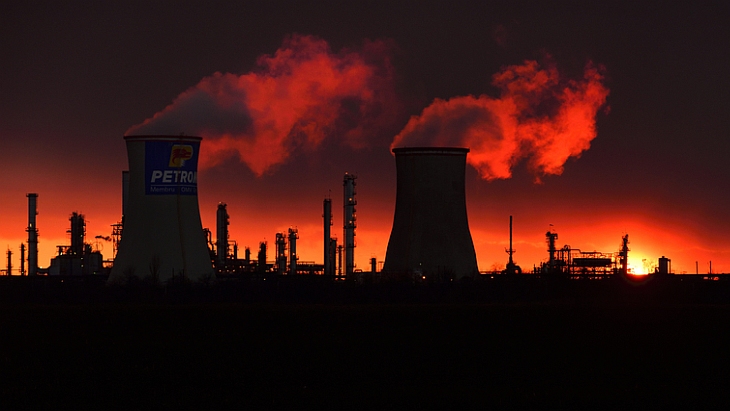
OMV Petrom, the largest integrated energy producer in Southeast Europe, is advancing the construction of the new sustainable fuel production unit at Petrobrazi. With an investment of €560 million, this project will position the refinery as the region’s first major producer of sustainable fuels. The foundations have been poured, and the main equipment for sustainable fuel processing—including columns and reactors—has been assembled and installed. With a capacity of 250,000 tonnes per year, the new unit will produce sustainable aviation fuel and renewable diesel—fuels that can help reduce emissions in sectors that are difficult to electrify, such as aviation and heavy-duty transport.
“Petrobrazi is undergoing one of the most significant transformations in its recent history. With an investment of €560 million, we are building a new unit that will produce 250,000 tonnes of sustainable fuels annually from renewable feedstocks. These lower-carbon fuels will help reduce emissions in sectors where electrification is challenging, such as aviation and heavy transport. We have completed the foundations—requiring the pouring of approximately 20,000 cubic meters of concrete—and equipment reaching up to 60 meters in height has already been installed at the refinery. Through this project, we are gradually adapting Petrobrazi to the new demands of the market and the energy transition, including by developing the production of sustainable fuels,” said Radu Căprău, member of the OMV Petrom Executive Board. The new SAF/HVO unit will use green hydrogen to transform vegetable fats and used cooking oils—renewable feedstocks—into fuels similar to conventional ones, yet with significantly lower emissions across the entire production and usage chain.
The new facility’s flexibility will allow for adjustments to the feedstocks used and the mix of finished products—ranging from SAF and HVO to bio-naphtha and bio-LPG—based on market demand and feedstock availability.
Using these fuels enables a significant reduction in CO₂ emissions compared to traditional fossil fuels (by at least 65%).
Construction work began in 2025. The next phase will involve equipment installation, connecting the new facilities to the refinery’s existing infrastructure, and conducting an extensive testing and verification program prior to commissioning, which is scheduled for 2028.
In parallel, the company has developed green hydrogen production capabilities at Petrobrazi. This year, the modules for the two electrolyzers—with a total capacity of 55 MW—were delivered. Investments in these facilities amount to approximately 190 million euro.