

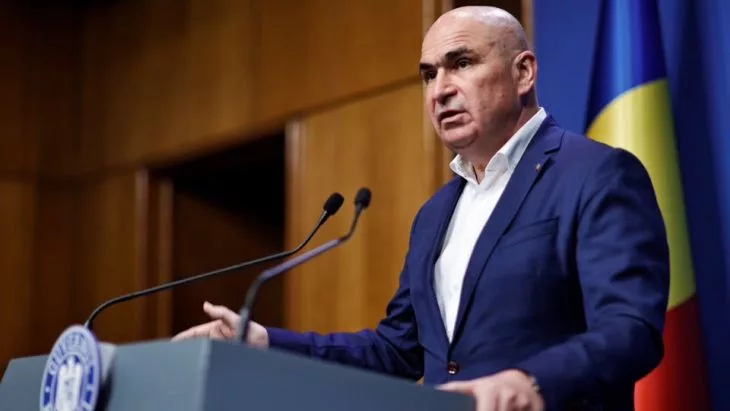
Romanian Government has agreed with representatives of major industrial consumers to voluntarily reduce energy consumption between 19:00 and 23:00, in the context of the energy crisis caused by the severe drought and the extremely low flow of the Danube. The companies Dacia and Ford will voluntarily stop production until August 19, which will mean an energy saving of approximately 200 MW, declared on Monday the interim Prime Minister and interim Minister of Energy, Ilie Bolojan, in a press conference held at the Victoria Palace.
“The pressure hours are the evening hours and, in the discussions we had today with the main consumers, we agreed that each of them will take measures to voluntarily reduce consumption in the evening hours, depending on their profile, depending on the technology they operate, because some can stop exactly in a certain time interval and can restart easily without affecting their production process, other companies cannot afford this, they must ensure a minimum consumption so that the installations can operate under normal conditions. One of the measures that some companies have put into practice these days is the maintenance entry part, the repair part and two important companies, large consumers, Dacia and Ford, are, as of today, with production stopped until the 19th (August, ed.), which means a saving of approximately 200 MW. This decision will also be taken by several other companies, so that we have a voluntary reduction in energy consumption in the evening hours,” said Bolojan, quoted by Agerpres.
According to the official, up to this point, due to the voluntary reduction of energy consumption on Monday morning, Romania has had consumption, on average, 200 MW lower.
“I appeal, once again, to citizens, to companies, to public authorities to take voluntary measures to reduce consumption. I want to thank all Romanians and all companies that, in these days, at the requests of the Government, in the face of this reality that does not depend on us, have taken these measures and the effects are visible in reducing energy consumption in these days. For example, compared to other hours of the day, this morning we had consumption, on average, 200 MW lower and this action of companies is visible, for example, related to the voluntary reduction of consumption (…) I also appeal to local authorities, to all public institutions to reduce activities related to buildings, architectural lighting in the evening hours, and where they have remote management systems regarding public lighting, to regulate the light intensity, in such a way that, by decreasing it, they generate savings between 9:00 p.m., from when the public lighting is turned on, for example, until 11:00 p.m.,” he mentioned.
He added that, in the coming days, a complementary Government Decision could be adopted, by which large consumers could be notified 24 hours in advance that a certain quantity of consumption would be established for them.
“In the coming days, we will adopt a complementary Government Decision that is taken into account in the conditions in which we will not be able to fully ensure energy consumption in the evening hours through voluntary reduction, a Decision that is provided for in the legislation, namely the one through which we have a mechanism that we can put into practice through the National Energy Dispatcher at Transelectrica, to limit consumption. This means that, with a 24-hour notice, large consumer companies would receive a notification through which their consumption will be established depending on the technology they use and the possibilities that the National Energy System has to ensure total consumption at those hours. This measure is a reserve measure, it is a mechanism that we are putting into practice according to legal provisions, in such a way that we can take coordinated measures, if necessary, in the coming days,” emphasized Ilie Bolojan.
About Schneider Electric
Schneider Electric creates impact by maximising the value of energy and resources, connecting progress with sustainability. We are a global leader in electrification, automation and digitalization, providing AI-driven IoT solutions for smart industries, infrastructure, data centres and buildings.
With 150,000 employees in over 100 countries we promote diversity and innovation. Schneider Electric România, with 27 years in business and more than 300 employees, runs operations in Armenia and Moldova and provides support in 17 languages for 26 countries through the Bucharest Hub.