The lessons learned from the Iberian Peninsula blackout and the new challenges for NES operation, under debate at FOREN 2026, led to the conclusion that Flexibility and resilience become strategic priorities.
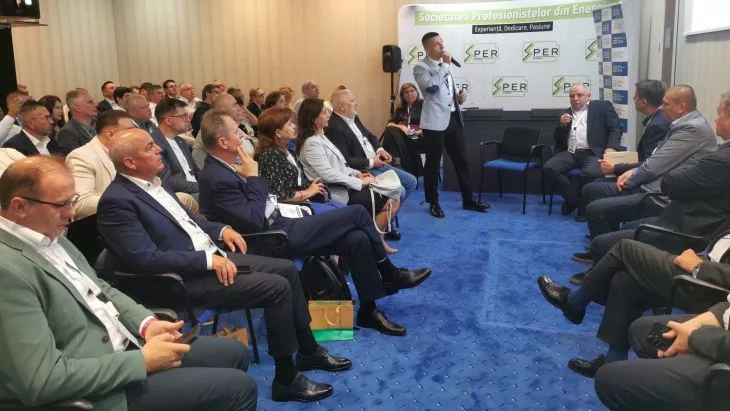
The round table on the topic “Challenges of NES dispatch management under the conditions of massive integration of renewable sources”, organized by the Romanian Society of Energy Professionals (SPER), within FOREN 2026, enjoyed great interest, bringing together a significant number of specialists in the field.
Representatives of the Energy Transmission Operators from Romania and the Republic of Moldova, the regulatory authority, the distribution operators, as well as various private companies active in the energy market, in the presence of the press, debated major current issues: the operation of the power systems under the conditions of the energy transition, the lessons learned from the blackout in the Iberian Peninsula and the conclusions of the final report of ENTSO-E, the need to increase the flexibility of the National Energy System (NES), the new European requirements regarding the assessment of flexibility needs (Flexibility Needs Assessment), as well as the impact of the accelerated integration of renewable sources and the increase in the number of prosumers on the electricity grids.
Mihai Cremenescu, Director of the Operational Directorate of the National Energy Dispatcher, highlighted the complexity of the energy event in Spain and the need to learn from the experiences of others: “This blackout was a complex, complicated one, it is, in my opinion, proof of the neglect of sustainability in the integration process for many years. We all need to see where others have gone wrong and to what extent we can prevent this. We have a well-defined defense plan and restoration plan.”
Adrian Mihai Constantin, Chief Dispatcher of DEC Shift and Technical Expert at Distribuție Energie Electrică Romania, involved in the analysis of the blackout that affected approximately 55 million consumers in the Iberian Peninsula, presented the main recommendations of the ENTSO-E report: “There are 17 causes that led to this blackout and 21 recommendations in the ENTSO-E report. The causes analyzed refer to voltage control, generator unit trips, the defense plan, forced oscillations and intra-zonal oscillations, system restoration. It is important to remember that we also have responsibilities, not just rights, in using the network.”
According to the recommendations formulated at the ENTSO-E level and presented by Adrian Mihai Constantin, increasing the safety and resilience of the electric power system requires a series of technical and operational measures, including: operating production units in voltage regulation mode, modernizing reactive power compensation solutions through the use of flexible equipment and STATCOM systems, optimizing settings for damping oscillations, reviewing protection settings and developing advanced automatic disconnection schemes when the frequency decreases. ENTSO-E also recommends performing periodic real tests for restoring the NES in case of collapse or for islanded operation, as well as defining a regulatory framework that allows for the controlled reconnection of distributed energy resources in the system restoration process.
Alexandru Molnar, Head of the Electricity Market Regulation Service at ANRE, highlighted the importance of the safety of interconnected systems and the role of collaboration between the regulator and network operators: “Good things must be preserved and adapted to the needs and challenges that arise within the energy system. The regulator must listen to the operators. We will continue from a regulatory point of view, which is no longer just a national prerogative, but a European one.”
Valeriu Binig, Scientific Advisor of CNR-CME, spoke about adapting to the new grid codes and the stability requirements of the energy system: “In the coming period, the energy sector will have to adapt to increasingly strict requirements regarding compliance with grid codes and maintaining system stability. Among the issues under the attention of authorities and system operators are voltage control, monitoring of system inertia at national and regional level.
There is also an increasing emphasis on the participation of renewable energy generation facilities in reactive power and voltage control, on increasing the observability of the system and on the real-time transmission of necessary data to grid operators. In this context, periodic verification of protection settings, avoiding unjustified disconnections and compliance with technical requirements become essential elements for the safety and resilience of the electricity grid.
For Romania, a series of important decisions are to be clarified in the coming period, including those relating to the requirements applicable to certain categories of facilities and the implementation schedule of the new technical obligations. These developments will contribute to the safe integration of an increasing share of renewable sources and to strengthening the stability of the national energy system.”
Daniel Farcaș, Head of High Voltage Dispatch Service, Delgaz Grid, highlighted the need for close collaboration between distribution operators and the transmission and system operator, as well as the importance of better monitoring and management of prosumers. “There is a need for communication between distribution operators and the TSO, communication and coordination by phone during restoration, as well as a direct line between dispatch centers, as well as between dispatchers and operating personnel. We need to see the prosumers, to manage them.”
Eduard Albulescu, Measurement Director at Distribuție Energie Oltenia, emphasized that, although blackout situations cannot be completely excluded, they can be limited through preventive measures, clear restoration procedures and the development of efficient flexibility mechanisms, defined through collaboration between operators and academia and through the involvement of prosumers.
Cătălina Drenea, Operations Manager at Rețele Electrice România, presented the measures adopted after analyzing the blackout in the Iberian Peninsula, emphasizing the prioritization of critical consumer supply, the development of dispatcher management and the need for continuous adaptation of networks to new operating conditions.
Octavian Ciobîrcă, Deputy General Manager of Moldelectrica, shared the experience of the Republic of Moldova in managing blackout situations and highlighted the importance of regional cooperation and exchange of experience with Transelectrica.
Ion Lungu, President of CNR-CME, drew attention to the responsibilities of all network users and the need for preparation through simulations and periodic training, emphasizing that “flexibility and competitiveness” are the keywords of the future energy sector.
In conclusion, Corina Popescu, Vice President of SPER and President of the Board of Directors of Moldelectrica, the moderator of the event, stated: “We will convey the conclusions of this round table to the authorities. It is important that the voice of specialists in the sector is heard and listened to. Today’s discussions show that new challenges require new rules. The needs of the energy system are different from the past and we must carefully analyze which new categories of investments we promote. We will continue to focus on the exchange of good practices and the analysis of the latest technical challenges in the safe operation of the electric power system.”
The Society of Energy Professionals of Romania (SPER) is a non-governmental, non-profit and independent association, which brings together specialists with extensive experience in the energy sector, recognized domestically and internationally. The association supports gender equality and fair conditions for access to leadership and decision-making positions, supporting the promotion of competence in the energy sector through awareness campaigns, advocacy activities and collaborations with government institutions and industry organizations.