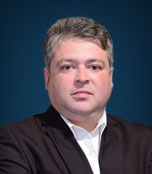
Romania will support the production of second-generation biofuels – the production of bioethanol, as well as sustainable aviation fuel (SAF), along with HVO (Hydrotreated Vegetable Oil), said the Secretary of State at the Ministry of Energy, Sorin Elisei.
He also stated that Romania is one of the countries with the weakest results in the adoption of renewable energy in the transport sector, and the year 2035 is considered much more feasible for achieving the current decarbonization commitments set for 2030.
“The current crisis and those that will follow will confirm, at least this is my belief, part of the decarbonization trends by moving away from fossil fuels that are not under the control or responsibility of the member states, at least when we talk about the European Union. However, this requires massive investments. We are one of the weakest countries in terms of the adoption of renewable energy in the transport sector. Year after year we register an increase in the number of second-hand vehicles, an increase in the consumption of diesel and gasoline, and the only way we fight against this phenomenon is biofuels. However, these do not cover Romania’s commitments regarding the 2030 target, which, if I look at the succession of crises and the way governments have allocated money to support this process from public funds, is not really achievable. I think 2035 is much more feasible than 2030 to achieve the current commitments set for 2030”, said Elisei, according to Agerpres.
He also mentioned that the Romanian state has considered the idea of supporting the production of second-generation biofuels.
“The state has considered, through the Ministry of Energy, supporting the production of second-generation biofuels, in the sense of bioethanol, as well as sustainable aviation fuel (SAF), together with HVO (Hydrotreated Vegetable Oil, n.r.). These would be produced locally, from raw materials largely available locally, and would fit both into energy security and into reducing dependence on oil and its derivatives. We discussed support schemes. The only source of funding that we see at the moment is the Modernization Fund. We are also actively engaged at the government level to position the needs of the Ministry of Energy within the next multiannual financial framework 2027-2034, so that this reduction in fossil fuel consumption in transport can be stimulated. In addition to these, there is, of course, the adoption of electric vehicles, the development of infrastructure and other complementary measures. However, if I look at the overall picture, the only real difference, the only real impact in terms of “in terms of commitments, it would be the effective decarbonization of the fleet we have on the roads today,” the Energy official believes.
In the Secretary of State’s view, the authorities must sit down at the table and outline a strategy regarding Carbon Capture and Storage (CCS), “which also takes into account the temporal aspect.”
“A few words about CCS… We understand that there is a project that has been accepted for funding through the Innovation Fund. We supported it. We support any other project that involves beneficiaries from hard-to-decarbonize industries – a cement factory or a company from the so-called hard-to-decarbonize industries (ed.). But at the moment I see the need for all authorities to sit down again at the table and outline some kind of strategy on CCS, which also takes into account the temporal aspect. The current target for 2030 and I dare say it is not achievable. We need to look and discuss with the European Commission regarding Romania’s share of millions of tons that need to be stored. I would say that offshore is more suitable for CCS than the current onshore perspective, because we expect many challenges related to public acceptance and infrastructure. The time needed to develop this type of project is at least six to seven years. We currently have a financing contract, but we will talk about CCS, “I would say, in six-seven, maybe ten years from now, because they are very complex projects. What the Ministry of Energy can do for the current project is to allow the infrastructure to function and serve the transport of CO2‚‚ in any form, gas or liquid, and to implement the necessary regulatory framework to allow stakeholders to really invest,” explained Sorin Elisei.