


The integration of artificial intelligence, sustainability goals, and talent development policies is becoming essential for the competitiveness of the industrial sector, in a context marked by operational pressures, accelerated technological transitions, and a structural skills crisis. The new report by HFS Research in partnership with GlobalLogic shows that 51% of industrial organizations cite skills shortages as the main reason why AI and advanced technology initiatives fail or deliver below expectations, and the gap between strategic ambitions and actual implementation capacity risks slowing down the profound transformation of the industry in the coming years.
The study, based on responses from over 100 executives and senior managers from global industrial companies with revenues exceeding $1 billion, shows that the problem is not a lack of vision, but rather an inability to execute. Forty-two percent of respondents say they face major difficulties in recruiting digital and AI specialists, and nearly half (49%) consider the integration of new technologies with existing IT systems to be the biggest barrier to adopting advanced digital solutions, including Agentic AI solutions, which involve interconnected processes and autonomous real-time decisions..
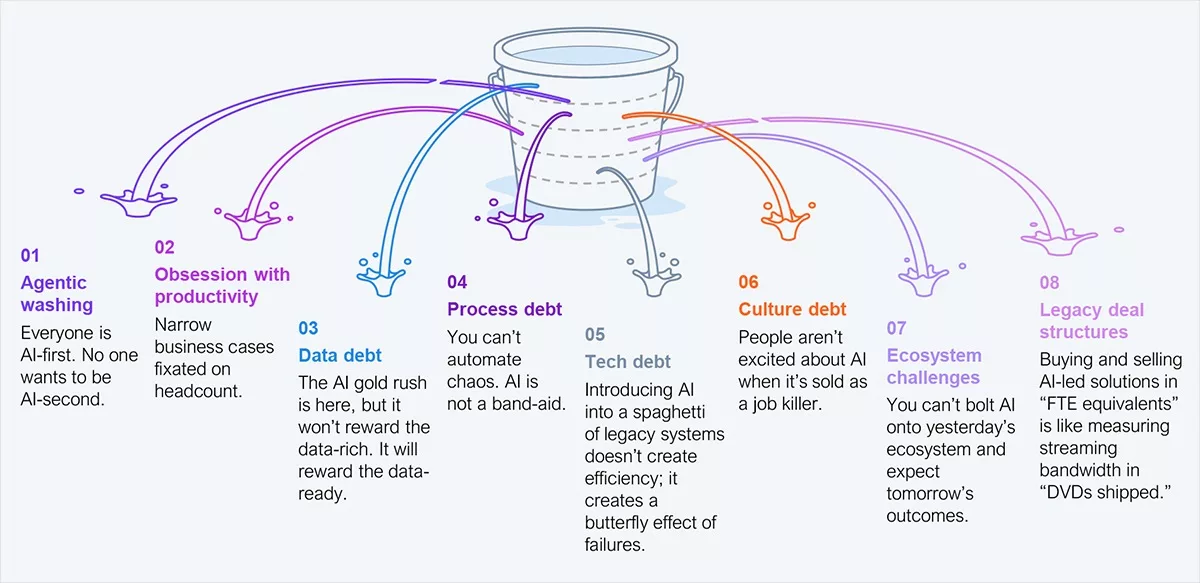
The study is relevant at a time when digitization is increasingly seen not as an end in itself, but as a tool for transforming business models, operating methods, and the relationship between technology and people. The report highlights that although 46% of industry leaders currently place reducing operating costs among their top three priorities, in the next two years AI adoption and operational optimization are expected to become the number one strategic priority, signaling a clear paradigm shift in decision-making.
An additional warning sign relates to the attractiveness of the industry as a career option. Fifty-eight percent of respondents believe that professional mobility is limited in the industrial sector, 48% indicate a lack of perceived innovation, and 46% acknowledge that salary levels are lower compared to other sectors. These perceptions exacerbate the difficulty of attracting and retaining talent, precisely at a time when the digital and green transitions require new, interdisciplinary skills. At the same time, half of companies say they do not have structured upskilling programs, which widens the gap between technological needs and available human resources.
The report argues that success will not come from fragmented implementations, but from integrated plans that link short-term operational efficiency to long-term strategic goals, modernizing digital infrastructure, developing skills, and adopting AI sustainability commitments. For industry, the stakes are not just about increasing productivity, but about building resilient organizations capable of operating in a volatile economic and technological environment.
Technology, people, and sustainability must be approached as elements of the same equation in order to transform current pressure into a competitive advantage. Otherwise, industrial company leaders risk getting stuck between ambition and execution, at a time when the speed of adaptation makes the difference between relevance and decline.