

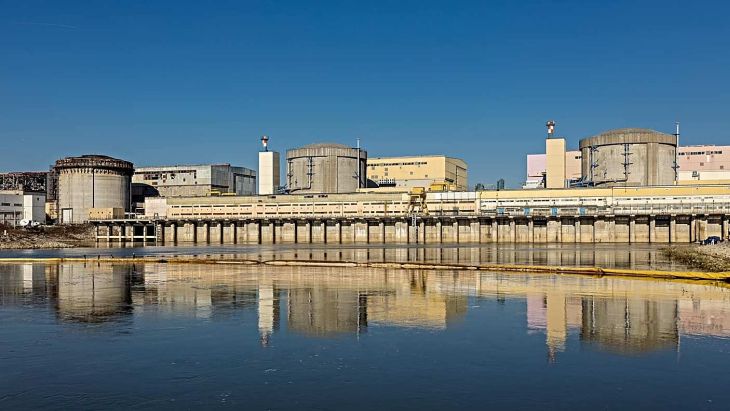
Market sources have told the press that the water flow from the Danube could be sufficient this month to allow the Cernavodă power plant to resume production, following a visit to the facility by the Ministry of Energy on Friday.
Investment projects that are part of the Romanian nuclear program are essential for ensuring Romania’s energy security, stated Minister of Energy Dumitru Chisăliță.
“Investment projects that are part of the Romanian nuclear program are essential for ensuring Romania’s energy security. As Minister of Energy, I am constantly focused on the timely fulfillment of commitments-in accordance with project schedules-and I will take all necessary steps to accelerate the pace of implementation. Furthermore, cooperation and synergies between the Romanian nuclear operator and all involved parties are key factors for the success of these projects. I expect all parties involved to adhere to the agreed-upon deadlines and to speed up project execution. Any delay could compromise the country’s energy security and lead to significant costs for consumers,” said Chisăliță, as quoted in a statement from the Ministry of Energy.
The Minister held discussions with representatives of Societatea Națională Nuclearelectrica S.A. (SNN) regarding the situation at the power plant-which has been affected by climatic conditions-as well as the company’s investment projects. During the visit, the Minister of Energy met with Hur Seung-chul, Ambassador of the Republic of Korea to Romania; Laurențiu Cazan, Chairman of the Board of Directors of Nuclearelectrica; and Mihai Laurențiu Gioară, General Manager of SNN. The discussions focused on the status of the refurbishment project for Unit 1 of the Cernavodă Nuclear Power Plant, specifically addressing the progress of infrastructure works, adherence to the project schedule, any observed deviations, and the measures required to accelerate implementation.
The Tritium Removal Facility (CTRF) project was also discussed during the visit. As the first facility of its kind in Europe, it will contribute to environmental protection and the safety of personnel at the Cernavodă site by removing tritium from heavy water. Both projects include implementation plans that incorporate progress monitoring and the identification of necessary solutions, with the ultimate goal of ensuring their continued advancement.
The refurbishment of Unit 1 is intended to extend its operational lifespan by an additional 30 years. The planned shutdown for these works is scheduled for the 2027-2030 period, during which approximately 700 MW of nuclear capacity will be unavailable. Consequently, early preparation and the coordination of these activities are essential-both for the successful execution of the project and for the operational planning of the National Power System. “The refurbishment of Unit 1-the company’s most significant project-will extend the unit’s operational lifespan by another 30 years and is essential for the stability of the National Energy System. The tritium removal facility complements this effort, further strengthening nuclear safety as well as the protection of personnel and the environment. Accelerating these projects and maintaining them as a strategic priority ensures that Romania will have safe, clean, and reliable nuclear energy for decades to come. Nuclearelectrica remains fully committed to safeguarding the country’s energy security,” stated Mihai Gioară, as quoted in the press release.
Discussions with SNN management also covered the status of the project for Units 3 and 4 at Cernavodă, which is currently in the pre-construction phase. According to the project timeline, construction is scheduled to begin in 2027.
In light of preparations for the cold season and low water levels in the Danube, the Minister-together with SNN representatives-reviewed the status of Units 1 and 2, which are currently being kept in a safe shutdown state, in compliance with nuclear safety regulations and standards.
On the evening of October 28, the National Committee for Emergency Situations extended the state of alert by 30 days. This decision was made in response to the current state of the National Energy System, taking into account the risk that power and energy reserves might prove insufficient to balance the system during peak hours.