

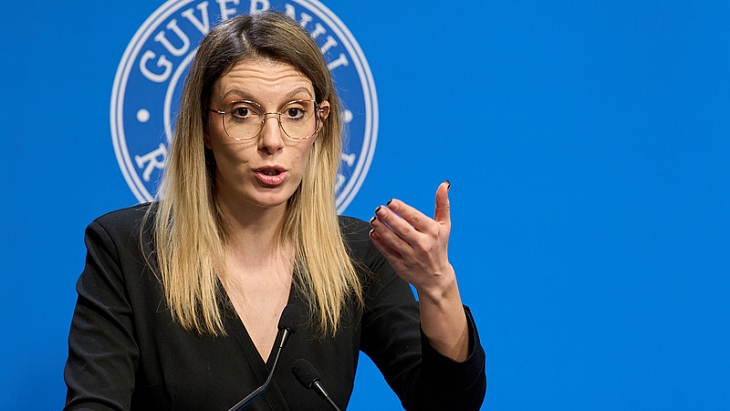
The program dedicated to photovoltaic energy storage in batteries, set to launch this year, will help lower market prices and should become a public policy for the next 3–4 years, stated Diana Buzoianu, Minister of Environment, Waters and Forests.
“It would be somewhat arrogant for me to explain supply and your energy market to you, because the reality is that you are the key players here—the ones who know best and who, together with the Ministry of Energy, can further develop this aspect. From the Ministry of Environment’s perspective, what we managed to do was shift the paradigm regarding environmental fund projects. Last year, when I floated the idea—addressing the huge potential of prosumers who lacked storage batteries—that we would change the approach for the coming year to include battery storage rather than just focusing on photovoltaic panels, I recall the public reaction: open letters were issued claiming we were shutting down a program beloved across Romania. Then came the crisis involving the drought and the Cernavodă plant, and suddenly, the conversation about storage gained much wider public acceptance—specifically, the idea that we could help lower energy prices simply by having storage capabilities, avoiding peak-price evening imports and instead utilizing the energy we already possess but currently fail to store,” said Buzoianu, according to Agerpres. According to the cited source, the battery energy storage program launching in 2026 should ideally serve as a public policy for the next 3–4 years.
“We are currently at a point where, from the Ministry of Environment’s perspective, I want to set a direction for the coming years. I would like the battery storage project we are launching this year to become a public policy for at least the next 3–4 years, allowing us to catch up with the photovoltaic panels already deployed in the market. I believe this will help lower prices in the medium term, so to speak… For instance, I think what we launch this year can be installed next year. If everyone does their job properly, I believe that within a year—by next year—we could have batteries installed alongside the existing photovoltaic systems. We have also shifted from a ‘first-come, first-served’ approach to an application evaluation system; this means that, given the current 400-million-lei budget for this program, we will see many more batteries installed, simply because co-financing will be one of the key criteria,” explained Diana Buzoianu.
She added that, despite the Ministry of Environment’s limited resources, they managed to “stimulate the market to ensure more batteries are installed for the same amount of money.” “I believe this should, in fact, be the vision for the coming years as well. So, from the Ministry of Environment’s perspective—regarding pricing—I think this is a program that can help,” Buzoianu pointed out.