

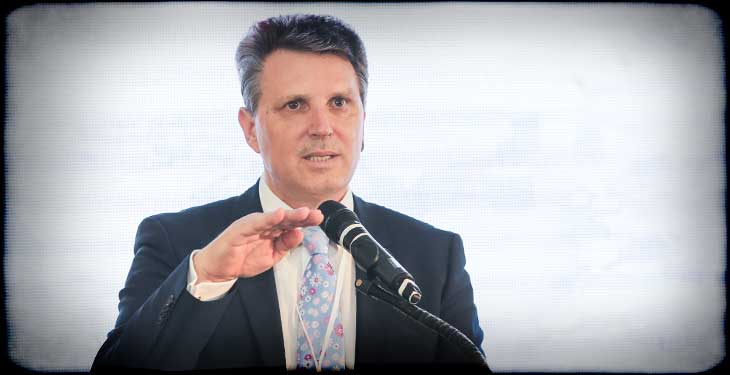
Reducing energy intensity is one of the opportunities for development of the Romanian economy, believes Iulian Iancu, President of the Romanian National Committee of World Energy Council (WEC). On the occasion of presentation of 2016 FOREN conclusions, Iancu has exposed four advantages that the Romanian energy industry can focus its efforts on in order to come up with solutions beneficial to the whole society: harnessing biomass, natural gas resources, its hydrographic dasin and energy efficiency.
Wednesday, on September 7, from 9 A.M. at Cesianu Racoviţă Palace, in Bucharest, energynomics.ro invites you to a professional debate on this theme, at Energy Breakfast Club – Energy Efficiency – profit from the available resources. Our invited speakers will be: Irina Nicolau, expert of the National Regulatory Authority for Energy (ANRE), the Direction for Monitoring the National Action Plan for Energy Efficiency, Andrei Ceclan, Senior Energy Advisor Servelect, Cristian Pîrvulescu, CEO Enevo Group, Olivier Marechal, Chief Engineer – South Europe Field Engineering Support ExxonMobil Lubricants.

Experts in the energy industry can provide a new vision for the Romanian society, said Iulian Iancu, in his plead for integrating the energy system priorities in the overall Romanian context. “Analysis and future priorities of the energy sector can not be divorced from the situation and the general problems of the Romanian society,” insisted Iulian Iancu. He listed some of these characteristics: social polarization, decapitalisation, an acute shortage of qualified labor force and lack of public trust in the current model of economic and social development of Romania.
Meanwhile, Romania distinguishes itself from other European countries with some extraordinary advantages. Iulian Iancu mentioned the fact that Romania has 495,000 hectares of biodegraded and desertified land, for which a national program of technical energy plant cultivation is required. “It’s an example of how the energy industry can respond with internal solution to a general problem of society,” said Iulian Iancu. Such a program may also contribute to ease the difficulties in the forestry sector, affected by massive deforestation in recent decades.
The second advantage that Romania must take is the natural gas resources, with the best potential in the region. “Primary resource for co-generation of high-efficiency, backup solution to electricity generation from renewable sources and energy security provider for our neighbors, using natural gas underground storage capacities; these are three options for harnessing the now available and futuere Romanian natural gas”, explained Iancu.
President of NRC-WEC also mentioned the advantage of rich hydrographic basin Romania has, currently only used in up to 49% of its potential. “The hydrographic basin is completely out of any watercourses regularization program. The first benefit would be reducing the number and severity of floods. We should also add to this other additional four clear benefits: irrigation, water transport, hydropower – generating and storage – and tourism”.
A fourth chance for economic development that was mentioned by Iancu is a national program focusing on reducing energy intensity. “Romania uses 2.6 times more energy per GDP unit than the European average. A country project can address strictly improvement in energy efficiency, with direct, immediate and widespread benefits, including tens of thousands of jobs,” Iulian Iancu argued.
The role of energy professionals is much larger than to be simple messengers of the dominant themes in the energy sector, because “we have people among us people with vision, people with synthesis capacity, visionary people who can provide a valid future for our society”, the President RNC-WEC concluded.
