

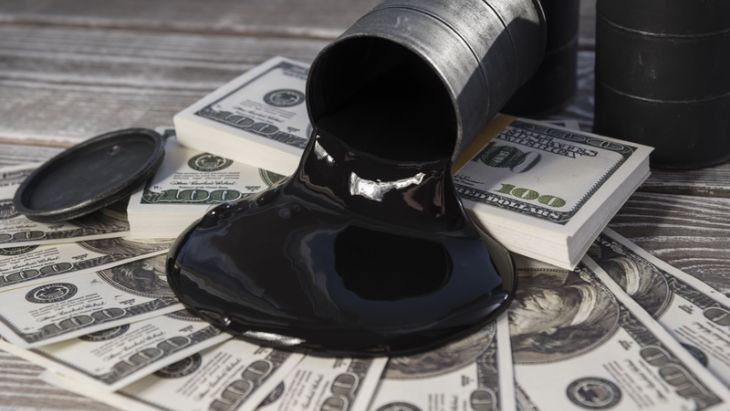
Europe has paid approximately €112 billion more for fossil fuel imports than it otherwise would have, and this year that figure could reach €450 billion, stated Tudor Constantinescu-principal advisor to the Director-General for Energy (DG ENER) at the European Commission-in a video message on Tuesday. “Over the last few months-the last six months, to be precise-as our President, Ursula von der Leyen, has pointed out, Europe has paid approximately 112 billion euros more for fossil fuel imports than it would have otherwise. Last year, we already paid 340 billion euros. This year, that figure could reach 450 billion euros. These funds could certainly be used much more effectively to support our goals regarding competitiveness, the energy transition, sustainability, and tackling the climate crisis. (…) Romania’s interest in accelerating the green transition and decarbonizing the molecular component of the energy system is of great importance. In response to the current crisis, we have also accelerated the electrification process and launched an electrification action plan, which targets a 46% share of electricity in final energy consumption by 2040-up from approximately one-quarter today. This is highly significant, yet we will still need to decarbonize the portion of energy consumption that remains reliant on molecular fuels, which accounts for nearly half of our total energy use,” emphasized Constantinescu, quoted by Agerpres.
According to the official, renewable and low-carbon gases will play a crucial role in the energy system. “As we integrate an increasing number of renewable sources into the energy system-and particularly into the electricity grid-we will require large-scale storage solutions, in which hydrogen and its derivatives are set to play a crucial role. It is worth noting that, in this regard, Europe has developed what is arguably the most comprehensive legislative and regulatory framework in recent years. We have also established financing mechanisms: we have the European Hydrogen Bank and the Connecting Europe Facility-the latter’s second list includes over 100 projects of common or mutual interest in the hydrogen sector, ranging from pipelines to storage facilities and electrolyzers. Furthermore, we have approved numerous projects under the ‘Important Projects of Common European Interest’ (IPCEI) framework-a major initiative that helps build value chains across Europe. At the European level, more than 38 billion euros have been approved. The Recovery and Resilience Facility has also provided significant support for such hydrogen-related projects throughout Europe,” the advisor pointed out.
He also noted that the financing efforts currently underway will continue through the Decarbonization Bank-an entity slated for future establishment. “At the same time, we will continue to develop legislation and regulations that facilitate private investment and the mobilization of private capital-aspects that are both extremely important and necessary. Regarding the regulatory framework, you are aware of the legislative package on gas and decarbonization. Naturally, this must be implemented and transposed by the Member States. The same applies to the Renewable Energy Directive, which will help facilitate the transformation at a European level. In the specific case of hydrogen, it is crucial to create the necessary conditions to develop demand for renewable and low-carbon hydrogen, as well as for renewable gases in general. Only in this way can we benefit from economies of scale and enable the economy, industries, and producers-whom we want to see in as large a number as possible within Europe-to capitalize on the opportunities presented by the energy transition. Instead of spending the hundreds of billions of euros mentioned earlier on energy and fossil fuel imports, we could invest far more in research and innovation, the energy transition, and the transformation of existing infrastructure,” stated Tudor Constantinescu, citing the adaptation of pipelines for hydrogen transport or the construction of new infrastructure required to facilitate the energy transition as examples.
Furthermore, the Romanian representative within DG ENER argued that electricity and hydrogen networks must be better connected and integrated, and that the natural gas system should be transformed to allow for an increasing share of renewable gases in the future.
“We must work together across all these areas. Research and innovation will remain critically important. We encourage all Member States to take advantage of existing European-level opportunities-such as the ‘Hydrogen Valleys’ initiative-and to engage in demonstration projects, while identifying ways to make them economically viable. These solutions must account for the current economic and political landscape, as well as the specific local and regional circumstances of each Member State. At the same time, we must leverage these capabilities to strengthen European value chains and identify areas where each state can contribute-including through the development of new industries and products manufactured in Europe. All of this must support the integration of renewable energy sources and the decarbonization of the entire energy system. Moreover, we need to create viable business models for the production of fertilizers, green steel, and other goods that the economy will continue to require-products that can also benefit from the opportunities presented by the energy transition,” noted Constantinescu.